Why Materials and Colour Matter More in Thailand
Selecting interior finishes in Thailand requires accounting for conditions that differ substantially from temperate-climate assumptions. Bangkok's relative humidity of 70–85% year-round, combined with sustained high temperatures and intense tropical sunlight, causes certain materials to warp, delaminate, or fade significantly faster than specification sheets suggest. Natural timber flooring that performs reliably in Europe may require more intensive maintenance in a Bangkok home than the homeowner anticipates.
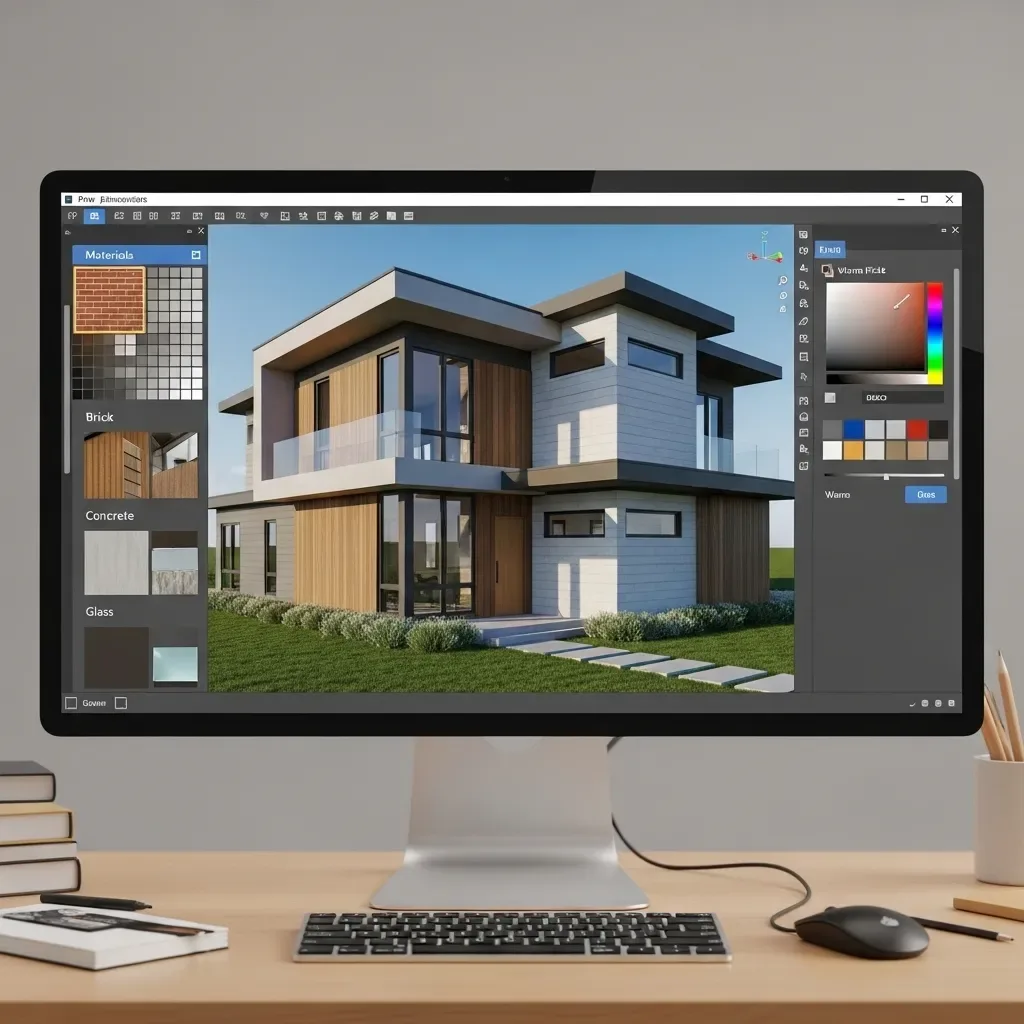
3D modelling addresses this by allowing materials to be evaluated in a simulated Thai environment before purchase. HappySmart AI Interior layers climate-aware material filtering on top of the visualisation, recommending finishes that have demonstrated performance in Thailand's conditions alongside their aesthetic qualities.
AI Interior: From Description to Photorealistic Simulation
HappySmart AI Interior uses mood-from-text technology — the client describes the desired atmosphere in plain Thai, such as "a bedroom that feels calm and natural, with warm wood tones and minimal clutter" — and the system generates a 3D model of that space with material and colour options that align with the described mood.
This technique eliminates the interpretation gap between what a homeowner imagines and what a designer understands — a gap that typically drives multiple revision rounds in conventional interior design engagements and inflates both time and cost.
Flooring Materials: Side-by-Side Comparison in Context
Flooring has an outsized impact on both atmosphere and long-term maintenance requirements. The 3D model allows direct comparison of the primary options in the Thai context: - Porcelain tile: Performs exceptionally in Thailand's humidity, easy to clean, and cool underfoot — advantages the model makes visible alongside aesthetic trade-offs. Tile size selection is clearly impactful; larger formats (90×90cm or 120×60cm) read very differently in the rendered space than standard 60×60cm. - Luxury Vinyl Plank (LVP): Wood appearance with moisture resistance; more economical than solid timber; well-suited to living and bedroom areas. The model reveals how different wood-grain patterns and tones read under Thai natural light. - Solid hardwood: Warm and premium, but requires consistent humidity management and periodic refinishing in Bangkok's climate. The model helps identify which species and finish (matte vs. satin) achieves the target aesthetic. - Micro-cement: A growing preference for Industrial and Wabi-Sabi aesthetics, highly durable but requiring consistent moisture sealant application in humid conditions.
Wall Colour: Working with Thai Light Conditions
Colour swatches are typically produced under controlled European lighting conditions that do not replicate the intensity and warmth of Bangkok's tropical sunlight. In the 3D model, wall colours can be evaluated under simulated Thai solar conditions — bright midday direct light, diffused afternoon light through low-e glazing, and warm evening artificial light — revealing how each shade will actually appear in the finished space.
Pure white tends to read as harsh and overexposed under direct Thai sunlight. Cream, warm stone, and warm grey tones typically read better in Bangkok's light. For bedrooms, cool sage green or muted blue-grey tones create a sense of lower temperature and calm — a psychologically useful quality in a consistently hot climate.
Integrating Smart Home Devices Into the Material Palette
In homes designed with smart home integration, material selection and device placement must be coordinated. HappySmart AI Interior embeds smart device positions — switches, cameras, sensors, speakers — directly into the 3D model, ensuring that in-wall smart switches are flush with the tile or paint line, security cameras are positioned to cover priority zones without visual dominance, and speaker grilles align with ceiling finishes. The system also connects to Thai material supplier catalogues with current pricing and lead times, enabling budget planning to remain accurate through the specification process.