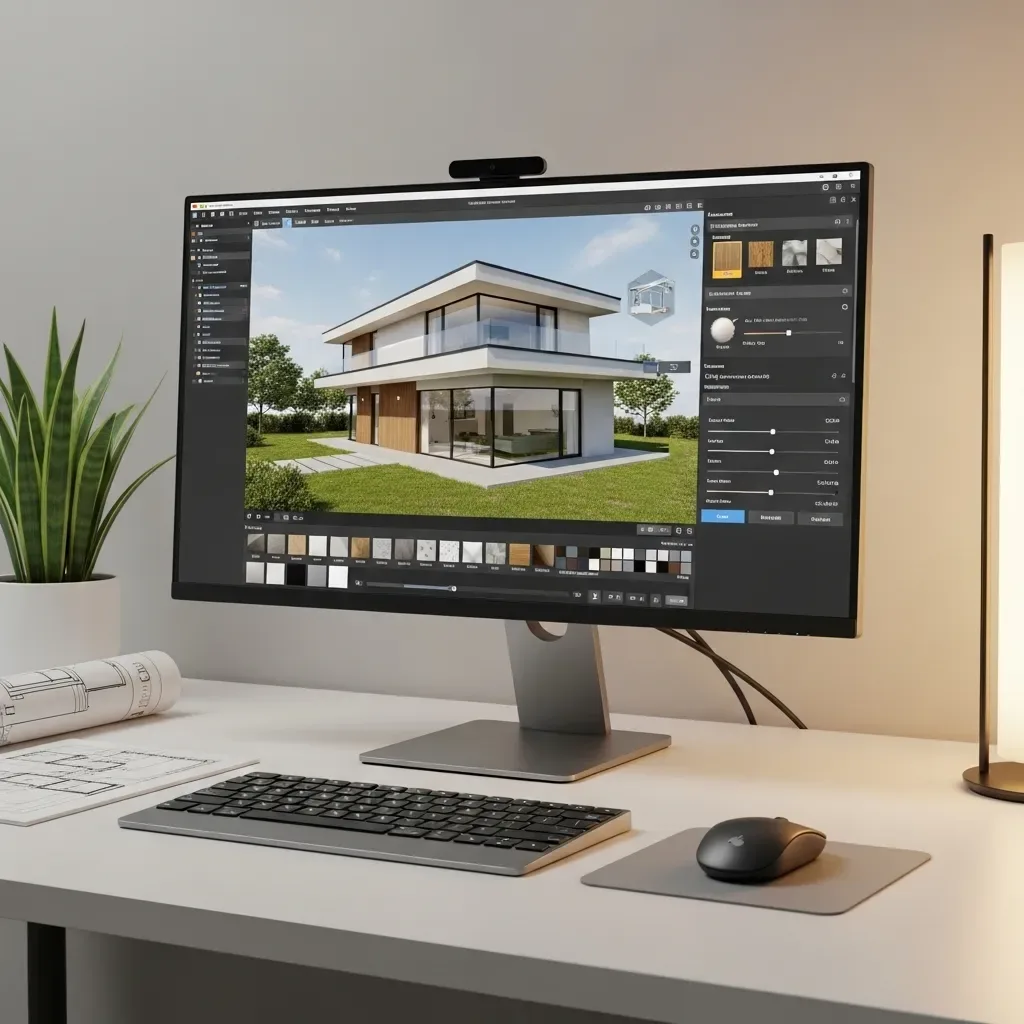
Thailand is located near the equator, meaning the sun passes nearly overhead throughout the year. Homes designed without considering sunlight direction will be significantly hotter than necessary, especially rooms facing west that receive harsh afternoon sun from 14:00 to 18:00. Using 3D simulation software before construction is an investment that pays back through reduced electricity bills.
Sun Path Simulation HappySmart’s AI Architect can simulate the Sun Path using the actual coordinates of the project site in Thailand, showing how sunlight falls on various building surfaces in each month — from Summer Solstice to Winter Solstice. This enables architects to design overhangs of precisely the right depth to shade afternoon sun while preserving desired natural light.
Wind Direction Analysis In Bangkok, prevailing winds blow from the south and southeast during summer and from the north during winter. Designing window and door openings aligned with the primary wind direction can significantly increase cross ventilation, reducing interior temperature by two to four degrees Celsius without air conditioning.
Thermal Mass Placement Positioning high Thermal Mass materials — such as concrete and stone — where they receive morning sunlight allows them to absorb heat during the day and release it slowly at night, keeping the home cooler during the hottest daytime hours. 3D simulation identifies the optimal positions for these materials.
Shade Tree Simulation The software can also simulate the effect of trees of various sizes planted at specified locations, showing exactly how much shading each tree provides across the building surface by month and time of day. This is valuable data for landscape design that integrates meaningfully with energy efficiency goals.
Smart Home Integration: Auto Curtain by Sun Position Simulation results can also directly inform Home Assistant Automations. For example, automatically closing west-facing motorized curtains at 13:00 to block afternoon sun, or automatically opening windows when wind speed is sufficient and outdoor temperature drops below 28 degrees Celsius — creating a Passive Cooling system that operates entirely on its own.
Energy Impact Homes designed with correct Sun Path and Wind Direction analysis consume 30 to 40% less energy for cooling compared to standard builds. This benefit is realized across the entire lifespan of the home, not just in the first year.