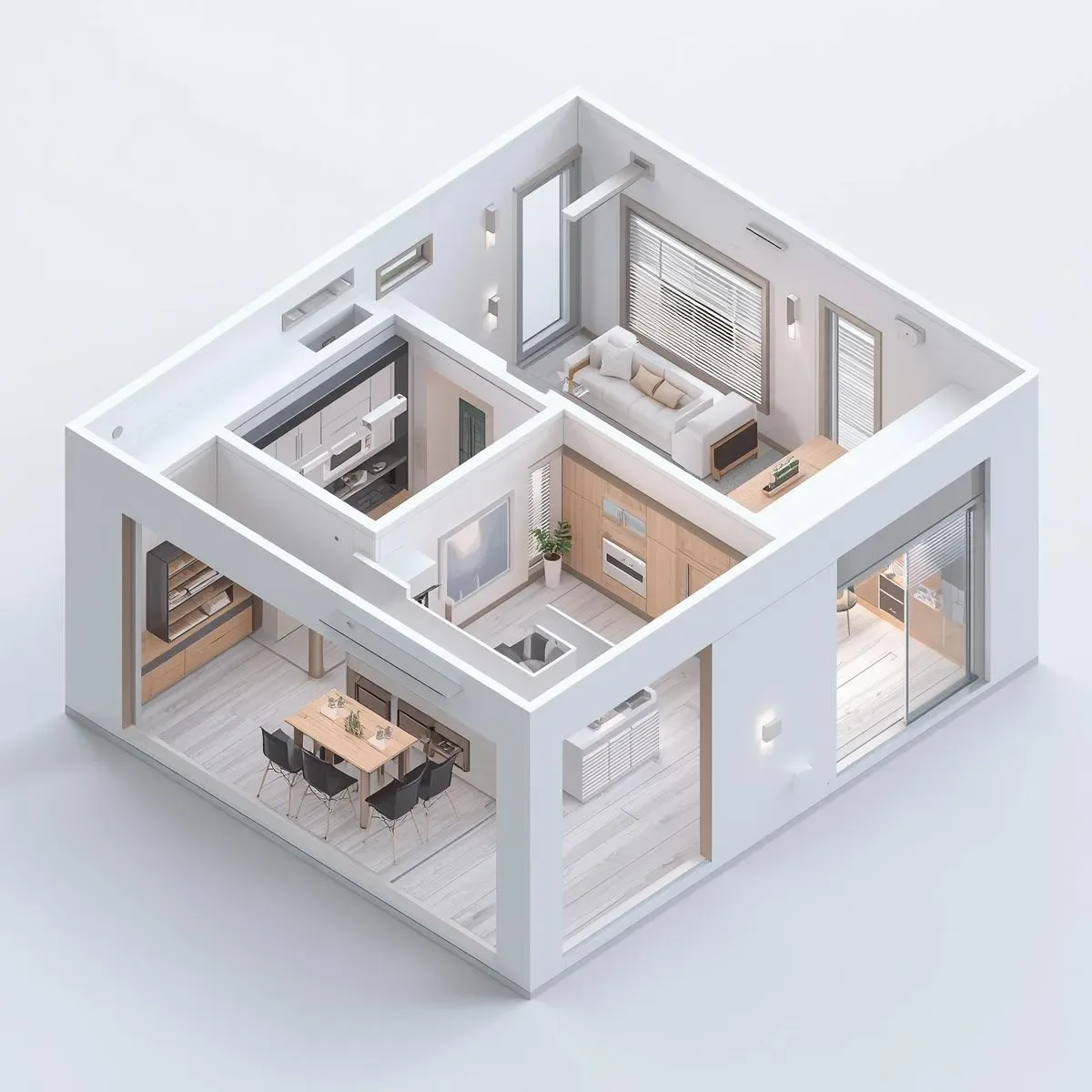
Good health depends not only on exercise and diet but on the environment occupied for 16–18 hours daily. Stanford Sleep Center research demonstrates that bedroom temperature alone significantly affects Stage 3–4 Deep Sleep duration. A Personalized Health Environment system uses IoT to connect wearable physiological data with home control systems, creating conditions that adapt in real time to each resident’s actual biological state.
HRV-to-HVAC Integration: Wearables such as Oura Ring, Garmin, or Apple Watch transmit Heart Rate Variability data via API to Home Assistant. High HRV (RMSSD over 50ms) indicates strong parasympathetic activity and sleep readiness—the system responds by lowering bedroom temperature to 20–22°C (the thermoneutral zone for deep sleep onset), extinguishing all lights, and adding minimal fan airflow for white noise. Low HRV (RMSSD below 30ms) signals physiological stress—the system responds with warm 2,700K light, activates the air purifier to reduce VOC and PM2.5 levels, and optionally plays Binaural Beats frequencies via Smart Speaker to support autonomic recovery.
Air Quality to Health Correlation: CO2 exceeding 800 ppm triggers the ERV (Energy Recovery Ventilator) to increase fresh air exchange, reducing CO2 below 600 ppm within 15 minutes—restoring cognitive sharpness and reducing morning headache risk. PM2.5 exceeding 12 μg/m³ activates the HEPA Air Purifier at full speed, closes motorized windows automatically, and notifies residents via LINE OA. TVOC exceeding 200 μg/m³ (common for 2–4 weeks after new furniture delivery) activates 24-hour continuous ventilation until readings normalize.
Sleep Stage Environmental Adaptation: when the wearable detects Deep Sleep (Stage 3), the HVAC drops one additional degree and enters Quiet Mode with minimum fan speed. During REM Sleep, temperature rises 0.5°C because REM physiology eliminates body thermoregulation. Thirty minutes before predicted wake time (calculated from wearable sleep cycle tracking), Dawn Simulation begins: HVAC returns to 24°C, Circadian Lighting starts at 3,000K and advances to 4,500K, and the bedroom curtains partially open.
In Smart Longevity applications, older adults experience progressive changes in sleep architecture: reduced Deep Sleep, increased REM fragmentation, and higher Wake After Sleep Onset (WASO). Precise environmental control can partially compensate for these changes. Research published in Nature and Science of Sleep (2022) demonstrates that temperature adaptation aligned with the circadian clock increases Slow Wave Sleep by 15–25% in older adults—a meaningful improvement in cognitive and cardiovascular health outcomes.