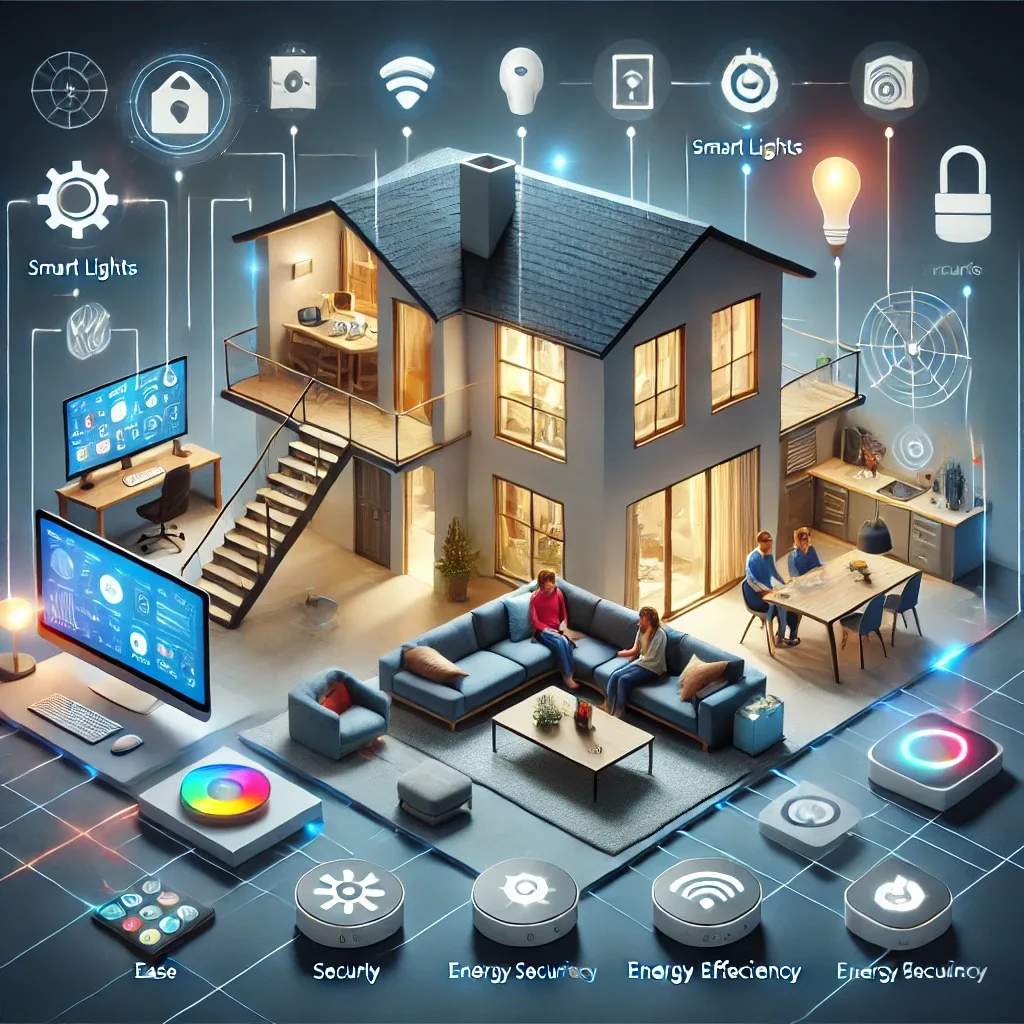
What Is a Smart Home System and How Does It Work?
A Smart Home System connects IoT devices, sensors, and automation software to intelligently manage your home. The leading platform today is Home Assistant running on Raspberry Pi 5, processing everything locally without cloud dependency — making it more secure and reliable than cloud-based alternatives.
Core components include a central hub (Home Assistant), environmental sensors (temperature, humidity, CO2, PM2.5, VOC), control devices (lighting, air conditioning, ERV, cameras, locks), and automation rules that respond automatically to defined conditions.
Reason 1: Measurably Better Health
Smart Home systems deliver real health benefits through automated air quality management. When CO2 exceeds 800 ppm, the system activates the ERV automatically. When outdoor PM2.5 is high, the air purifier runs at full capacity. When humidity exceeds 70%RH, the dehumidifier switches on.
Measured outcomes from Bangkok users include 40-60% reduction in allergy and asthma symptoms, 30% improvement in sleep quality, and bedroom CO2 maintained between 400-700 ppm throughout the night.
Reason 2: Professional-Grade Security
Smart cameras like the Reolink Duo 2 POE record 4K footage 24 hours a day and send motion alerts via Home Assistant to LINE within 5 seconds. Smart locks such as the Aqara U200 or August Lock allow remote locking and unlocking, provide a log of who entered and when, and support temporary codes for housekeepers or repair technicians.
Gas and smoke sensors alert immediately when abnormal readings are detected, preventing accidents before they escalate.
Reason 3: Significant Energy Savings
Smart thermostat control with devices like the Ecobee Smart Thermostat Premium saves 20-30% on electricity by adjusting temperature to actual occupancy, avoiding cooling empty rooms, and pre-cooling 30 minutes before arrival. Smart Lighting with Philips Hue or IKEA TRADFRI reduces lighting energy by 15-25% through automatic off when rooms are empty and daylight-responsive dimming.
Reason 4: Everyday Convenience
An example automated morning routine: at 06:00, bedroom lights gradually rise from 0 to 30% (3,000K) simulating dawn; the ERV purges overnight CO2; the coffee maker starts; the air conditioner adjusts to 25°C. At 06:30, the bathroom light activates and Spotify begins playing. Users report saving 30-45 minutes per day previously spent manually checking and adjusting home devices.
Reason 5: Better Data for Better Decisions
A Grafana + InfluxDB dashboard gives you real-time visibility into every room's air quality, identifies which air conditioner is drawing abnormal power, and delivers weekly LINE Notify summaries. Data-driven insights lead to smarter home improvement decisions.
Reason 6: Increased Property Value
Bangkok real estate surveys show smart home-equipped properties sell for 5-15% above comparable homes in the same area. New-generation buyers increasingly value technology integration, security systems, and indoor air quality — making smart home upgrades a genuine financial asset.