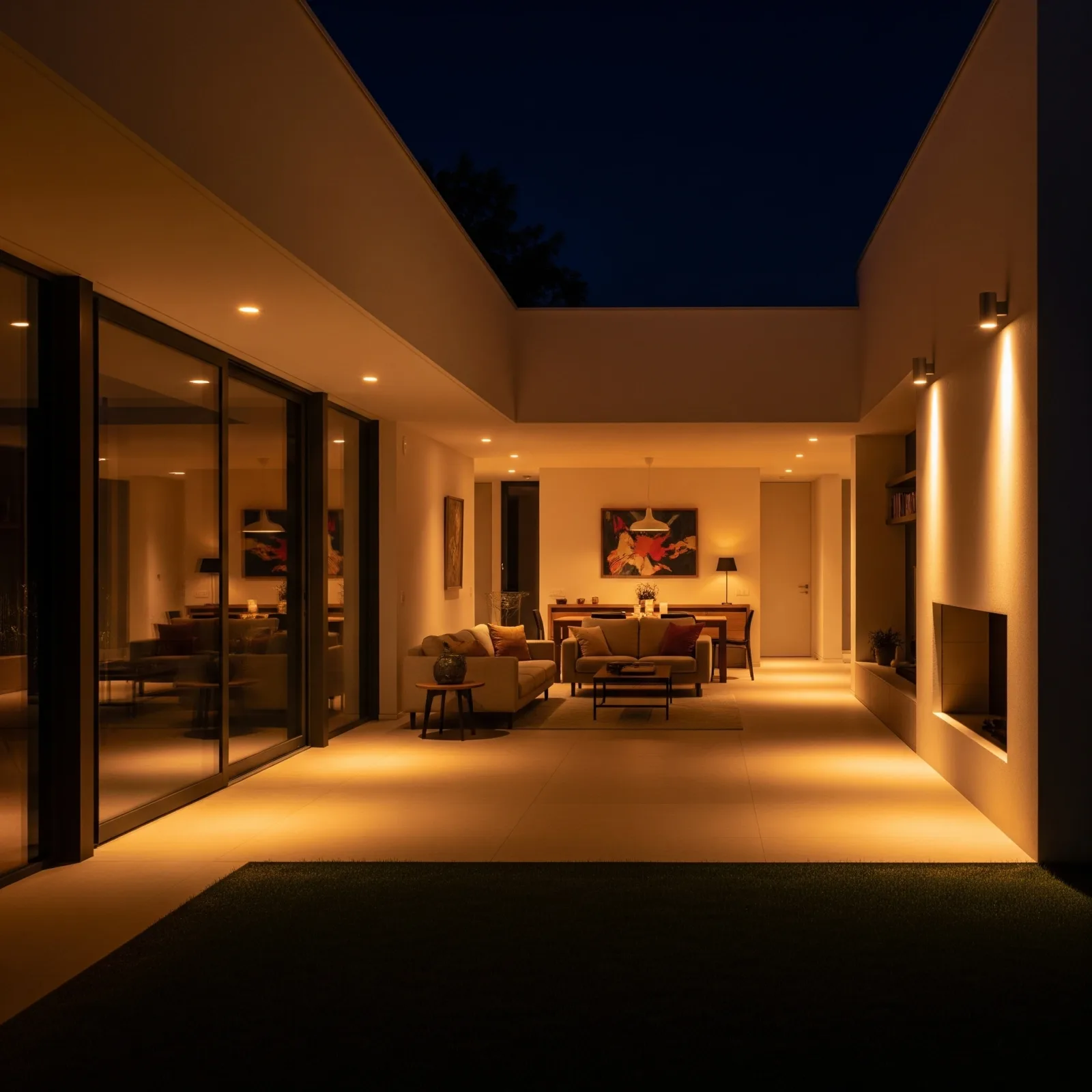
Why Nighttime Guide Lighting Is Non-Negotiable
As Thailand enters a full aging society, fall accidents during nighttime movement remain one of the most underestimated household risks. A single trip from bedroom to bathroom in darkness can cause life-altering injuries. Properly designed guide lighting is therefore not a comfort upgrade — it is a prevention system.
Types of Smart Guide Lighting HappySmart Recommends
The most effective setups combine Warm White LED strips (2700–3000K) installed along floor edges or under beds with PIR or mmWave motion sensors. Lights activate only when movement is detected and turn off automatically, saving energy without disturbing sleep.
Popular options include floor-edge LED strips along hallways, low-lumen wall lights at staircases, under-bed lights triggered when feet touch the floor, and plug-in nightlights with built-in ambient sensors. Each serves a different use case; correct design maps to residents' actual movement paths.
Home Assistant + Raspberry Pi 5 as the Control Core
Integrating guide lighting with Home Assistant running on Raspberry Pi 5 enables sophisticated automations: activate only between 22:00 and 06:00, dim brightness by time of night, pre-light bathroom when its door sensor detects opening, or push a mobile notification if an elderly person leaves their room at an unusual hour.
The system supports Zigbee, Z-Wave, and Matter protocols, allowing multi-brand device selection without vendor lock-in. HappySmart engineers design custom Automation rules tailored to each home's floor plan.
Real Installation Cases from HappySmart
At Khun Wichai's Bangkok single-story home (200 sqm), LED strips were installed along both bedroom-to-bathroom corridors with two mmWave sensors connected to Home Assistant on Raspberry Pi 5. His 78-year-old mother can now use the bathroom safely every night without searching for switches in the dark.
At Khun Piya's Chiang Mai condo (45 sqm), under-bed lighting combined with a bathroom door sensor automatically brightens the bathroom to 30% after 22:00 — eliminating jarring bright light that would otherwise disrupt return sleep.
Selection and Installation Tips
Always choose Warm White to avoid suppressing melatonin, which is critical for sleep quality. Target 50–150 lux at floor level along walkways. Ensure sensors provide adequate field-of-view coverage and set a motion timeout no longer than 3 minutes. When using Zigbee, deploy a hub capable of supporting at least 50 nodes to accommodate future expansion.