Thailand's Aging Society Demands Home Adaptation
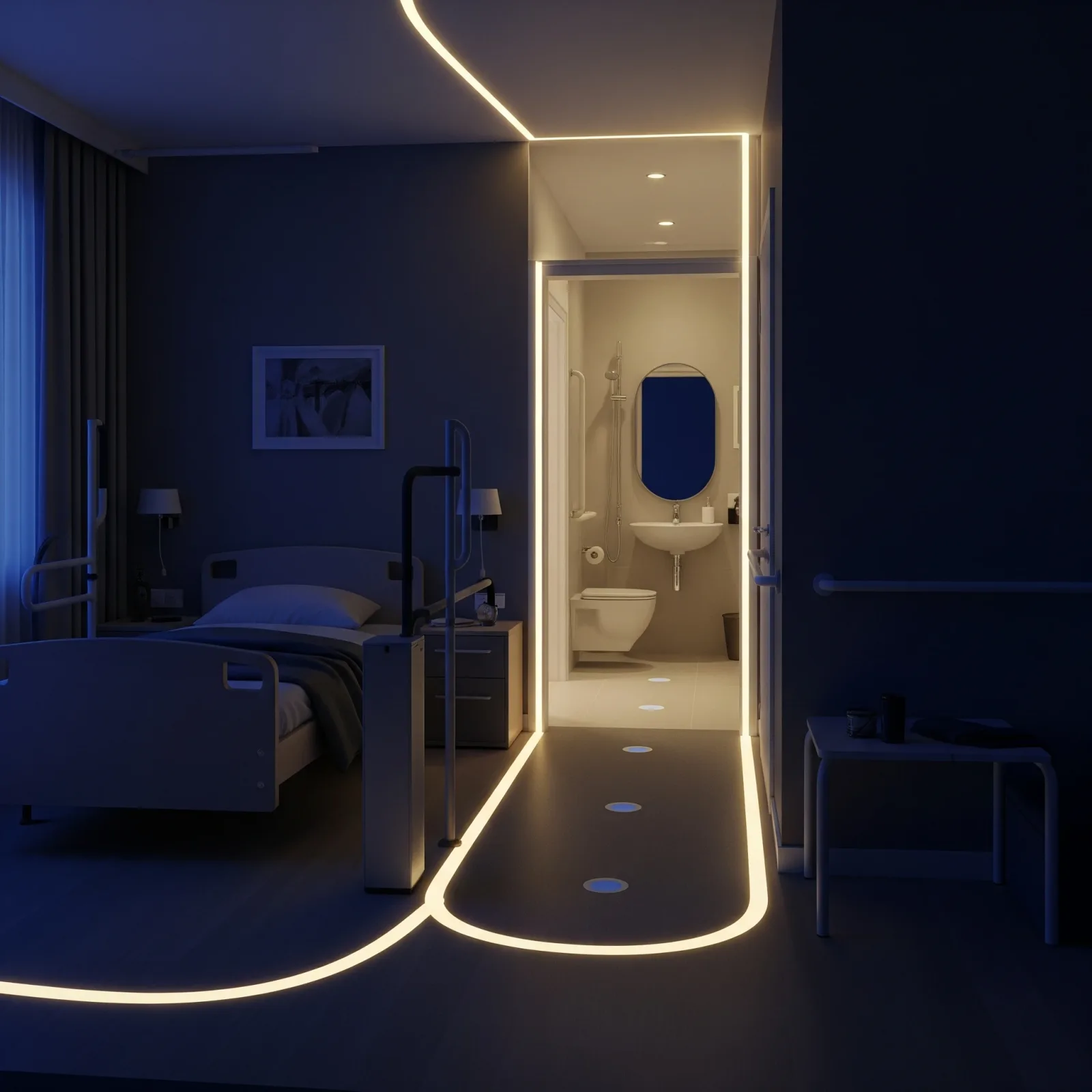
As Thailand fully enters an aging society, home design can no longer prioritize aesthetics alone. Elderly residents experiencing vision problems such as cataracts or glaucoma, or muscle degradation affecting balance, face high fall risk when walking in darkness — particularly on the most frequently used nighttime route: bedroom to bathroom.
The Night-Time Challenges Elderly Residents Face
The most common problem is reduced vision in low light conditions, making it impossible to accurately judge distances and surfaces. Sudden standing can cause temporary blood pressure drops (orthostatic hypotension), resulting in dizziness and increased fall risk. Lighting that gradually brightens rather than switching on instantly allows eyes and the body to adjust more effectively.
Types of Navigation Lighting for Elderly Residents
Floor-edge LED strips along hallways suit corridors between rooms and staircases, providing low-level illumination that shows the floor clearly without glare. Low-lumen wall lights mounted 30–50 cm above the floor highlight floor-level obstacles. Under-bed lights triggered when feet touch the floor are highly effective for nighttime rising. Plug-in smart nightlights with ambient sensors suit bathrooms and kitchens.
Home Assistant + mmWave Sensor: The Most Appropriate Technology
Connecting guide lighting to Home Assistant on Raspberry Pi 5 via mmWave sensors creates a far smarter system than basic timers. mmWave detects movement in complete darkness, records no images or audio, works in bathrooms, allows brightness to vary by time of night, and links to alert systems when abnormal behavior is detected.
An effective example Automation: if mmWave detects movement in a bedroom between 23:00 and 06:00, activate hallway LED strips at 15% brightness to guide toward the bathroom, then turn off automatically after 5 minutes of no movement.
Why Warm White, Not Cool White
Cool White light (6500K) stimulates alertness and suppresses melatonin, making it difficult to return to sleep after a bathroom visit. Warm White (2700–3000K) does not disrupt the sleep cycle, allowing elderly residents to return to sleep quickly. Target 50–100 lux at floor level along walking paths.
HappySmart: Expert in Homes for the Elderly
HappySmart has extensive experience installing smart home systems for elderly residents in single-family homes, condos, and housing developments. Their team begins with a physical site survey and resident interviews to design a system that precisely matches each family's needs and lifestyle patterns.