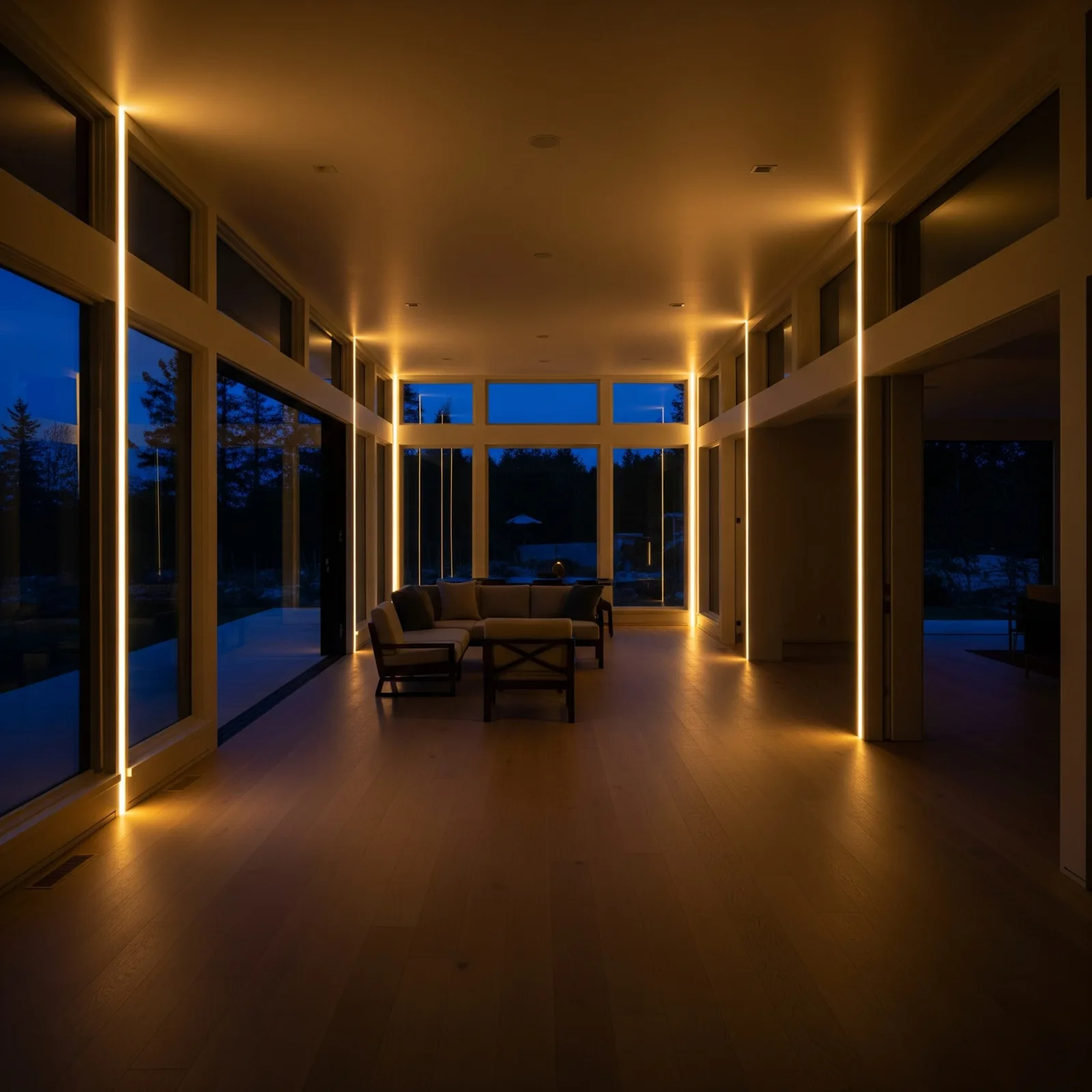
Safety Starts from the Very First Light
When people think of Smart Homes, they often imagine voice-controlled lights or remotely viewed security cameras. But what genuinely protects lives in daily routines is simpler: the right light in the right place at the right time, especially when the body is not fully alert in the middle of the night.
Ordinary Home vs Smart Home: The Night Lighting Difference
In an ordinary home, a nighttime bathroom trip means groping for a switch in darkness, being hit with bright light immediately, then struggling to return to sleep because eyes have been stimulated. In a correctly designed smart home, Warm White LED strips at floor level glow softly before feet even touch the ground, guide the resident gently to the bathroom, then fade when they return to bed — no switch touch required throughout.
The System HappySmart Uses in Modern Smart Homes
The system has three core components: strategically placed Warm White LED strips, mmWave or PIR sensors for accurate movement detection, and Home Assistant running on Raspberry Pi 5 as the central control brain. Automation configurations make lights active only during set hours, dim to appropriate nighttime levels, and integrate with other smart devices throughout the home.
Real Case: The Somboon Family's Home in Chiang Mai
A two-story 180 sqm home in Chiang Mai housing three generations — grandparents, parents, and two daughters. HappySmart installed LED floor-edge strips along the entire staircase and second-floor hallway with three mmWave sensors connected to Home Assistant. Lights activate at 20% brightness after 22:00 on movement, and jump to 100% if abnormal elderly movement is detected. The system also alerts the son's smartphone in Bangkok if grandfather has not returned to his room within 15 minutes.
Real Case: Khun Manas's Bangkok Condo
A 12th-floor 55 sqm condo occupied by Khun Manas, age 65, living alone after retirement. HappySmart installed under-bed lighting triggered when feet touch the floor, guide strips along the bathroom corridor, and a Door Sensor at the bathroom. When the bathroom door opens, room lights brighten automatically to 40%. The result: Khun Manas reports feeling significantly safer and more confident living independently.
Where to Install Guide Lighting in a Smart Home
Priority locations are the bedroom-to-bathroom path, all sides of every bed, staircases and landings, floor-level changes and door thresholds, and kitchen areas for elderly residents who may rise for water at night. Good design always begins with surveying residents' actual movement routes before placing any device.