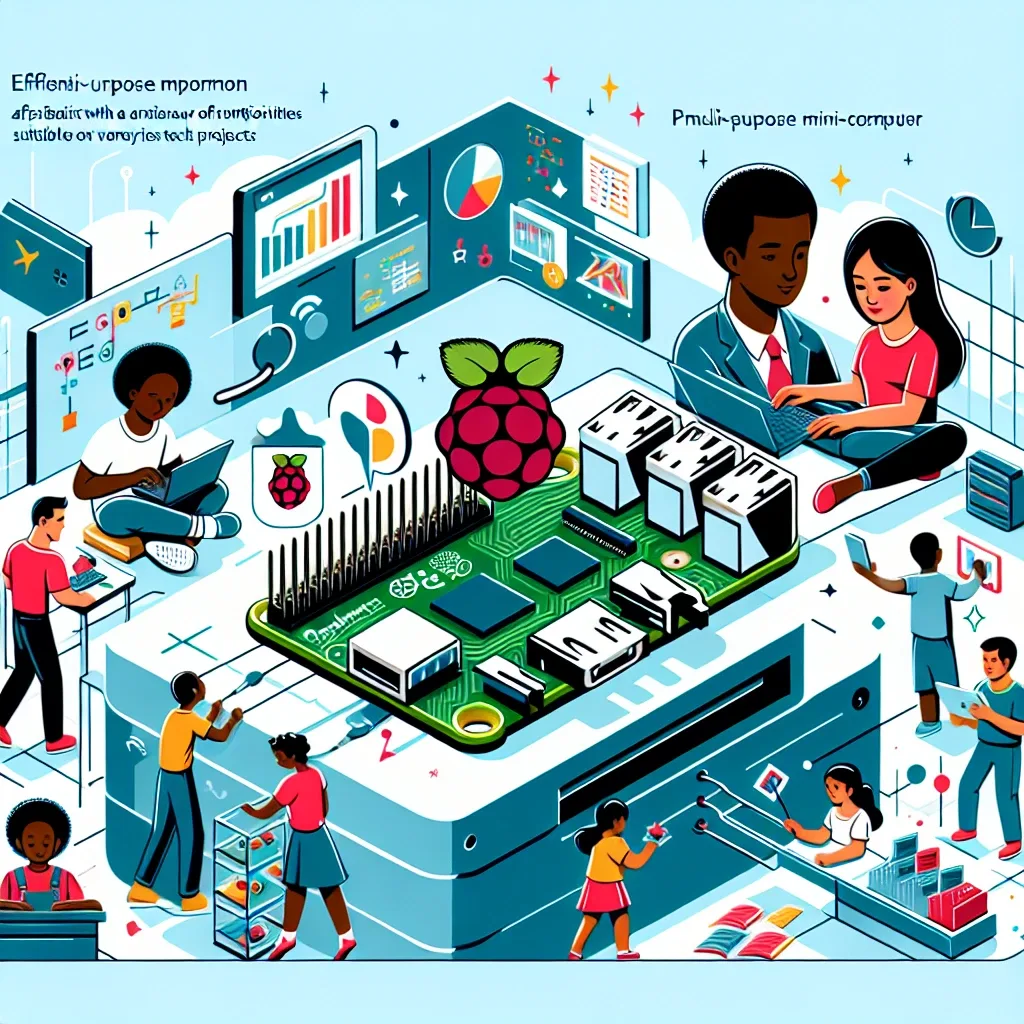
What Is Raspberry Pi 5 and Why Does It Matter
Raspberry Pi 5 is a single-board computer built around a Cortex-A76 quad-core processor running at up to 2.4 GHz, with RAM options up to 8 GB and a PCIe 2.0 interface that opens the door to hardware expansion. In Thailand, the board retails between ฿3,500 and ฿4,500 depending on RAM configuration and supplier.
For smart home purposes, the real story is what this hardware can run: Home Assistant OS, the world's most widely deployed open-source smart home platform, with monthly releases and a developer community numbering in the millions.
Home Assistant OS and Why It Leads the Field
Home Assistant OS is an operating system purpose-built for smart home orchestration. It ships with native integrations for more than 3,000 brands and platforms — Tuya, Mi Home, Philips Hue, EZVIZ, TP-Link Tapo, Apple HomeKit, and Google Home among them — each installable in a few clicks from the built-in integration store.
The platform handles multiple wireless protocols simultaneously. Add a Zigbee USB dongle such as a Sonoff Zigbee 3.0 or HUSBZB-1 and you gain full Zigbee support alongside Z-Wave, Matter/Thread 1.4, and standard Wi-Fi devices — all managed from a single dashboard without touching separate apps.
Comparing Raspberry Pi 5 Against Commercial Hubs
The comparison with commercial hubs is straightforward. A SmartThings Hub costs roughly ฿3,500 but depends entirely on Samsung's cloud infrastructure and supports a narrower protocol set. An Amazon Echo Hub at around ฿4,000 locks users into the Alexa ecosystem with limited escape routes.
A Raspberry Pi 5 4 GB board, a 64 GB Class 10 MicroSD card, a 5V/3A USB-C power supply, and an active-cooling case total approximately ฿5,000-฿5,500. What that budget buys is full local control: all automation logic and data remain on-site, no cloud dependency, and every configuration detail is open to adjustment. That trade-off is why HappySmart recommends Raspberry Pi 5 as the primary brain for complex installations — multi-protocol setups, mixed Zigbee and Wi-Fi environments, and projects requiring automation logic that commercial hubs cannot express.
Capabilities Beyond Commercial Hubs
Home Assistant on Raspberry Pi 5 supports automation of essentially unlimited complexity. A few practical examples: shut down all air conditioners when a door or window sensor stays open for more than five minutes; send a LINE notification when an EZVIZ camera detects motion inside a defined zone; adjust all lighting colour temperature on a circadian schedule without any manual input.
The add-on ecosystem extends this further. Zigbee2MQTT enables cross-brand Zigbee interoperability with device coverage broader than any commercial hub. ESPHome allows cost-effective custom sensor builds. Matter 1.4 support is native, meaning devices from Apple, Google, and Amazon ecosystems can coexist on the same installation without bridges or workarounds.
Professional Installation by HappySmart
Configuring Raspberry Pi 5 for long-term stability requires attention to network segmentation, automated backup schedules, and integration conflict management — details that matter in a residential environment where reliability is non-negotiable. HappySmart handles the full setup and configuration for residences and luxury property developments across Bangkok, Hua Hin, and Khao Yai.