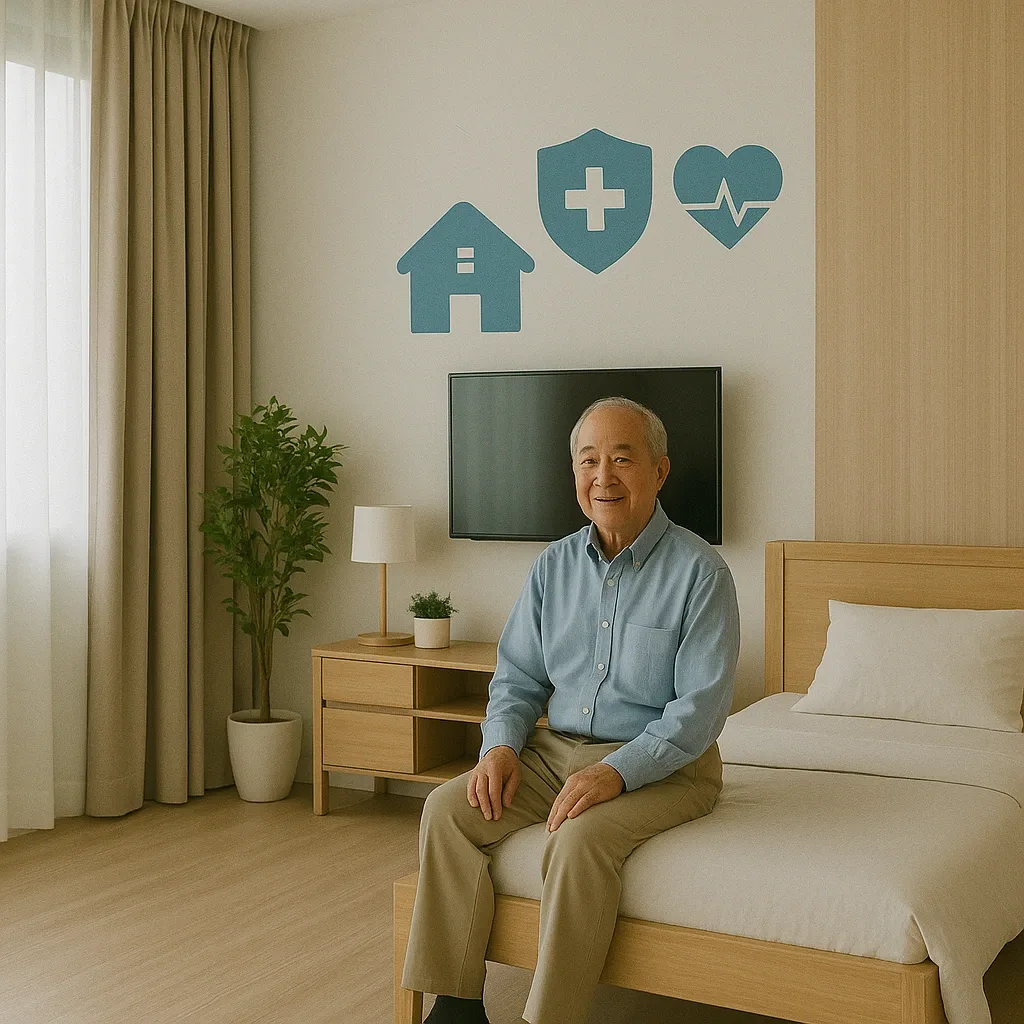
What Is Wellness Design and Why Does It Matter for the Elderly?
Wellness Design applies scientific principles to residential spaces in order to promote the physical, mental, and social health of occupants. For elderly users, the WELL Building Standard identifies three most critical factors in the bedroom: lighting quality, air quality, and furniture ergonomics. Research from the National Sleep Foundation found that elderly residents in wellness-designed rooms showed 34% improvement in sleep quality and 28% fewer nighttime awakenings.
Circadian Lighting: The Most Overlooked Factor
The circadian rhythm weakens progressively with age, reducing melatonin production and causing sleep difficulties. Daytime light is the strongest circadian stimulus available. A proper circadian lighting system adjusts color temperature automatically: Warm White 2,700K from 6:00–9:00 AM for a gentle morning awakening, Cool White 5,000–6,500K from 10:00 AM–4:00 PM for alertness and concentration, then a gradual return to 2,700K from 5:00–8:00 PM to stimulate melatonin production ahead of sleep. This is configured in Home Assistant via the Adaptive Lighting integration, which calculates color temperature automatically based on time and solar position. Tunable White LED options include Philips Hue White Ambiance and IKEA Tradfri at 500–1,500 baht per bulb.
Air Quality: Essential Sensors
Closed Bangkok bedrooms running air conditioning with sealed windows can easily accumulate CO₂ above 1,000 ppm overnight. CO₂ exceeding 1,500 ppm degrades sleep quality and causes the resident to wake feeling unrefreshed. Lawrence Berkeley National Laboratory research found that every 500 ppm increase in CO₂ reduces cognitive performance by 11%. Recommended sensors: the Aranet4 (NDIR, Bluetooth) at 4,500–5,500 baht, or the Sensirion SCD40 module for DIY integration at 800–1,200 baht via ESPHome. Automation: above 800 ppm, activate the exhaust fan; above 1,000 ppm, open the window automatically if a smart actuator is fitted and send a LINE Notify alert.
Ergonomic Furniture: The Numbers That Matter
Bed height is a critical factor in how easily an elderly person can rise. Geriatric ergonomics research specifies 45–50 cm from floor to mattress surface as the optimal seated height for elderly users. Beds below 40 cm make standing up difficult and increase fall risk; beds above 55 cm make getting into bed difficult and increase the risk of falling off. An electric adjustable bed with height range 30–70 cm (15,000–45,000 baht) is the ideal solution. The bedside table should be level with the seated bed height so items can be reached without bending.
VOC-Reducing Plants and Biophilic Elements
NASA’s Clean Air Study identified the highest-performing indoor VOC-absorbing plants: Boston Fern (Nephrolepis exaltata) for formaldehyde and xylene, Peace Lily (Spathiphyllum) for benzene and ammonia, and Snake Plant (Sansevieria) for nighttime oxygen production — particularly suitable for bedrooms. Bangkok’s warm, humid climate suits all three plants and simplifies their care. One plant per approximately 10 square meters is recommended for meaningful air filtration effect.
Conclusion: The Complete Wellness Room for Thai Elderly
A complete elderly wellness bedroom for the Thai context combines automatic circadian lighting configured through Home Assistant, an NDIR CO₂ sensor linked to ventilation automation, an adjustable bed at 45–50 cm seated height, and two to three VOC-reducing plants. Total upgrade cost to wellness standard falls between approximately 30,000–60,000 baht depending on bed and lighting quality selected.