5 Daily Health Rituals That Smart Home Makes Effortlessly Consistent
The Wellness Home concept for elderly residents is not about filling a house with expensive medical equipment. It is about designing daily routines that actively support physical, mental, and social health — with Smart Home technology as the invisible infrastructure that makes these rituals happen automatically, reducing the cognitive load of remembering, and eliminating the risk of skipping critical steps.
Ritual 1: Morning Health Check — Measure Before the Day Begins
At 06:30–07:00, Circadian Lighting gradually increases from 50 Lux to 300 Lux at 4000K, triggering the natural Cortisol Morning Response instead of a jarring alarm. A Bedside Smart Display then prompts the morning health checklist: blood pressure measurement, weight check, and SpO2 reading via a Bluetooth Pulse Oximeter connected to Home Assistant.
All readings are logged automatically to a family dashboard. If values are abnormal — blood pressure above 140/90 mmHg or SpO2 below 94% — the system immediately sends a LINE Notify alert to family members including the exact readings. This 5–7 minute morning ritual creates longitudinal health data that is invaluable for treating physicians.
Ritual 2: Medication Adherence — Never Miss, Never Double-Dose
Over 70% of Thai elderly have chronic conditions requiring continuous medication. Common failure modes include missed doses, forgetting whether a dose was taken, or self-discontinuing when feeling better. Wellness Home addresses this with a Smart Medication Dispenser — programmable for precise timing, with audible alerts and tamper-detection logging.
Connected to Home Assistant via Zigbee, units range from 3,500–8,000 THB. Premium models photograph dispensed medication and send confirmation images to family. For elderly managing multiple medications, Smart Dispensers reduce non-adherence rates from 40% to below 10%, based on studies of independently-living elderly populations.
Ritual 3: Gentle Movement — Prompt Every 45 Minutes
Sitting still for more than 2 hours increases Deep Vein Thrombosis risk and reduces cerebral blood flow in elderly individuals. Wellness Home uses mmWave Sensors to detect prolonged inactivity and plays a gentle musical cue through a Smart Speaker, while a TV prompt displays 3 simple stretch exercises, 10 wrist rotations, and 2 laps around the living room.
The system is designed as a Gentle Nudge rather than a command. If the elderly resident does not respond within 10 minutes, family members receive a notification — which typically signals the person is asleep or may need assistance.
Ritual 4: Nutrition and Hydration Monitoring
Bangkok averages 30–35°C year-round, yet elderly individuals experience 20–30% reduced thirst sensation due to age-related Osmoreceptor decline — making silent dehydration a significant risk. Wellness Home includes a Bluetooth-connected Smart Water Bottle tracking daily intake against a 1.5–2 litre target.
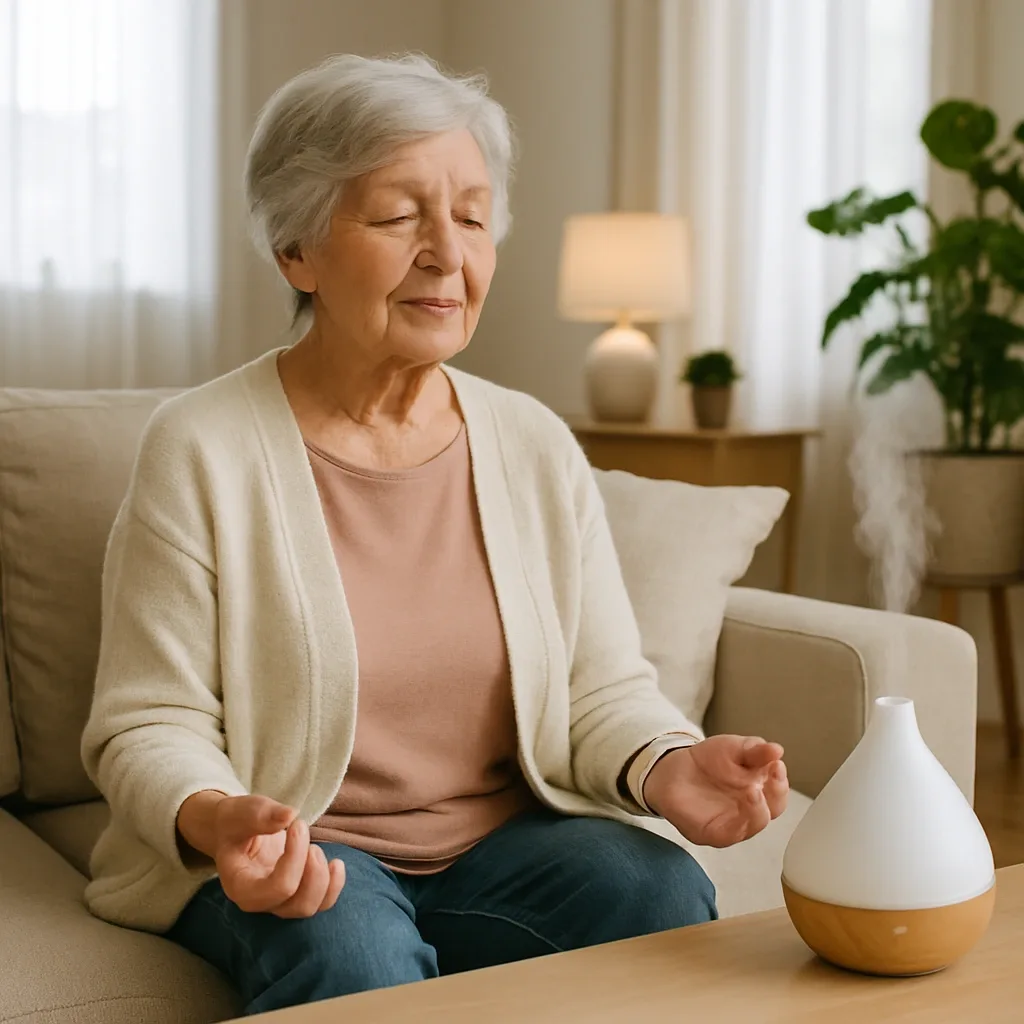
If hydration falls below 50% of the daily goal by noon, a Smart Speaker delivers a soft reminder. Combined with SHT31 Humidity Sensors that trigger a humidifier when indoor humidity drops below 45%, the system addresses dehydration through both intake and ambient environment management.
Ritual 5: Evening Wind-Down — Preparing Brain and Body for Sleep
Two hours before the scheduled bedtime, Circadian Lighting automatically shifts from 4000K to 2700K and dims from 300 Lux to 50 Lux to stimulate natural Melatonin production. The TV switches to Night Filter mode reducing Blue Light, and the bedroom thermostat adjusts to 25–26°C.
If the elderly resident continues watching TV past midnight, the system delivers a gentle audio prompt without forcing shutdown, while logging the Sleep Pattern. If late nights extend beyond 3 consecutive evenings, family members are notified to investigate potential causes: pain, anxiety, or a sleep disorder requiring professional care. The Wellness Home philosophy is not control — it is a Supportive Environment where self-care becomes natural, easy, and consistent every single day.