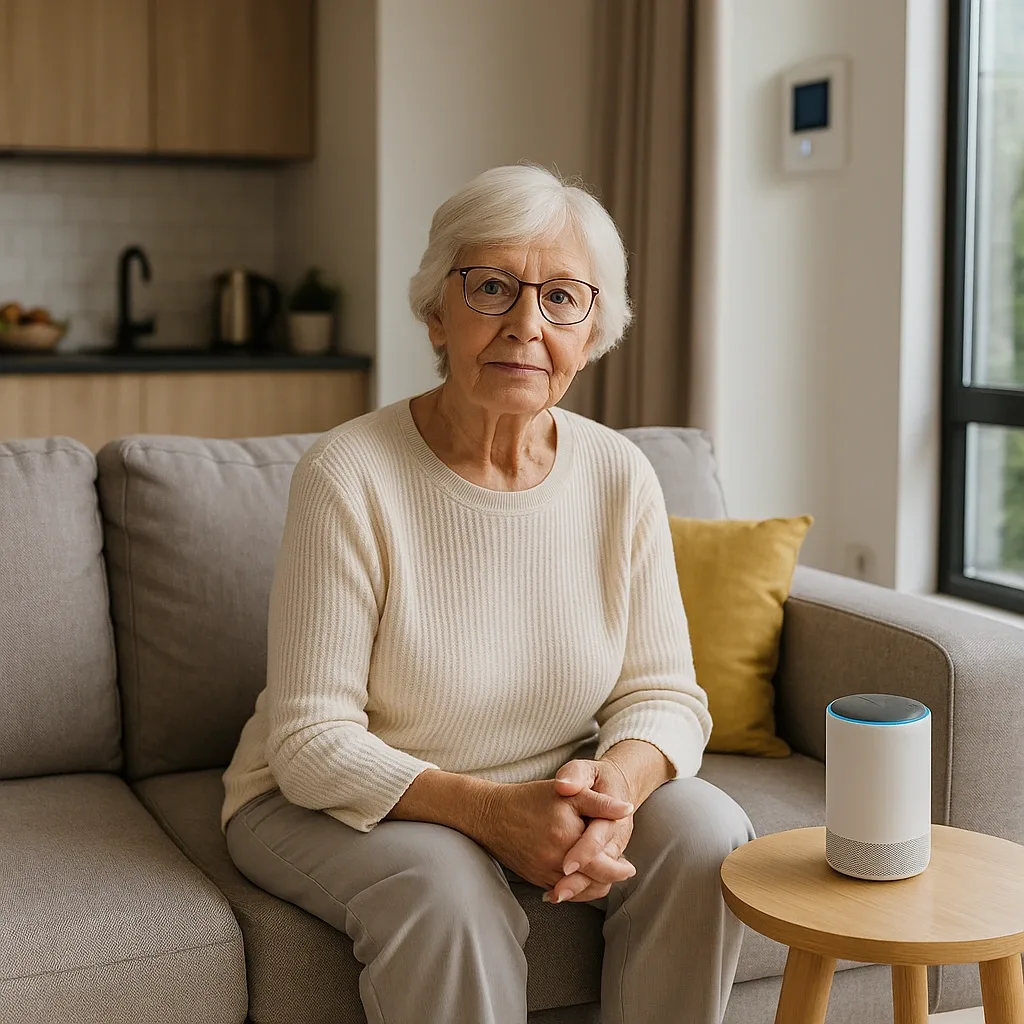
Why Night-Time Is the Highest-Risk Period for Elderly Living Alone
Mortality statistics for elderly individuals living alone indicate that over 60% of emergency events without timely assistance occur between 22:00 and 06:00. The reasons: family members are asleep with phones silenced, and elderly residents themselves are in a semi-wakeful state where decision-making is slower than normal. A Night Safety system must be designed specifically for 4 distinct nighttime risk categories.
Risk 1: Falls During Nighttime Bathroom Trips
Elderly individuals wake to use the bathroom an average of 1–3 times per night (Nocturia). Completely dark corridors, the rapid transition from lying to standing (Orthostatic Hypotension), and smooth flooring all make these nighttime trips significantly hazardous.
Night Safety system: the bedroom mmWave detects when the resident rises from bed — Smart Night Light Path activates automatically at 2700K, 30 Lux along the entire corridor from bedroom to bathroom. Bright enough to navigate safely, not bright enough to fully wake or cause eye strain. Lights switch off automatically once the resident returns and the mmWave confirms they are back in bed. If the resident does not return from the bathroom within 20 minutes and bathroom mmWave detects no normal movement, the system alerts family immediately.
Risk 2: Sleep Apnea and Abnormal Breathing During Sleep
30–40% of elderly individuals have some degree of Sleep Apnea, which in severe cases can lead to oxygen deprivation during sleep. A mmWave 60GHz Sensor mounted on the bedroom ceiling can monitor Breathing Rate and Heart Rate without any wearable, by analyzing micro-vibrations of the body surface. If Breathing Rate falls below 8 breaths per minute, or breathing pauses exceed 10 seconds repeatedly, the system first delivers a Soft Alarm to gently rouse the resident. If no response within 2 minutes, it immediately alerts family members. This is not a medical diagnosis — it is an Early Warning that may save a life during a night of more severe apnea than usual.
Risk 3: Unusual Late-Night Exits
Nighttime Wandering — exiting the home between 23:00 and 03:00 — is an early indicator of Dementia or Sundowning Syndrome. Elderly residents experiencing Confusion may open the door and go outside without knowing what they are doing.
Night Safety: Smart Lock logs every door opening. If the door opens between 22:00 and 06:00, the system sends an immediate alert with a Video Doorbell snapshot of whoever is leaving. Family members can review and remotely lock the door from their phone if necessary. A Motion Sensor near the exit also triggers a gentle audio reminder: "It is raining tonight — please stay inside."
Risk 4: House Fire During Sleep
Deep sleep prevents elderly residents from hearing standalone smoke alarm alerts. Zigbee Smoke Detectors integrated with Home Assistant activate every speaker in the house simultaneously — including the bedroom Smart Speaker — and turn on the bedroom lights at full brightness to guarantee the resident wakes. LINE Notify alerts family concurrently. The system also automatically unlocks the front door upon smoke detection so the elderly resident can exit without needing a code, and to enable emergency services immediate entry.
Night Safety Package: Budget and Installation
Full Night Safety Package for 1 bedroom + bathroom + corridor: mmWave bedroom 5,500 + mmWave bathroom 5,500 + Smart Night Lights (4 points) 2,400 + Zigbee Smoke Detector 1,800 + Smart Lock 6,000 + UPS for Hub 2,500 = 23,700 THB total — covering all 4 nighttime risk categories comprehensively.