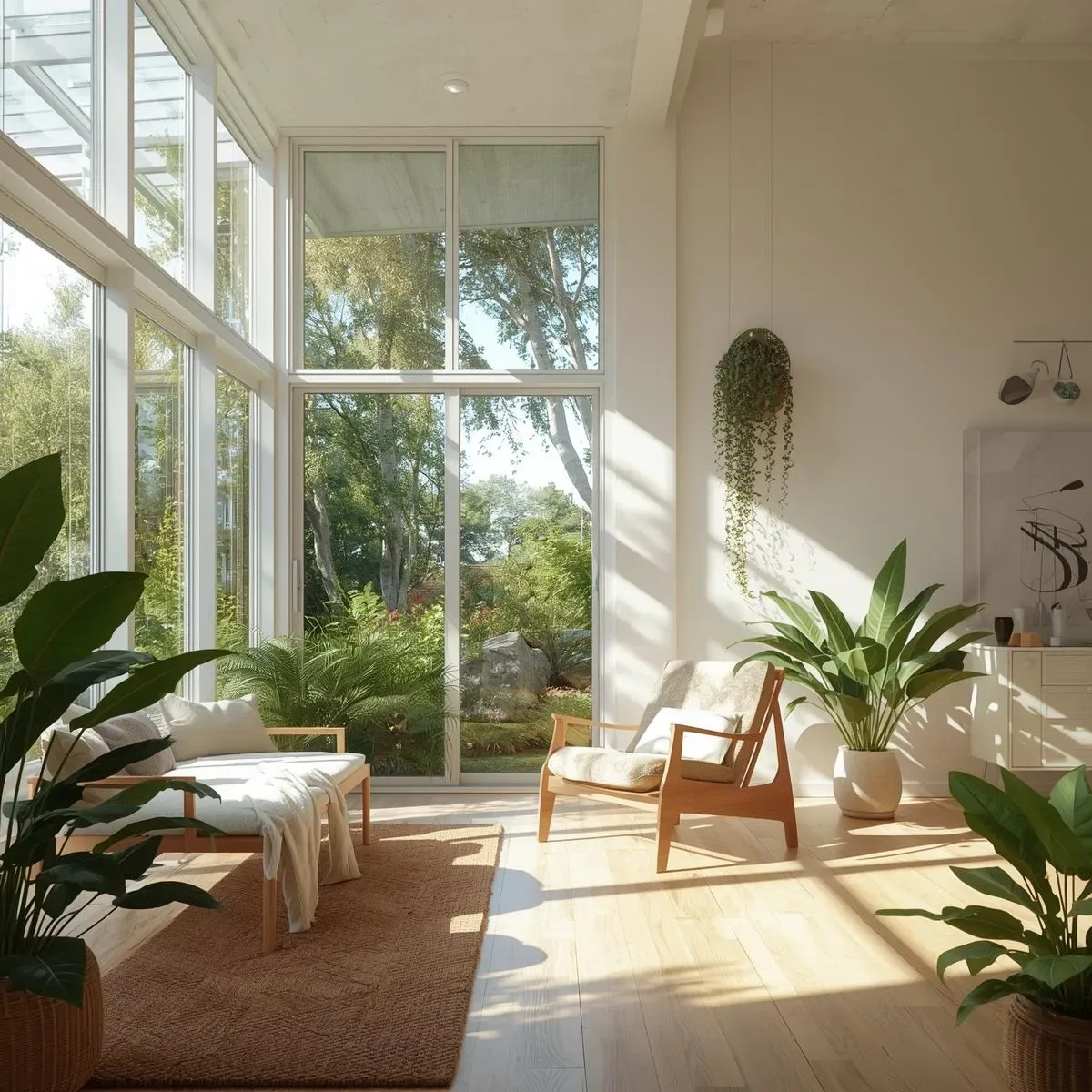
Biophilic Design is not decoration with plants — it is an architectural approach that integrates living systems into the building’s operational fabric: microclimate regulation, air purification, acoustic dampening, and occupant mental wellbeing support. Combined with Smart Energy Management, it creates homes that are sustainable in both environmental and economic terms.
Green Wall: Intelligent Living Wall Systems
Green walls install as 0.5×0.5m modules, each containing growing medium (perlite and coconut coir), drip irrigation, and an IoT soil moisture sensor (target VWC 40–60%) connected to Home Assistant.
Plants suited to Bangkok’s climate for indoor use: Pothos (Epipremnum aureum) effectively filters formaldehyde and VOCs. Boston Fern (Nephrolepis exaltata) boosts ambient humidity. Peace Lily (Spathiphyllum) is resilient and filters benzene.
A University of Michigan study (2015) found that plants in occupied spaces reduce cortisol (stress hormone) levels 13–15% and increase productivity 6–15%.
Living Roof: Smart Garden Rooftops
Beyond passive cooling (covered in post 23044), living roofs function as carbon sequestration units: Sedum plants on 100 sqm absorb approximately 25–50 kg of CO₂ per year. HA-controlled smart irrigation responding to soil VWC sensors and rain sensors reduces water use 50–70% compared to fixed-schedule irrigation.
Smart Carbon Dashboard
Home Assistant Energy Dashboard extended with carbon tracking: each kWh of grid electricity equates to 0.5187 kgCO₂ (Thailand grid, 2023). Solar PV generation reduces carbon proportionally. Municipal water consumption adds approximately 0.344 kgCO₂ per cubic metre (Thailand PWA 2023).
The dashboard displays daily, weekly, and monthly Carbon Balance (emissions versus offsets from solar generation and living roof sequestration), giving occupants real-time environmental impact visibility and behavioural feedback.
Smart Energy Integration
Biophilic elements deliver measurable energy benefits: green walls reduce indoor temperature 1–3°C, directly cutting HVAC load. Living roofs reduce roof cooling load 15–20%. Plants raise ambient humidity, reducing static electricity and humidifier use. Skylights and clerestory windows reduce artificial lighting consumption during daylight hours.
ROI of Biophilic Smart Design
A 10 sqm green wall (THB 50,000–100,000 installed) reduces HVAC energy 3–5% and international research suggests property value uplift of 5–8%. Thai-specific studies remain limited, but the luxury property market is increasingly pricing Biophilic features as a tangible differentiator.