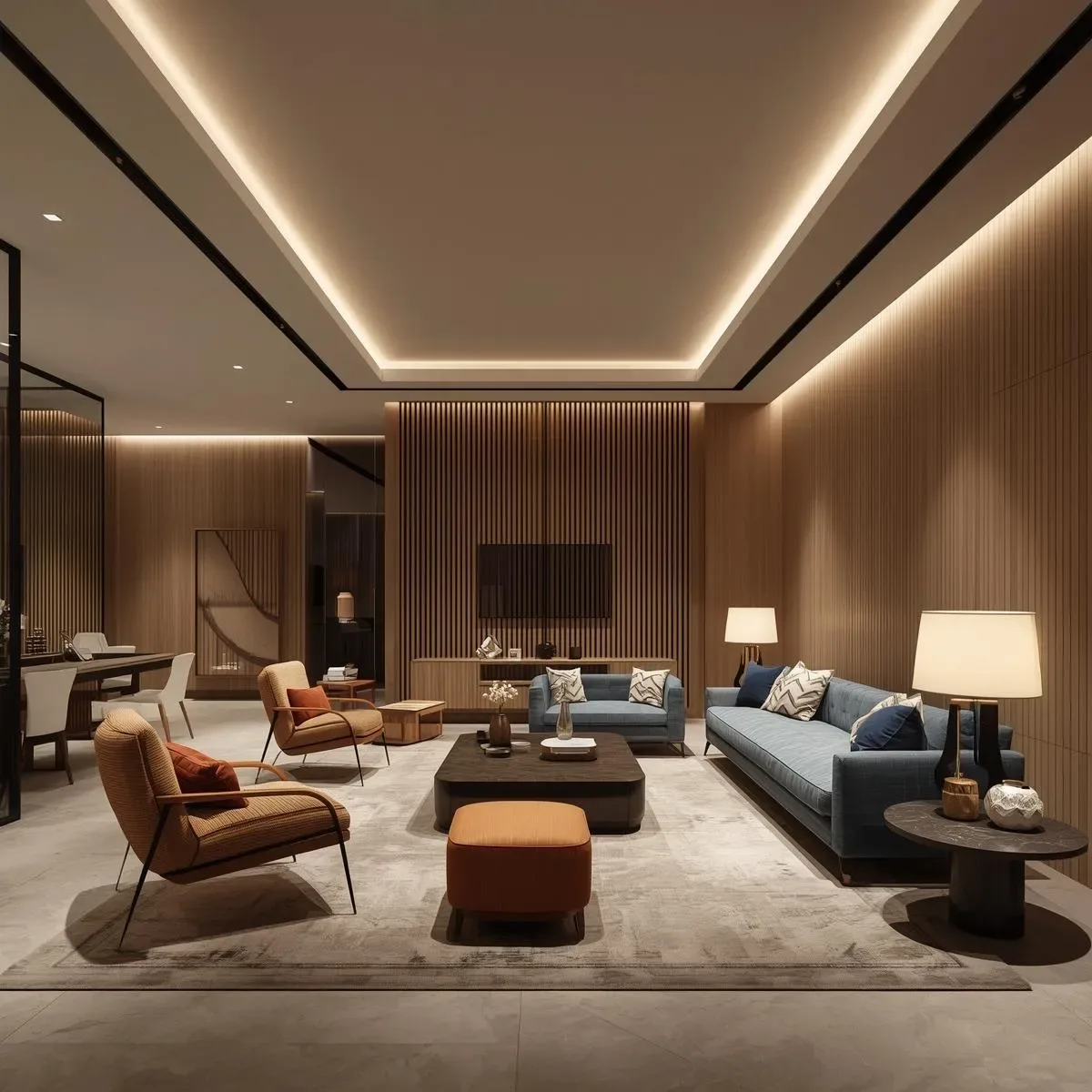
Traditional SmartInterior design often begins with assumptions about how occupants will use spaces—assumptions that rarely match reality in Thai households, where floor-sitting replaces sofas, late-night cooking is common, and elderly family members prefer warmer temperatures than younger ones. SmartInterior Behavioral Design shifts this model by learning from actual usage rather than enforcing pre-programmed schedules.
Multi-zone sensing deployments use high-resolution sensors—including mmWave radar that detects stationary presence without requiring movement—to track which occupant is in which zone, what activity they are engaged in, and where they are likely to move next. Adaptive scene logic responds to this real-time occupancy data by adjusting lighting, audio, and climate independently per zone, so the study can be cool and dim for focused work while the adjacent living area stays warm and bright for an elderly family member simultaneously.
In multi-generational Bangkok homes with grandparents, working adults, and children sharing space, the system builds individual preference profiles without manual setup. After two to four weeks of use, the system knows that grandfather prefers a warm, bright living room while his daughter prefers a cool, dimly lit workspace—automatically adjusting each zone when the relevant occupant enters, without either person needing to touch an app or voice interface.