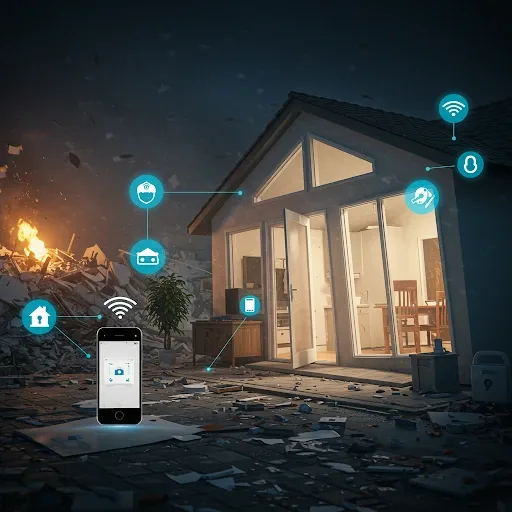
Earthquakes in Thailand: A Risk That Demands Preparation
Thailand experiences far more seismic activity than most people realize. The Meteorological Department records hundreds of tremors per year from domestic fault lines including Mae Chan, Mae Tha, Phayao, and Three Pagodas Pass, as well as waves from neighboring countries. Chiang Rai, Chiang Mai, Mae Hong Son, Tak, and Kanchanaburi carry the highest risk. But effective protection goes beyond structural reinforcement -- smart home technology is a second layer of defense that responds instantly without waiting for a human to wake up and think.
What Is Home Assistant?
Home Assistant is an open-source home automation platform that can be installed on a Raspberry Pi, mini PC, or standard home server. It acts as the central hub for every IoT device in the home -- from lighting and plugs to doors, cameras, and earthquake sensors. What sets Home Assistant apart from ready-made systems is its ability to define Automation Rules that respond to emergencies accurately and immediately without any human command.
What Home Assistant Does When an Earthquake Strikes
Once Home Assistant is connected to an earthquake sensor such as HappySmart's MPU6050, the system triggers multiple simultaneous actions the moment vibration is detected. First, it sends alerts to all smartphones in the household via Telegram, LINE, or the Home Assistant app directly. Second, it closes gas valves automatically to eliminate the risk of fire from gas leaks, while simultaneously cutting power to high-risk points such as water heaters and floor-level outlets.
The system also switches on all corridor and hallway lights so household members can see evacuation routes, and unlocks doors automatically so no one is trapped inside. Security cameras begin recording immediately and upload footage to Cloud or NAS storage. Smart speakers announce a vocal alert in every room so everyone knows what is happening.
Connecting to HappySmart for Accuracy
HappySmart has developed industrial-grade MEMS earthquake sensors that integrate fully with Home Assistant. Key advantages include sensors tested in real high-risk environments, professional installation with clear guidance, MQTT and ESPHome connectivity, and an After-sales team for long-term support -- meaning no technical expertise is required to operate the system.
Real-World Example
In Chiang Mai, Nattapong's home was installed with Home Assistant and HappySmart. When a 4.5 magnitude earthquake struck in the middle of the night, the system alerted all smartphones instantly, unlocked doors, switched on lights throughout the home, and closed gas valves automatically. The family evacuated safely in under one minute.
Get Started Today for Under 10,000 Baht
What once seemed complex and expensive is now accessible. HappySmart and Home Assistant make it possible to start with a budget under 10,000 baht with a complete installation service. The system is scalable -- add sensors in other rooms, connect cameras, or extend Automation to other home systems as needs grow.