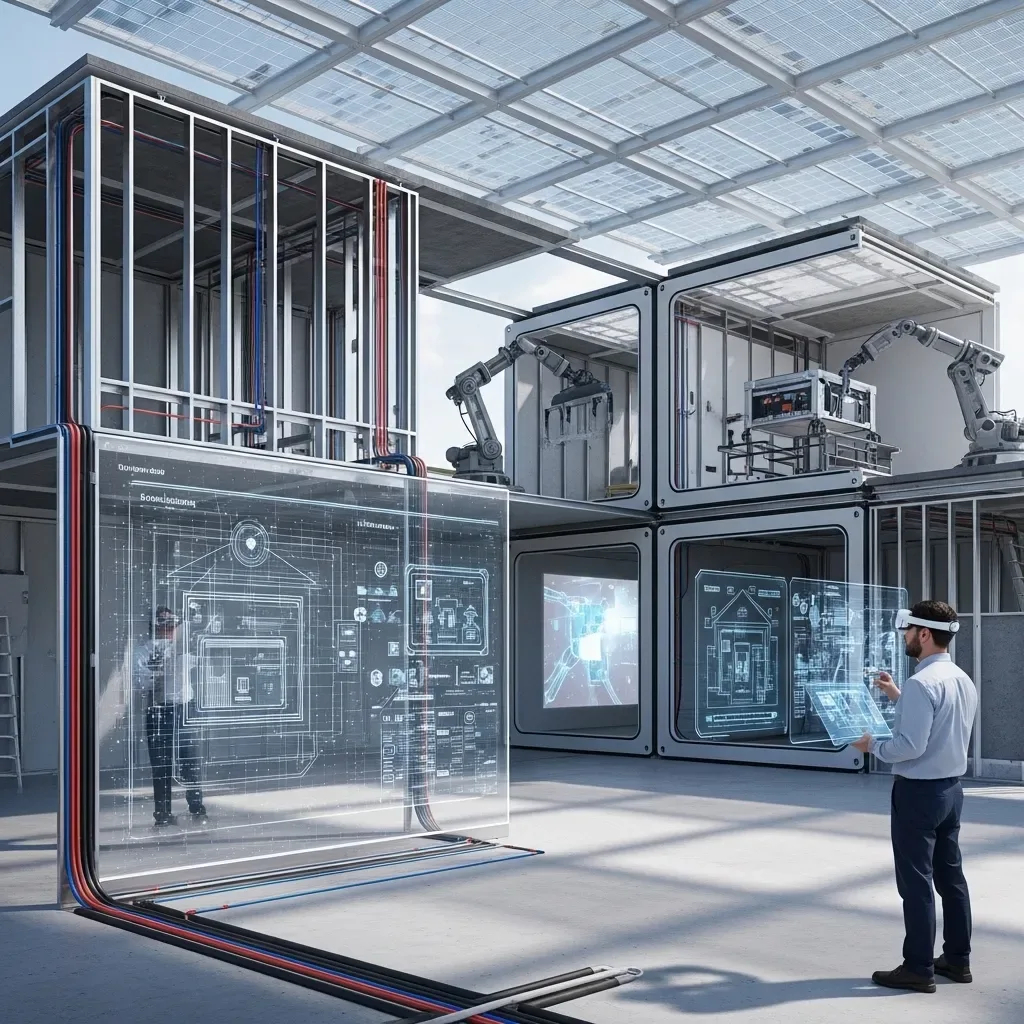
Every year, Smart Home technology becomes less expensive and more capable. Homes built today should be capable of accommodating technology that does not yet exist through flexible infrastructure.
Conduit Planning: Empty Pipes Are Future Gold During construction, adding extra PVC conduit inside walls costs very little compared to future wall demolition. HappySmart recommends installing additional 1-inch conduit in every primary wall of the home, particularly between floors, allowing any future cable type to be routed — HDMI, USB-C Power, CAT8, or cable types not yet invented today.
Structured Wiring Panel: The Home’s Central Hub The home’s main electrical panel should include a separate Structured Wiring Panel for all Low Voltage Systems: LAN, CCTV, Intercom, and Smart Home. This panel should be placed in an easily accessible location rather than hidden behind furniture or in a cramped storage room.
Neutral Wire at Every Switch Position One of the most common construction mistakes is wiring switches with a single live wire and no Neutral, making it impossible to install quality Smart Switches later. Adding Neutral wire during construction increases electrical costs by only 10 to 15%, but opens the door to installing any current or future Smart Switch model.
EV Charging Circuit EV sales in Thailand continue growing in 2026. Installing a dedicated 32A EV Charger circuit during construction costs 60 to 70% less than adding a new circuit later. Even without an EV today, pre-installing the circuit is a sound investment in future flexibility.
Solar-Ready Electrical Design A home designed to accommodate future solar panels must correctly position the Main Distribution Board, Bidirectional Meter, and Battery Storage Enclosure from the start. Going Solar-Ready from the outset reduces future solar installation costs by 20 to 30%.
Smart Hub Room Designating a small dedicated space to house the Smart Hub, Network Switch, UPS, and NAS Server together — with air conditioning to prevent heat buildup — is a practical design choice. Even 0.5 to 1 square meter is sufficient, but this makes future Smart Home maintenance and upgrades significantly simpler.