Why Electricity Cost Planning Matters in Thailand
MEA and PEA electricity tariffs in 2026 range from ฿3.8–4.5 per unit depending on meter type and consumption band. A mid-size Bangkok home consuming 600–800 units per month faces a monthly electricity bill of ฿2,800–3,600 — over ฿40,000 annually. At this scale, investment in structured energy management systems generates measurable financial returns, not just environmental benefits.
A modern Thai home combining smart home automation, rooftop solar PV, and intelligent EV charge management can reduce total energy costs by 50–60% compared to an unmanaged home of equivalent size.
Layer One: Smart Home Automation
The foundation of any residential energy strategy is smart home automation covering the highest-impact consumption categories:
Automated lighting: PIR or mmWave occupancy sensors eliminate unnecessary lighting in vacant rooms, reducing lighting electricity consumption by 40–60% annually without any behavioural change required from household members.
Smart thermostat for air conditioning: Learning thermostats adjust set points based on occupancy patterns and time of day, reducing AC electricity cost by 15–25% monthly — the most significant single saving given AC's dominance of the Thai household electricity bill.
MEA Time-of-Use scheduling: Automatic scheduling of high-draw appliances — washing machines, dishwashers, water heaters — to run after 22:00 during off-peak tariff hours reduces their per-cycle electricity cost by 30–40%.
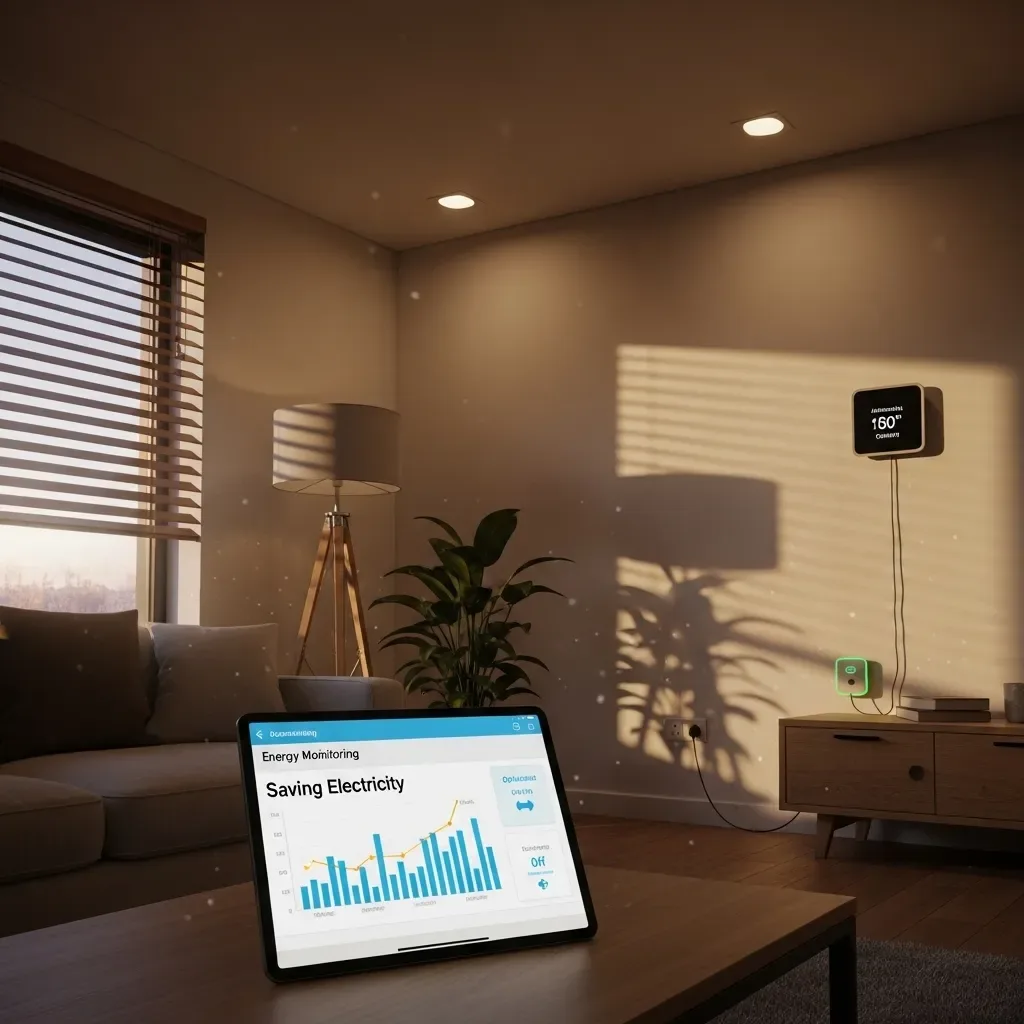
Energy monitoring: A real-time per-device consumption dashboard identifies unnecessary standby loads and informs decisions about appliance upgrades.
Layer Two: Rooftop Solar PV with Smart Energy Management
2026 is among the most economically favourable periods in history to install residential solar in Thailand. PV panel prices have fallen more than 70% since 2015, and DEDE (Thailand's Department of Alternative Energy Development and Efficiency) maintains ongoing support programs for residential rooftop installations.
A well-integrated smart home system coordinates solar production with home automation in ways that maximise the value of generated electricity: - When solar production exceeds immediate demand, the system automatically activates the washing machine, water pump, or pool pump to consume the surplus rather than export it at a lower feed-in tariff rate. - When cloud cover temporarily reduces generation, the system throttles high-draw device operation to preserve battery state of charge. - A unified energy dashboard shows production, consumption, battery state, and grid export on a single screen.
A 5 kWp system on a 150 sqm Bangkok home generates 600–650 units per month on average — sufficient to cover 75–100% of daytime electricity consumption.
Layer Three: Smart EV Charge Management
For households with electric vehicles, home charging introduces a substantial new electricity load. A mid-size EV with a 60–80 kWh battery draws 12–18 units per daily charge cycle. Charging during peak tariff hours adds meaningful cost that smart scheduling eliminates.
A Matter 1.4-compatible EV charge manager integrated with the smart home hub can: - Schedule charging automatically during MEA off-peak hours without manual timer setup. - Prioritise charging from solar surplus before drawing from the grid. - Pause charging temporarily when household loads peak, resuming when total consumption drops. - Deliver a daily charging cost summary via LINE.
ROI and Long-Term Planning
For a home investing across all three layers, indicative returns are: - Smart home automation: payback in 3–12 months depending on installation scope. - 5 kWp solar PV: payback in 5–7 years under Thai solar conditions, with 25+ year panel lifespan. - Combined system: 50–60% reduction in annual energy costs, plus a measurable increase in property market value.
HappySmart AI SmartHome designs integrated energy systems — from foundational automation through solar and EV coordination — as a single managed platform.