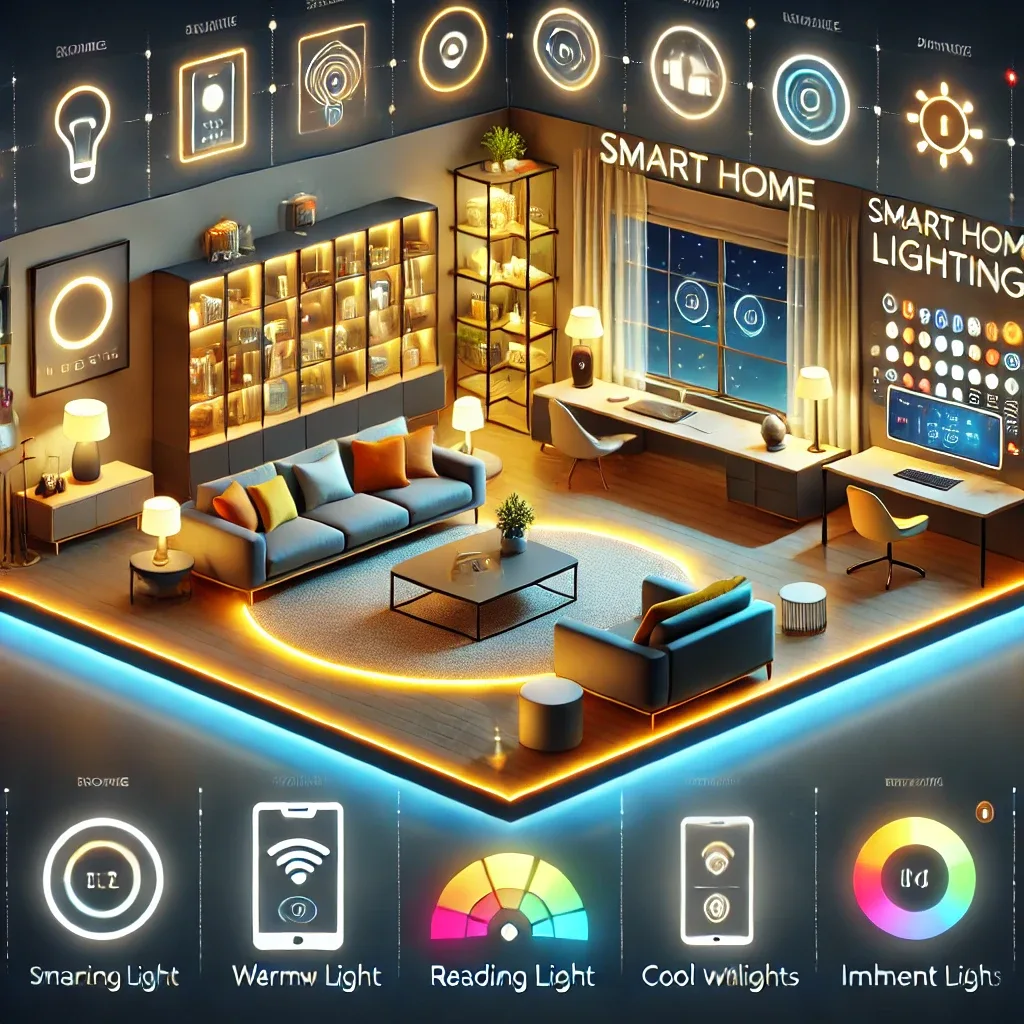
What Is Smart Home Lighting Solution and How Does It Work?
Smart Home Lighting Solution is a lighting system controlled via internet or smartphone app. It automatically adjusts brightness, light color, and on/off scheduling. It integrates with Home Assistant to connect with Motion Sensors, Voice Control, and all other home Automations — making intelligent lighting a seamless part of a complete smart home ecosystem.
Room-by-Room Lighting Guidelines for Better Health
Bedrooms benefit from warm light at 2700K-3000K in the evenings, programmed to dim automatically before sleep time. This stimulates melatonin production and promotes deeper sleep. Home offices benefit from cool white light at 4000K-5000K during working hours to sharpen focus and productivity, with a slight reduction in the afternoon to combat fatigue. Living rooms benefit from multi-mode lighting — bright during the day, soft in the evenings, and atmospheric for social occasions.
Key Technologies That Enhance Quality of Life
Adaptive Lighting automatically adjusts indoor brightness to match natural light levels outside. Motion Sensors switch on lights when someone enters and off when they leave — eliminating forgotten lights. Scheduling pre-sets daily, weekly, or seasonal lighting programs. Voice Control via Google Assistant or Amazon Alexa provides hands-free convenience especially when your hands are occupied with cooking or childcare.
Mental Health Benefits of Proper Lighting Management
Research confirms that light has a direct impact on mental health. Warm light in the evenings significantly reduces Cortisol levels — the stress hormone. Cool white light in the mornings stimulates the Circadian Rhythm for natural wakefulness. Color-changing lights can alleviate mild depressive symptoms and anxiety by breaking the monotony of a static indoor environment. Smart Home Lighting is therefore more than convenience — it is a holistic health promotion tool.
Installation Guidelines for Beginners
Start by choosing smart bulbs that support Zigbee or Matter for future Home Assistant compatibility. Install the companion app and connect to your home Wi-Fi. Set up basic Scheduling — for example, bedroom lights dimming automatically every evening at 9 PM. Add Motion Sensors in bathrooms and hallways for nighttime safety. Expand the system gradually as your needs grow. HappySmart is ready to provide consultation and full installation service at every step.