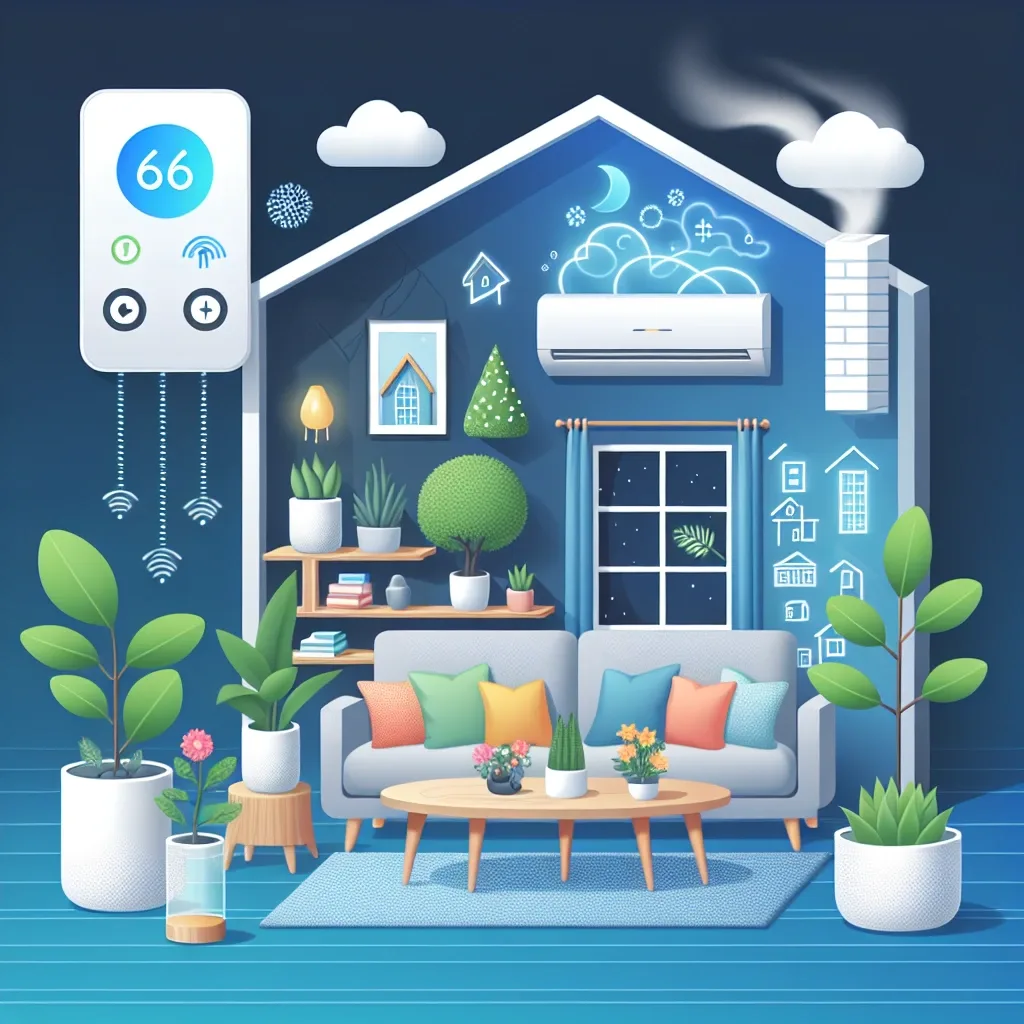
Why Indoor Air Quality Matters More Than Most Realise
Urban residents in Bangkok spend roughly 80-90% of their time indoors across homes, offices, and shopping centres. Indoor air frequently contains pollutant concentrations two to five times higher than outdoor air — a counterintuitive finding that surprises most people. The sources are varied: VOCs off-gassing from furniture, adhesives, and paint; CO2 accumulation from occupants in poorly ventilated rooms; residual fine dust; and humidity levels that sustain mould and dust mite growth.
Automated air quality management is not a luxury in this environment. It is a measurable investment in the health of everyone who spends time in the building.
What to Measure: The Four Key Parameters
A complete indoor air quality system monitors four values.
PM2.5: particles smaller than 2.5 microns that penetrate deep into lung tissue and have documented effects on cardiovascular and respiratory health. WHO guidelines set the safe 24-hour mean at 15 μg/m³.
CO2: accumulates in occupied, poorly ventilated rooms. Above 1,000 ppm, research consistently shows reductions in decision speed, concentration, and cognitive performance. This is a common but unrecognised cause of afternoon sluggishness in home offices.
TVOC (Total Volatile Organic Compounds): emitted by new furniture, paint, carpet, adhesives, and cleaning products. New homes and recently furnished spaces can have elevated TVOC for 6-12 months post-construction.
Relative Humidity: the 40-60% range is both the most comfortable for occupants and the range that inhibits mould growth, dust mite reproduction, and bacterial proliferation.
How the HappySmart Air Quality System Works
HappySmart deploys multi-point sensor networks connected to Home Assistant as the central automation engine. Aqara TVOC Air Quality Monitors or Xiaomi Mijia Air Detector 2 units measure all four parameters every 30 seconds and feed data to Home Assistant continuously.
When any value exceeds a defined threshold, automations respond immediately. PM2.5 above 35 μg/m³ activates the Xiaomi Mi Air Purifier 4 Pro in Auto mode and scales fan speed with pollution severity. CO2 above 900 ppm opens ventilation fans or triggers a LINE notification prompting the occupant to open a window. Humidity above 70% activates bathroom exhaust fans and recommends switching the air conditioner to Dry mode.
All of this happens without anyone looking at a display or opening an app.
Real-Time and Historical Data
The difference between a HappySmart system and a standalone air purifier is complete data visibility. Home Assistant logs every sensor reading with timestamps, creating a historical record of air quality across all parameters. This makes it possible to identify when air quality is worst — typically evening when cooking occurs and windows are closed — and whether the automated responses are responding adequately.
Historical data also reveals when outdoor air is cleaner than indoor air, suggesting when to open windows for passive ventilation rather than running electrical systems.
A Scalable Investment
HappySmart designs air quality systems that start with the rooms that matter most — bedrooms and home offices — and expand to whole-home coverage later. Each sensor added to the network connects to the same Home Assistant automation engine without requiring reconfiguration. The system grows with the household's priorities rather than requiring a complete reinstallation.
Bangkok properties with documented, well-managed indoor air quality are increasingly attractive to health-conscious tenants and buyers in 2026 — a factor that adds measurable value beyond the direct health benefit.