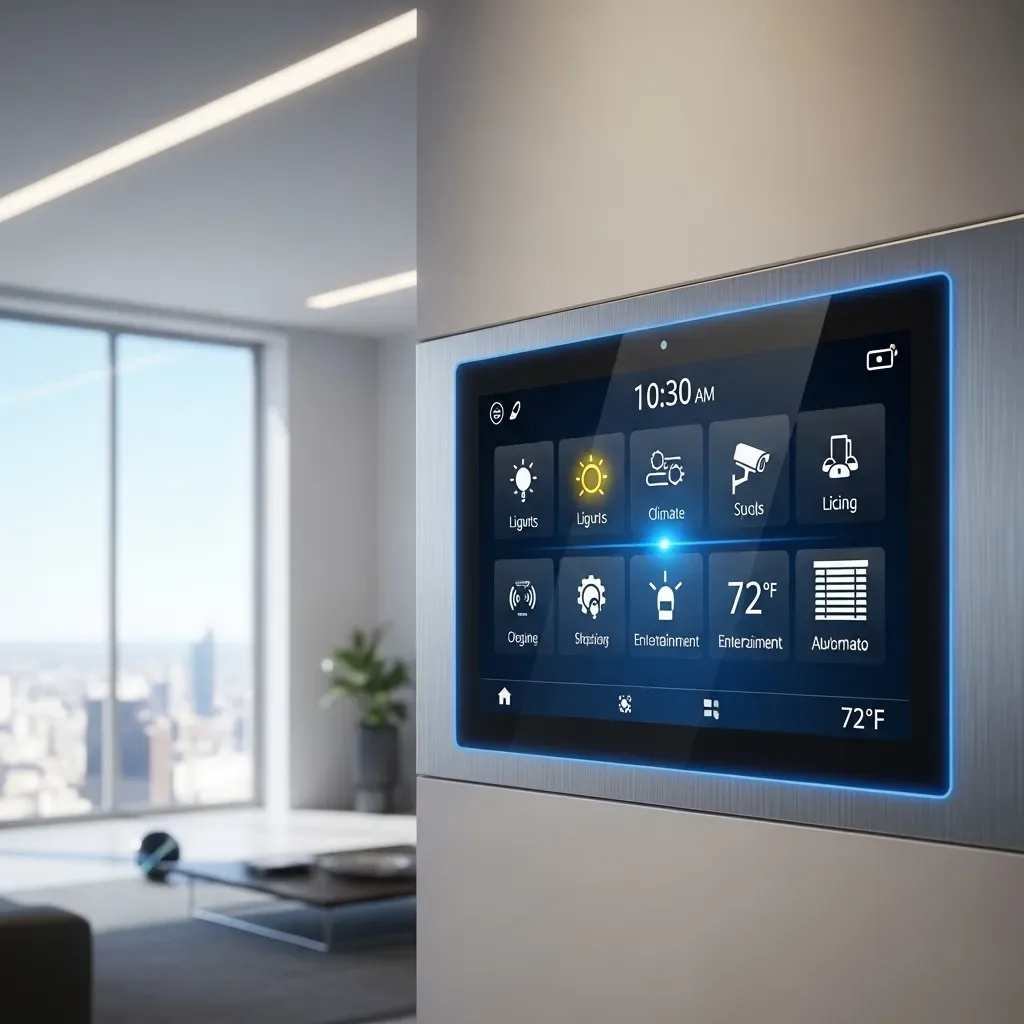
From Commands to Predictions: The Evolution of Home Automation
Early Smart Home systems operated on simple If-Then logic — press switch, light turns on. HappySmart’s AI SmartHome goes far beyond that, continuously analyzing occupant behavior patterns to anticipate needs and respond proactively. The system learns that you typically wake at 06:30, so it automatically warms the bedroom lighting, starts the coffee maker, and slowly opens the curtains — 10 minutes before you stir.
Scene Control: Programming Your Life, Not Your Devices
Scene Control executes multi-device commands simultaneously with a single tap. HappySmart ships with pre-built Scenes designed for Thai living contexts: ’Home Arrival’ — entry lights on, living room AC activated, door unlocked, favorite playlist started; ’Sleep’ — all lights off, doors locked, AC set to 26°C in Fan Mode to reduce power draw; and ’Welcome Guests’ — living room shifted to warm ambient lighting, background music started, temperature auto-adjusted to comfort range.
Routine Automation: Hands-Free Living
Routines differ from Scenes in that they activate without any command, using three trigger types: Time Triggers — retractable shades automatically open at 17:00 to capture the golden hour; Location Triggers — Geofencing detects when all household members are more than 500m away and turns off all AC automatically; and Sensor Triggers — rain sensor detects precipitation, retracts outdoor laundry, closes windows, and sends a LINE notification.
AI Predictive Action: A Home That Learns You
HappySmart’s most advanced capability is Unsupervised Learning — no programming required. The system clusters usage behavior during the first 2–4 weeks, then surfaces suggested Routines via LINE for user approval. For example: ’Every Tuesday you turn on the bedroom TV at 21:00. Would you like to set this as an automatic Routine?’ The home becomes progressively smarter without manual configuration, adapting to life as it changes.
LINE Integration: Thailand’s Native Control Center
HappySmart integrates with LINE OA — an app 95% of Thai users already have — making device control, alert reception, and energy dashboard viewing accessible without learning new software. LINE Group integration allows all household members to share control with configurable Permission Levels: children can adjust their room lighting but cannot override whole-home Scenes, giving parents full governance without micromanagement.
A Day in the Life with HappySmart
A typical weekday: 06:20 — bedroom lighting gradually brightens, water heater pre-activates. 06:30 — curtains open, LINE delivers today’s AQI (85, Moderate) with air purifier recommendation. 07:45 — Geofence detects the last member leaving, all AC off, doors locked, Security Mode on. 17:30 — vehicle detected within 500m Geofence, AC pre-cools, entry lights activate, LINE sends: ’Home is ready for you.’