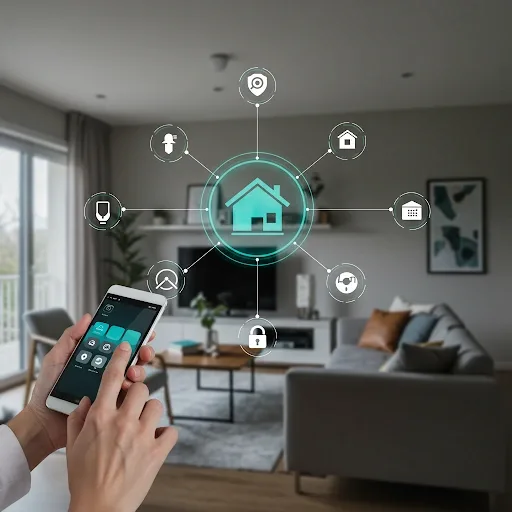
Smart Home Automation in 2025 Has Reached Its Most Compelling Point Yet
Smart home automation in 2025 has moved well beyond simple app-controlled devices. Today's systems learn, understand, and adapt to household behavior automatically. Three technologies are driving this shift: smarter voice control, AI-powered behavior analysis, and broader IoT connectivity that links virtually every device in the home.
Voice Control That Actually Understands Context
Voice control in 2025 handles complex, multi-step commands without requiring repetition. Instead of issuing separate commands to turn on the bedroom light, switch off the AC, and lock the door, you can say something like "get the bedroom ready" and the system executes everything based on what it has learned about your habits.
Behavior learning means voice assistants now anticipate actions before you ask. On weekday evenings, the system might automatically start the AC and adjust lighting based on patterns it has observed over weeks — without any explicit instruction.
AI Behavior Analysis That Adapts Your Home
AI in 2025 smart home systems continuously analyzes household lifestyle patterns. It learns your preferred AC temperature, your ideal lighting levels, and your peak electricity usage windows — then adjusts device operation automatically to maximize comfort while minimizing energy waste.
Expanded IoT connectivity means every device from AC units and security systems to kitchen appliances can communicate with one another and make coordinated decisions, all accessible through your smartphone.
Devices That Power Smart Home Automation in 2025
Smart lighting systems such as Philips Hue and Xiaomi Smart Bulb adjust brightness and color temperature by time of day and activity — bright white light for morning work, warm amber light for evening relaxation. Next-generation smart appliances including smart washing machines, smart refrigerators, and automatic coffee makers connect to companion apps and operate on custom schedules.
Smart locks and AI cameras work together as an integrated security layer. Motion sensors and air quality sensors measuring CO2 and PM2.5 feed real-time data to the AI, enabling informed automated responses to environmental conditions.
Choosing a Platform and Getting Started
Before selecting a platform, verify that the devices you plan to buy are compatible with it. Google Home suits Android users who want Thai language support. Amazon Alexa serves enthusiasts who want the widest device selection. Home Assistant fits users who want advanced customization and prefer local data storage for maximum privacy.
Start your smart home build with security — it delivers the clearest and most immediate return on investment. Plan your energy management strategy from the beginning so devices can work together efficiently rather than operating in isolation.