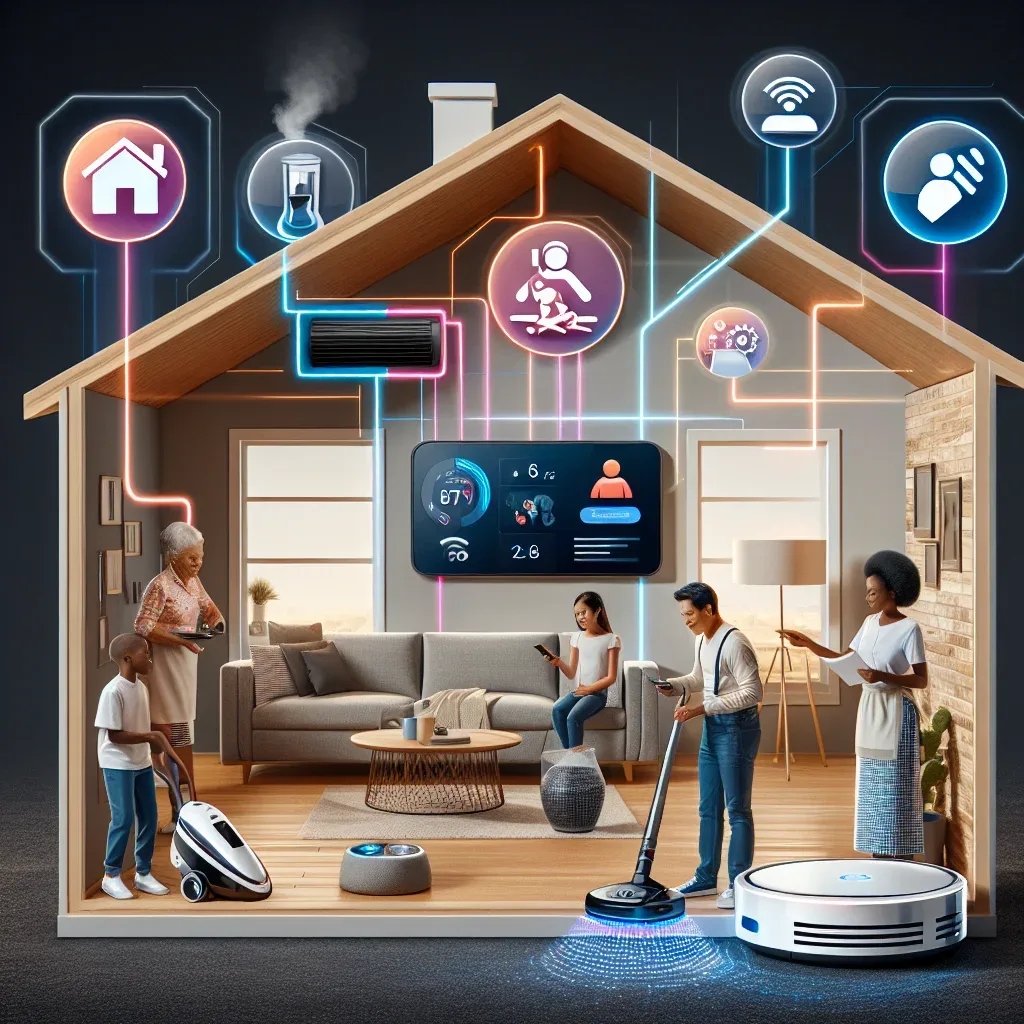
What Is AI in a Smart Home?
Artificial Intelligence in smart homes goes far beyond voice commands. It encompasses systems that learn resident behavior, analyze data from hundreds of sensors, and make autonomous decisions to enhance comfort, reduce energy consumption, and strengthen security — all without manual intervention.
Smart Lighting AI: Light That Knows You
AI-driven smart lighting learns your preferred brightness and color temperature throughout the day — bright cool white (5000K) for morning productivity, warm amber (2700K) for evening relaxation, and gradual dimming as bedtime approaches. Machine learning algorithms study patterns over weeks to anticipate your needs before you even realize them.
In Bangkok, where natural light varies dramatically with weather conditions and PM2.5 haze, Smart Lighting AI balances artificial light with available daylight in real time. This reduces eye strain significantly, particularly on heavy haze days when AQI exceeds 150.
Energy Management AI: Smarter Savings
Energy Management AI analyzes historical consumption data and predicts future demand. The system schedules heavy appliances — dishwashers, washing machines, water heaters — during Off-Peak hours (23:00–09:00) to leverage the MEA/PEA TOU (Time-of-Use) rate structure, delivering meaningful monthly savings.
Integrated with Solar Panel and Battery Storage systems, AI optimally allocates energy between solar generation, battery reserves, and grid import based on weather forecasts, time of day, and household activity patterns.
Voice Assistants: Hands-Free Home Control
Google Assistant, Amazon Alexa, and Apple Siri integrate with Home Assistant via Nabu Casa cloud or local API connections. Users can speak natural language commands — "Hey Google, set bedroom AC to 25 degrees" or "Alexa, good night" — triggering complex automation scenes that simultaneously dim lights, adjust the thermostat, lock doors, and activate security cameras.
Thai language support has improved substantially on all three platforms, making voice control accessible to all household members regardless of English proficiency.
Mood-Based Living: A Home That Reads the Room
Mood-Based Living fuses data from CO2 sensors (Sensirion SCD40), temperature-humidity probes, calendar events, and time-of-day patterns to proactively adjust the home environment. When CO2 exceeds 1000ppm, the ERV activates automatically. On weekend mornings, warm lighting and gentle background music create a relaxed atmosphere without any user input.
For elderly residents, AI monitors movement patterns through strategically placed Motion Sensors. Deviations from baseline behavior — such as no movement in the kitchen by 10 AM on a normal morning — trigger discreet family notifications.
Smart Security AI: Protection That Thinks
AI-powered Smart CCTV cameras distinguish between humans, pets, and vehicles, reducing false alerts by over 90% compared to standard motion detection. Zone-specific monitoring ensures alerts only fire for intrusions into defined sensitive areas. Smart Lock AI logs entry patterns and immediately alerts homeowners to anomalies — such as access attempts outside normal hours — providing a proactive rather than reactive security posture.