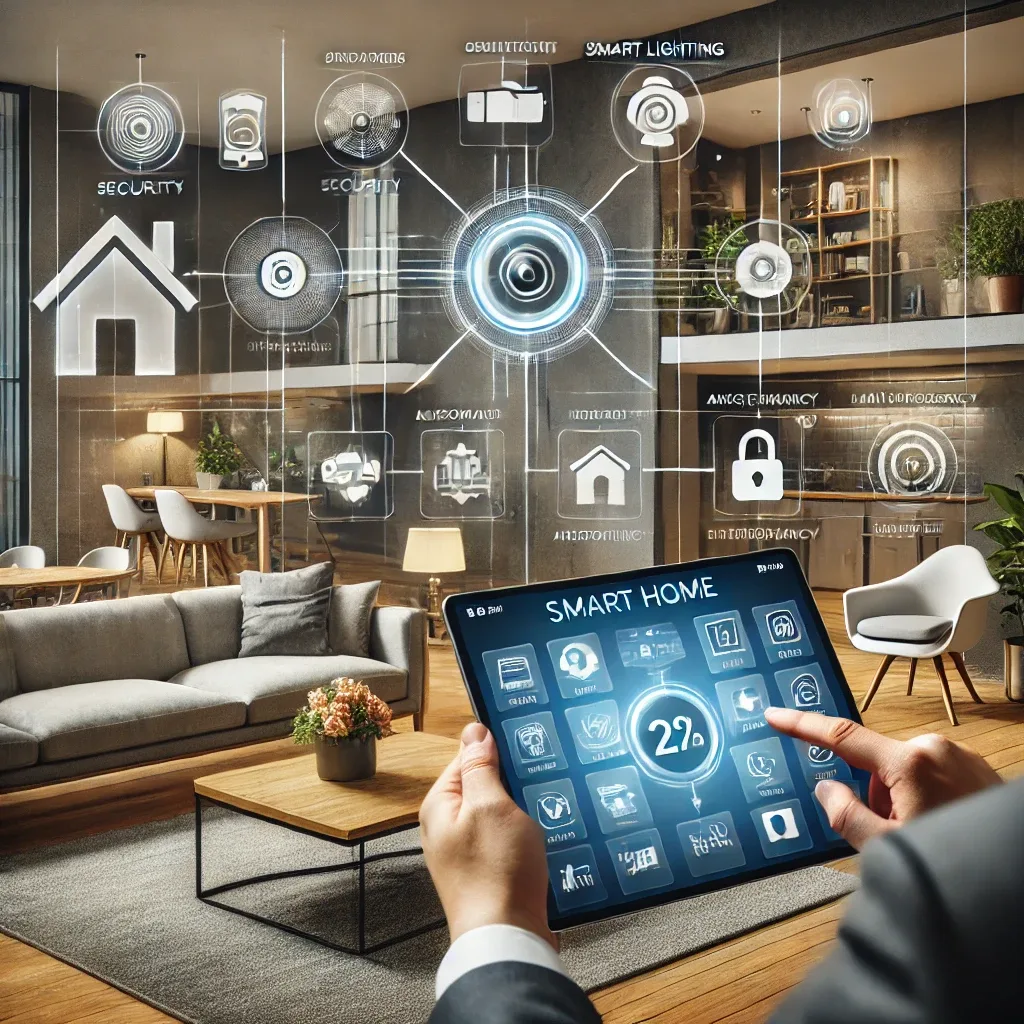
Why Choosing the Right Smart Home Solution Matters
Today's Smart Home market offers so many products that deciding where to start can feel overwhelming. Many people buy multiple devices only to find they cannot connect to each other, or they choose a system that does not actually match their needs, wasting both money and time.
The key is understanding the main categories of Smart Home solutions and what each one is designed to solve, then matching the choice to your home layout, budget, and daily lifestyle.
Four Main Categories of Smart Home Solutions
Smart Home systems fall into four primary categories based on their core function.
Smart Lighting is the easiest starting point for newcomers. It covers on and off control, brightness adjustment, color changing, automatic schedules tied to daily routines, and motion sensor integration for energy savings. Installation is simple and results are immediately visible.
Home Care systems focus on supporting elderly family members or residents who need assistance. Motion sensors, heart rate monitors, blood oxygen measurement devices, and fall detection systems can alert family members instantly. This category is ideal for homes where elderly residents live alone or where chronic health conditions require monitoring.
Smart Security combines AI CCTV cameras, door and window sensors, smart doorbells, and smartphone alert systems so you can monitor home safety from anywhere in the world. AI-powered cameras distinguish between people and pets, reducing false alerts while ensuring real threats are never missed.
Complete Smart Home integrates all functions into a single app, controlling lighting, security, energy management, and every IoT device in the house. This is suited to people who want a fully unified system and are prepared to invest in making their home genuinely intelligent.
Selecting the Right Control Platform
The control platform determines which device brands can work together and how much flexibility you have for automation.
Home Assistant is an open source platform supporting thousands of IoT device brands from multiple manufacturers. It processes everything locally without relying on external cloud services, and offers detailed automation customization. It is the right choice for those who want full control.
HomeBridge connects devices that do not natively support Apple HomeKit to iPhone and Siri. It offers simpler operation for Apple users who want to extend an existing HomeKit setup without rebuilding everything.
Scrypt enables writing advanced automation scripts that create complex triggers drawing data from multiple sources simultaneously, useful for scenarios that go beyond what standard app-based automation can handle.
How AI and Automation Make Homes Smarter
AI and Machine Learning technology allows Smart Home systems to learn resident behavior and adapt automatically.
Behavior learning means the system remembers when you wake up, leave home, and return, then adjusts air conditioning temperature, lighting levels, and device states to be ready before you need them, without any manual input.
Energy management involves real-time monitoring of power consumption per device and automatic adjustment to maximize efficiency without compromising comfort. Patterns in usage are analyzed over time to further reduce waste.
Automatic control scenarios handle situations like closing smart curtains and adjusting air conditioning when sunlight intensifies, or switching off all lights and activating the security system as soon as you leave home.
Measurable Benefits and Starting Recommendations
Investing in Smart Home technology delivers returns across multiple areas. Smart Lighting combined with automated air conditioning can reduce monthly electricity bills by 20 to 40 percent. Security systems reduce intrusion risk and provide instant alerts for emergencies such as fire or gas leaks.
The convenience of controlling everything with voice commands or a single app improves daily quality of life measurably, while a well-equipped Smart Home system increases property value, which is a factor that buyers actively consider in today's real estate market.
For anyone starting out, begin with Smart Lighting to learn the system, then expand to Smart Security, and finally to a Complete Smart Home setup as confidence and familiarity grow.