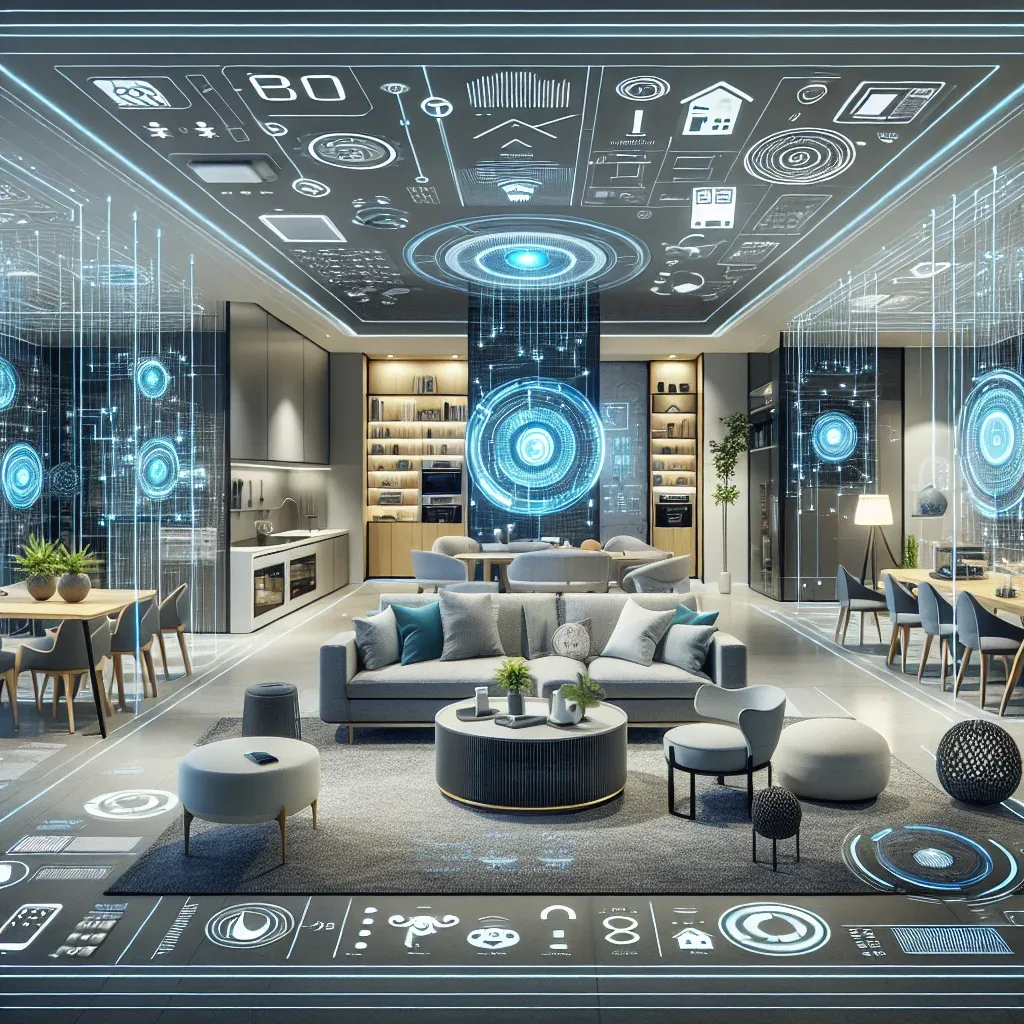
Why Smart Home Has Become Essential Today
Smart home technology has evolved so rapidly that what was once a dream is now tangible reality at accessible prices — whether for a small condo unit or a large detached house. Here are 5 smart home trends genuinely transforming home life that you should understand and consider for your own home, ranked by their current and future impact.
Trend 1: AI Automation and Intelligent Control
Bringing AI (artificial intelligence) into smart homes represents the most transformative trend. AI enables systems to learn resident behavior and adjust automatically — cooling bedrooms 30 minutes before sleep based on learned patterns, shifting to warm lighting at evening relaxation time, or shutting off all devices automatically when GPS Triggers confirm everyone has left home. Increasingly sophisticated AI can also analyze energy consumption patterns and recommend adjustments that meaningfully reduce electricity bills without requiring manual intervention.
Trend 2: Advanced Voice Control
Voice control has become the primary interaction between people and smart homes. Assistants like Google Assistant, Amazon Alexa, and Apple Siri have improved natural language understanding, better Thai language support, and faster response times. Saying "turn off all lights and turn on the bedroom air conditioner" in a single sentence can control multiple devices simultaneously without touching a screen — making home life genuinely easier for all household members regardless of technical ability.
Trend 3: Energy Sustainability Systems
Energy saving is not just about reducing electricity bills — it is environmental responsibility. Smart Thermostats learn behavior and adjust temperature based on actual usage. Motion sensors automatically turn off lights and appliances when rooms are empty. Smart Plugs cut standby power that wastes electricity even when devices are idle. Home Assistant's energy dashboard shows real-time electricity consumption, identifying which devices consume disproportionate power. For homes with solar panels, smart home systems can optimize energy usage to align with peak solar production hours.
Trend 4: Advanced Security with AI Technology
Smart home security has evolved far beyond traditional CCTV. AI cameras like Frigate distinguish between people, vehicles, animals, and objects — reducing unnecessary alerts while notifying only when genuinely suspicious activity is detected. Smart Locks with Access Logs record every entry and exit, create temporary passcodes for guests or maintenance workers, and send immediate LINE/Telegram notifications. Smoke and gas leak sensors send emergency signals before damage occurs. All of these work together through Home Assistant to create a robust layered protection system.
Trend 5: Full System Integration via Matter
The most significant long-term trend is integrating devices from all brands to work together seamlessly. The Matter standard developed jointly by Apple, Google, Amazon, and Samsung enables new devices to automatically connect with any compatible system. Home Assistant serves as the central Hub combining Matter, Zigbee, Z-Wave, and Wi-Fi in one place, enabling users to control everything from a single app without switching between brand-specific apps — the definitive end of smart home fragmentation.