Digital-Age Families: More Complex, More Diverse Needs
The modern Thai home is no longer a single-mode space. Many Thai households today span three generations — grandparents requiring safety monitoring and health support, parents needing productive work-from-home environments, and children requiring distraction-free online learning zones. A one-size-fits-all Smart Home cannot serve everyone. HappySmart’s Zone Personalization system gives each area of the home independent, customizable intelligence that adapts to whoever occupies it.
Zone Personalization: A Home That Knows Everyone
Zone Personalization divides the home into independently intelligent areas: Elderly Zone — lighting 20% brighter than standard to reduce fall risk, temperature 1–2°C warmer (elderly residents feel cold more easily), and SOS emergency buttons in every room; Home Office Zone — 5,000K white light for peak cognitive performance, non-essential notifications suppressed during work hours, and noise disruption from adjacent rooms minimized; Children’s Zone — entertainment devices locked during study hours, temperature adjustment restricted to safe ranges, and parents notified automatically when children return from school.
Family Dashboard: One View of the Entire Household
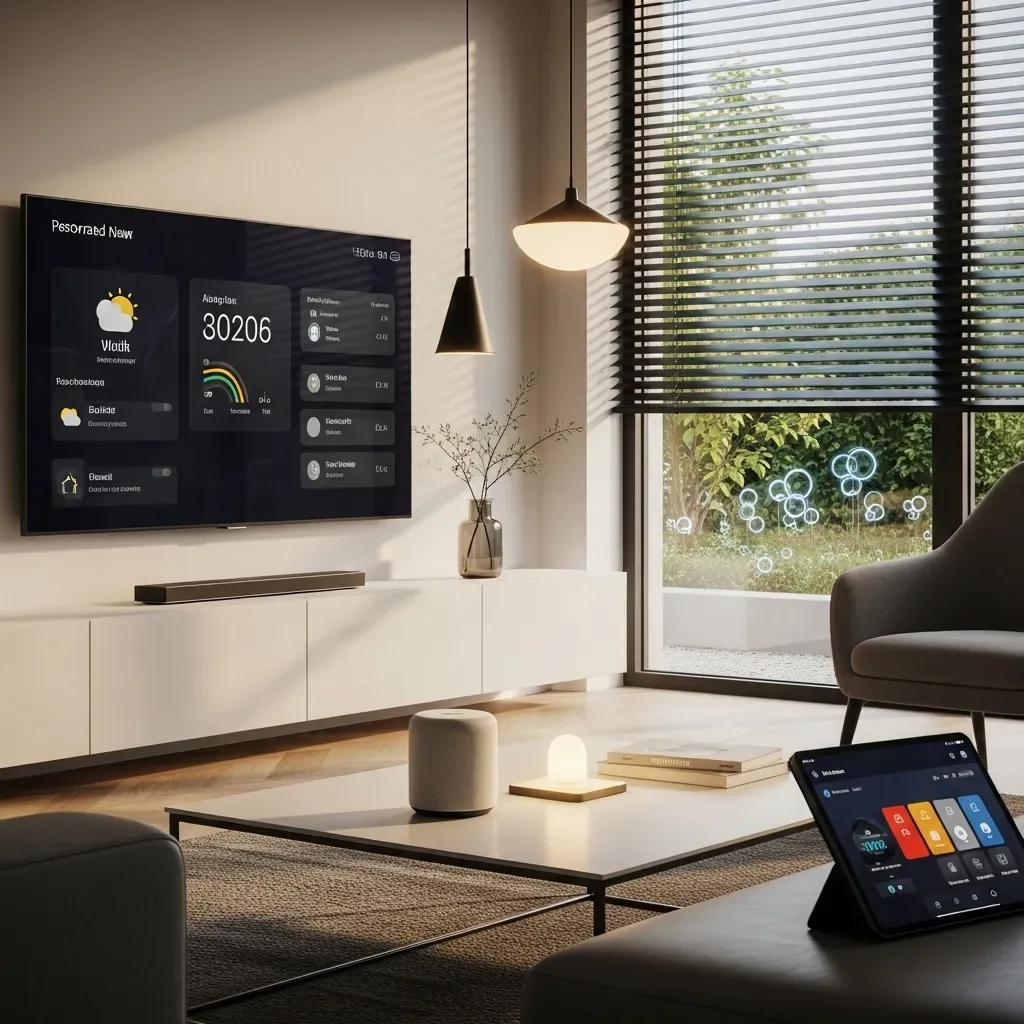
HappySmart’s Family Dashboard consolidates whole-home visibility into a single LINE OA view: real-time status of every zone, a family calendar synced with Google Calendar, daily energy consumption, sensor battery levels, and elderly resident health reports from motion detection sensors. Parents control which family members see which data, preserving individual privacy while maintaining household awareness from a single interface.
Family Routines: Automatic Adaptation to How You Live
HappySmart AI learns each family member’s schedule and builds automatic Family Routines: when children leave for school, the study zone converts to a Work Zone; when elderly residents wake (detected by motion sensor), water heater and bathroom lights activate automatically; when parents return home after 18:00, the house shifts to Family Mode — warm lighting, shared living room opened. The home adapts to family life automatically, not the other way around.
Safety Designed for Every Generation
HappySmart’s safety layer covers every age group. For elderly residents: radar Presence Sensors detect falls and alert all household members within 30 seconds. For children: Geofencing notifies parents immediately when a child moves outside the safe zone. For adults at home: IP cameras connect to LINE OA for live viewing from anywhere in the world. All systems work as a unified whole that the entire family manages through a single interface — making comprehensive household safety accessible, not complicated.