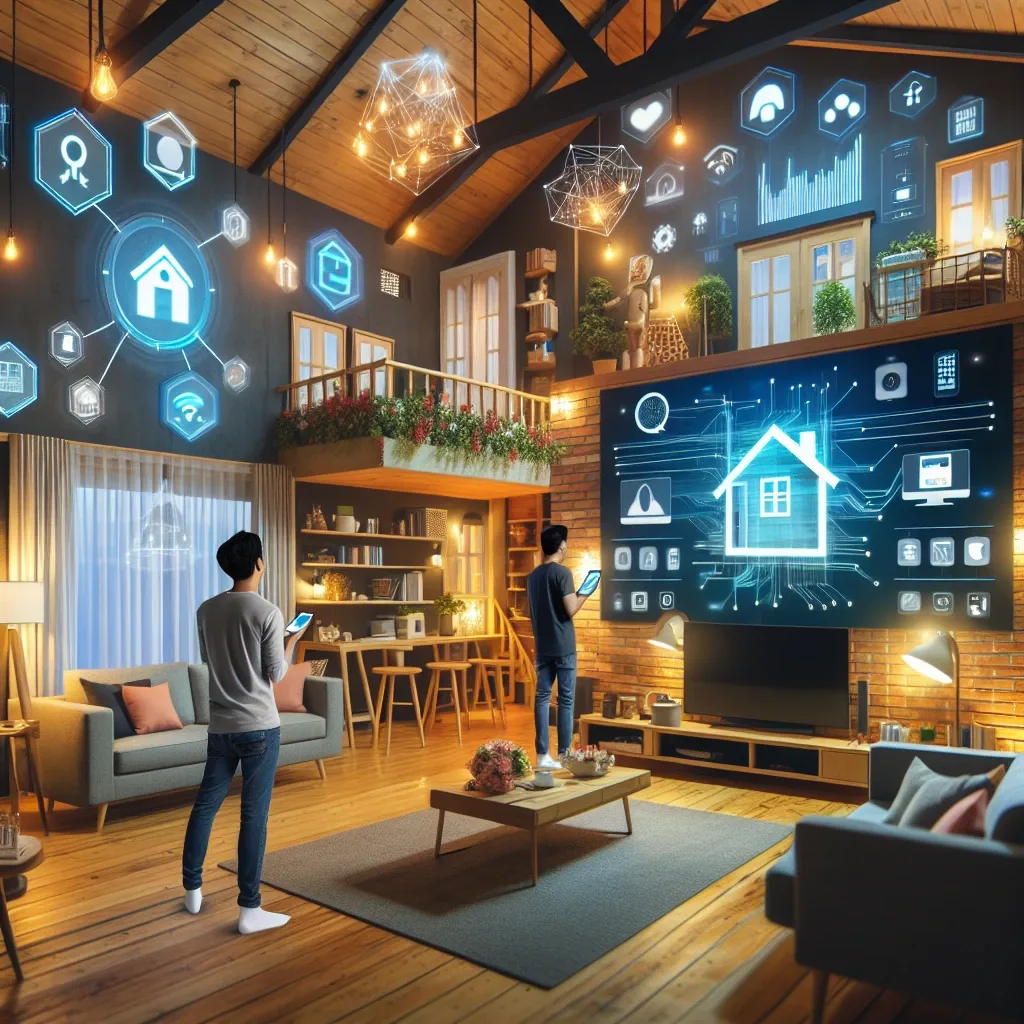
Thailand's Smart Home Market in 2026
Thailand is no longer a follower in the smart home space. In 2026, smart home installations in Bangkok's luxury residential projects have grown substantially, with developers along Sukhumvit, Rama 9, and in resort markets like Hua Hin and Khao Yai embedding automation into core property value rather than treating it as an optional add-on.
Three forces are driving this shift: steadily falling hardware costs, the Matter 1.4 standard enabling cross-brand compatibility, and a consumer base already comfortable with digital control through smartphones and apps.
AI Automation That Actually Learns
The clearest trend of 2026 is AI that adapts in practice, not just scheduled timers marketed as intelligence.
HappySmart's AI layer analyses energy and usage patterns over the first two to four weeks, then adjusts the home environment to match residents' actual routines. Lighting dims in the bedroom at the time you typically sleep. The air conditioner pre-cools before you arrive home. Alerts fire only when a pattern genuinely deviates from normal.
New mmWave sensors go further than basic motion detection. They can confirm human presence even when someone is sitting still, and distinguish postures such as sleeping versus falling — a critical capability in homes with elderly residents.
Modern Security with IoT and On-Device AI
EZVIZ and TP-Link cameras from 2026 lineups process video on the device itself, distinguishing between people, pets, and vehicles without streaming full footage to the cloud. This reduces both latency and privacy risk.
Intelligent push notifications filter out low-relevance events. Homeowners are notified only when a genuinely significant event occurs, not every time a cat walks past the sensor.
Matter 1.4 and Cross-Brand Integration
Matter 1.4's broad adoption across Xiaomi, TP-Link, EZVIZ, and European manufacturers has removed the biggest historical obstacle to smart home adoption: brand lock-in. Homeowners can now select the best device in each category without worrying about compatibility.
HappySmart installs Matter 1.4-certified systems for both new builds and renovation projects, backed by compatibility testing across the device stack.
Energy Management, the Fastest-Growing Segment
Energy savings now affect property values directly. Developments with intelligent energy management tied to solar panels and battery storage are attracting serious interest from premium buyers.
HappySmart designs systems that can expand to support renewable energy integration without requiring a full reinstallation later.