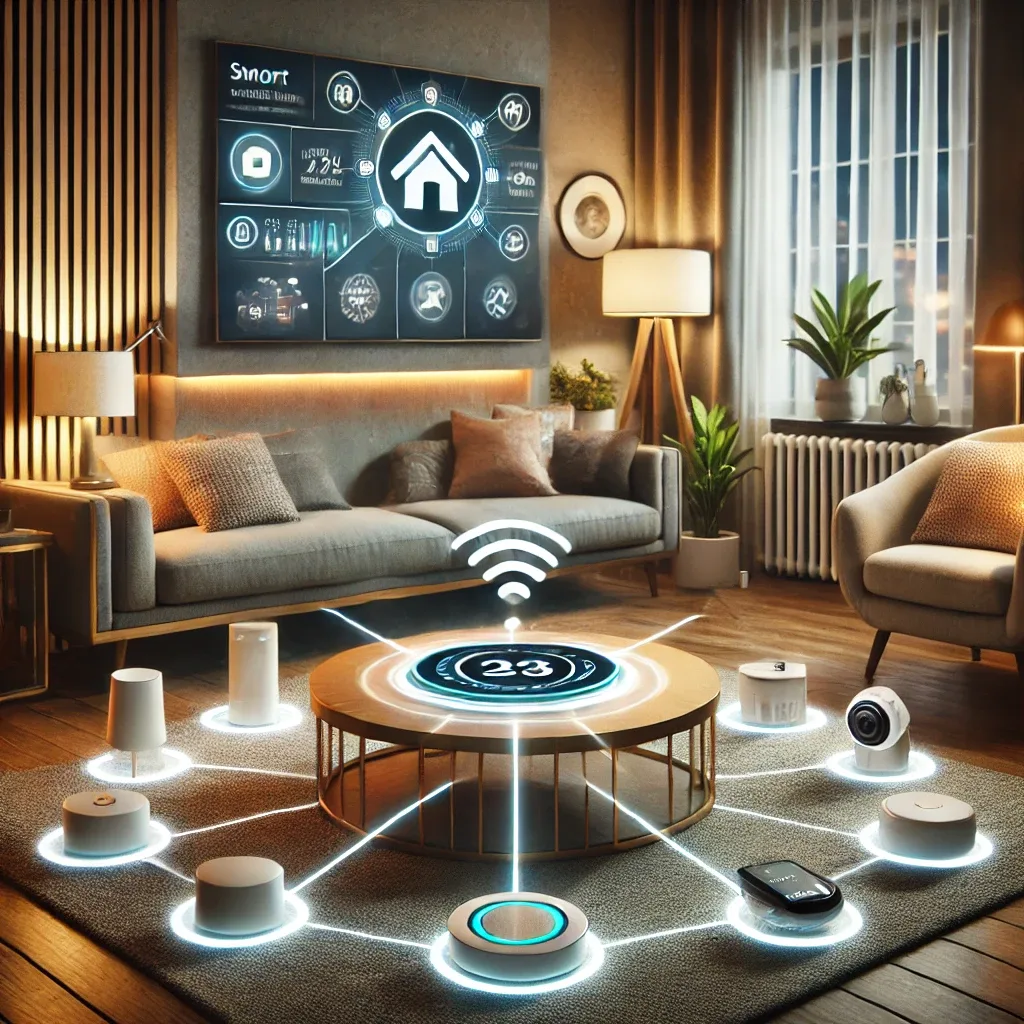
The Old Problem: Every Brand Speaks Its Own Language
Before Matter became a meaningful standard, a smart home was typically a collection of separate ecosystems. Xiaomi Mi Home controlled the lights, TP-Link Tapo managed the plugs, EZVIZ handled cameras, and Apple HomeKit covered door locks. Each required its own app, its own setup, and cross-system automations were either impossible or required complex workarounds.
Matter 1.4, which reached broad device availability in 2026, solves this by establishing a single IP-based protocol that devices from competing brands share natively. Interoperability becomes a practical reality rather than a marketing promise.
How Matter 1.4 Works in a Real Home
Matter operates over Wi-Fi, Ethernet, and Thread. Thread is a low-power mesh radio protocol designed for battery-powered sensors — door contacts, humidity sensors, motion detectors — that need to communicate reliably without draining batteries in weeks. New Xiaomi Thread sensors available in 2026 mesh with each other, maintaining connectivity even if one node goes offline.
Any Matter 1.4 controller — Apple HomePod mini, Google Nest Hub, or Home Assistant on Raspberry Pi 5 — can manage devices from any compliant brand. The improved multi-admin feature in Matter 1.4 means a single Thread bulb can simultaneously be registered with both Home Assistant and Apple Home, responding to commands from either platform without conflict.
Which Devices Are Worth Choosing in 2026?
For lighting, Xiaomi and TP-Link Tapo offer Matter-certified bulbs and light strips starting below ฿500 per unit. Philips Hue's premium range is also Matter-compatible for households that prefer its colour rendering.
For cameras, EZVIZ and TP-Link Tapo have models supporting HomeKit Secure Video, which stores encrypted footage directly in iCloud rather than on the manufacturer's server — a meaningful privacy improvement over standard cloud storage.
For smart plugs with energy metering, the TP-Link Tapo P115 and Xiaomi Matter Smart Plug measure real-time wattage that feeds directly into a Home Assistant energy dashboard, giving a clear picture of where power is being consumed across the home.
The Practical Value of Connecting Everything
When every device shares one platform, automations that were previously impossible become straightforward. If the front door lock is disengaged at an unusual hour, the system can simultaneously trigger the doorbell camera to record, send a notification, and turn on the entrance lights — all within one second and without internet access.
HappySmart designs connected systems around each home's actual usage patterns. A Bangkok condominium automation runs differently from a weekend villa in Hua Hin or Khao Yai, and the system should reflect that from the start.