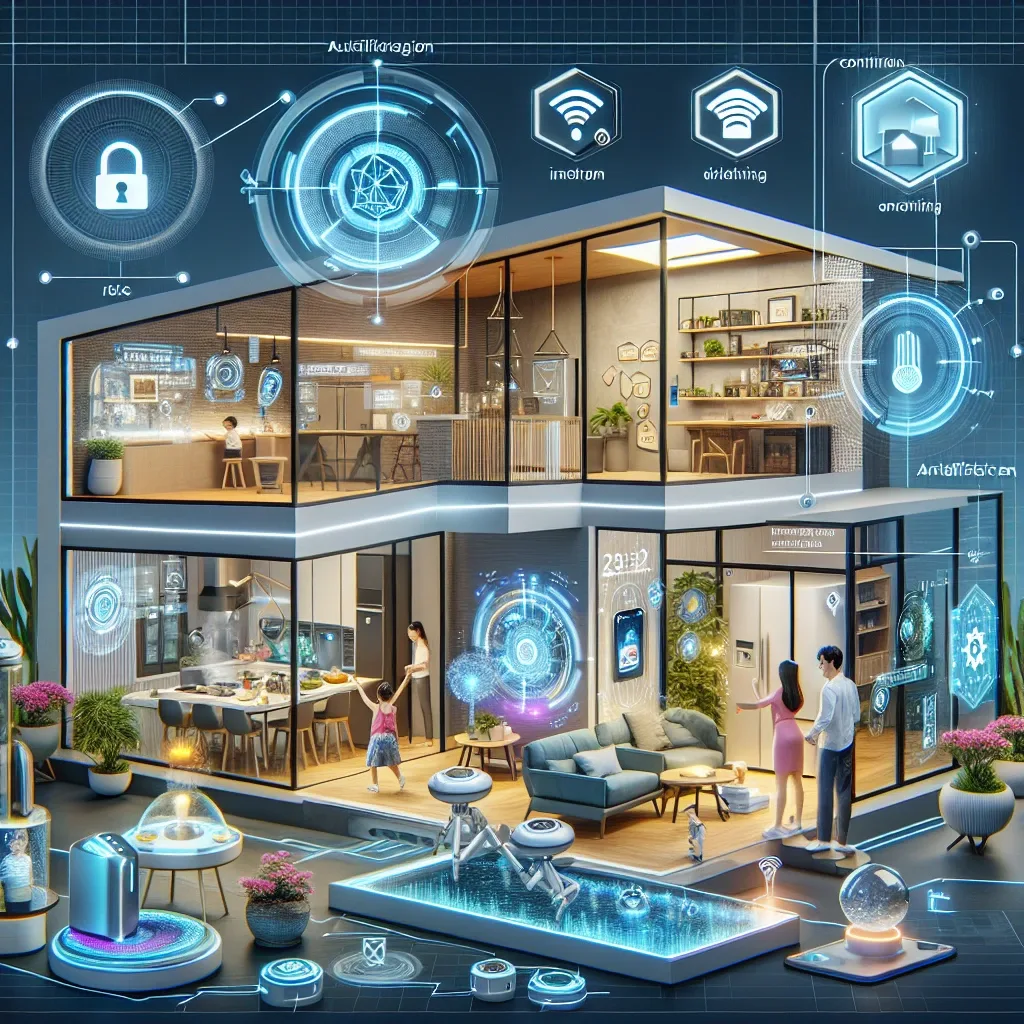
Where Smart Home IoT Stands Today
In 2026, IoT technology for smart homes has crossed a significant threshold. Device prices have fallen to the point where homes at every level can participate. Matter 1.4 has resolved the cross-brand incompatibility that once blocked adoption. And edge AI has begun embedding itself in cameras, sensors, and control devices.
What is happening over the next two to five years, however, is more interesting than what happened in the previous decade.
On-Device AI Shifts IoT from Reporting to Deciding
The clearest trend is the migration of AI processing from the cloud down onto the device itself. New EZVIZ and TP-Link cameras analyse footage on-device and transmit only the results — not raw video streams.
The outcome is faster response, better privacy, and far lower bandwidth consumption. New mmWave sensors classify behaviour directly on-device, allowing the system to respond faster than the round-trip to a cloud server and back.
Thread and Matter 1.4 Build a More Resilient Home Network
Thread, the mesh protocol underlying Matter 1.4, allows devices to relay data to each other rather than each connecting directly to a router. This makes the home network more robust and extends coverage without adding routers.
In large homes or those with thick concrete construction, Thread mesh reaches every corner without additional access points.
Home Assistant supports Thread Border Router functionality, allowing Raspberry Pi 5 to coordinate the home's entire Thread mesh.
Renewable Energy and Smart Homes: The Fastest-Growing Segment
Integrating IoT with renewable energy systems is the fastest-growing trend in Thailand's premium home market. Systems combining solar panels, battery storage, and smart load management allow homes to use renewable energy efficiently.
The smart system charges batteries when solar generation is high and releases energy during peak-rate periods or power outages, increasing the home's energy independence.
Health and Wellbeing: The Next Generation of Home IoT
Next-generation IoT devices will place greater emphasis on resident health and wellbeing. Sensors measuring PM2.5, CO2, VOC, and humidity; noise-level sensors detecting indoor pollution; and circadian-rhythm-aware lighting will become standard features in premium homes within the next few years.
HappySmart designs systems ready to expand into health-focused IoT without requiring infrastructure changes.