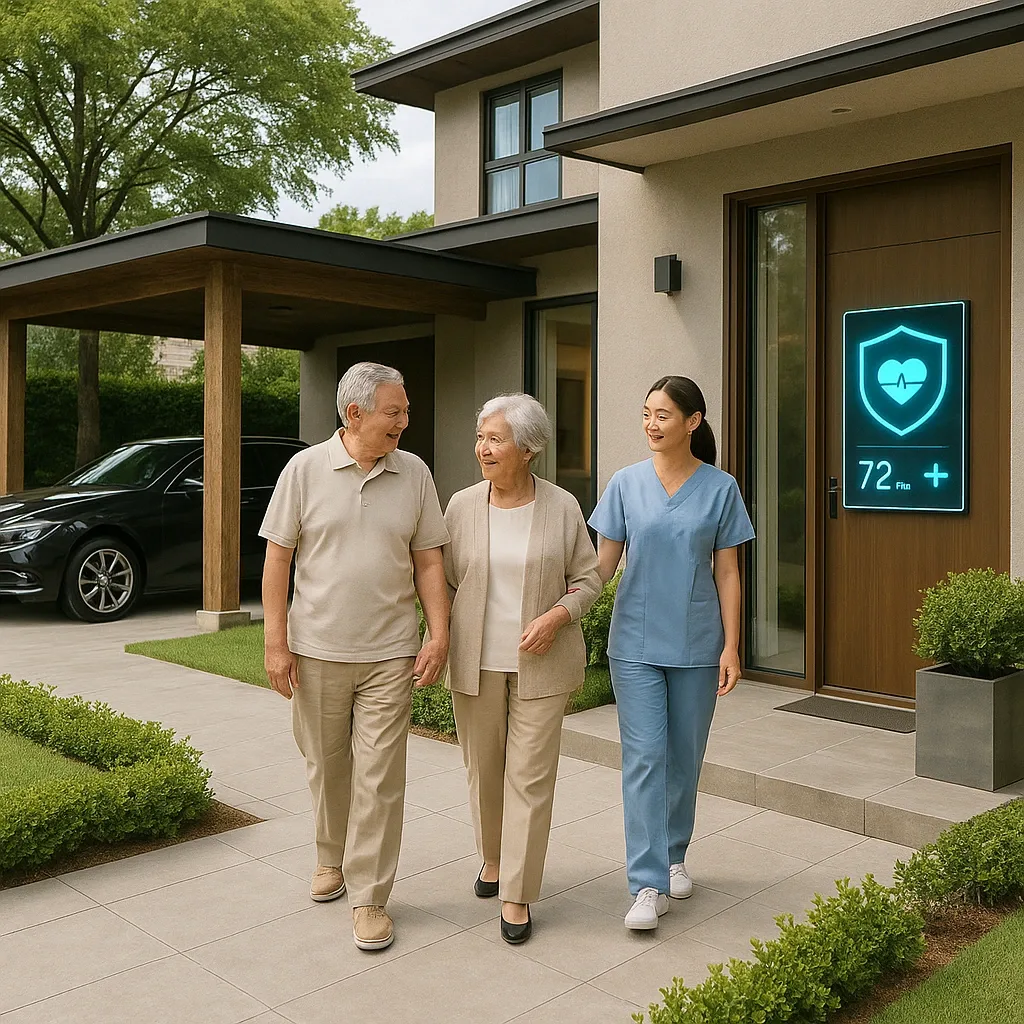
Why Comparing 4 Tiers Matters More Than Reading Project Names
Bangkok’s property market offers elderly-branded Smart Home and Wellness projects across a wide price spectrum, but the actual Health Care features delivered vary enormously. Some high-priced projects include fewer functional health features than a well-chosen mid-range project aimed at the same demographic. A tier-by-tier comparison reveals the real picture.
Tier 1: Luxury Wellness (Sathon–Silom, 8–15 million THB)
Projects in the Sathon–Silom corridor — often adjacent to Tier 1 private hospitals — typically provide rooms built to international Universal Design standards, a developer-installed Smart Home system (Smart Lock, motorised curtains, smart lighting), and a Concierge Nurse On-Call service. Health Care features included: an AI Health Monitoring Platform linked to a partner hospital, a Wearable Integration Dashboard accessible to the resident’s physician, and a five-minute emergency response time.
Caveats: common-area maintenance fees of 80–150 THB/sq m/month, and potential lock-in to a developer platform that may be discontinued.
Tier 2: Mid-Range Smart (Lat Phrao–Ratchada, 3–6 million THB)
Mid-range projects in Lat Phrao–Ratchada–Huai Khwang represent the sweet spot for Thai families. They are within reach of Chulalongkorn Hospital, Phrama 9 Hospital, and Vibhavadi Hospital. Developer-installed Smart Home systems typically include a Smart Lock, Video Doorbell, and shared-area motion sensors. Some projects include bathroom mmWave sensors — verify before committing.
Health Care features the buyer must add independently: a Wearable smartwatch, a medication reminder system, and a Family Monitoring Dashboard via Home Assistant. Additional budget required: 15,000–25,000 THB — still significantly cheaper than a Luxury project overall.
Tier 3: Smart Condo (Huai Khwang–On Nut, 2–4 million THB)
Smart condominiums in the 2–4 million THB range generally include basic Smart Home features: a Smart Lock and video intercom. Some add smart lighting and a shared-area air quality sensor. Developer-provided Health Care features are minimal; buyers must self-install most of the system. The upside: juristic bodies in these areas tend to permit personal IoT devices.
Key items to verify before purchase: ceiling height ≥ 2.5 metres (some units fall short), Fiber-to-Unit connectivity (not just shared WiFi), and a generator covering all residential units.
Tier 4: Suburban Retrofit (Pathum Thani–Nonthaburi, house 2–5 million + renovation 150,000–300,000 THB)
Detached houses in the suburban ring cost less than Bangkok condominiums but require independent renovation to Universal Design standards and full self-installation of all Smart Home systems. The significant advantages: no juristic-body restrictions on IoT, garden space for elderly exercise, and private parking.
Recommended renovation budget: bathroom Universal Design conversion 60,000–100,000 THB; full 4-zone Smart Home system 40,000–60,000 THB; emergency lighting and small generator 20,000–40,000 THB. Total renovation: 120,000–200,000 THB.
Summary Comparison Table
Luxury Wellness: Health Care Score 9/10, IoT flexibility 5/10, value per baht 6/10. Mid-Range Smart: Health Care Score 7/10 (after self-addition), IoT flexibility 8/10, value per baht 9/10. Smart Condo: Health Care Score 5/10 (after self-addition), IoT flexibility 7/10, value per baht 8/10. Suburban Retrofit: Health Care Score 8/10 (self-funded), IoT flexibility 10/10, value per baht 8/10.
For budget-conscious families seeking the best overall value, Mid-Range Smart in the Lat Phrao–Ratchada corridor is the strongest choice.