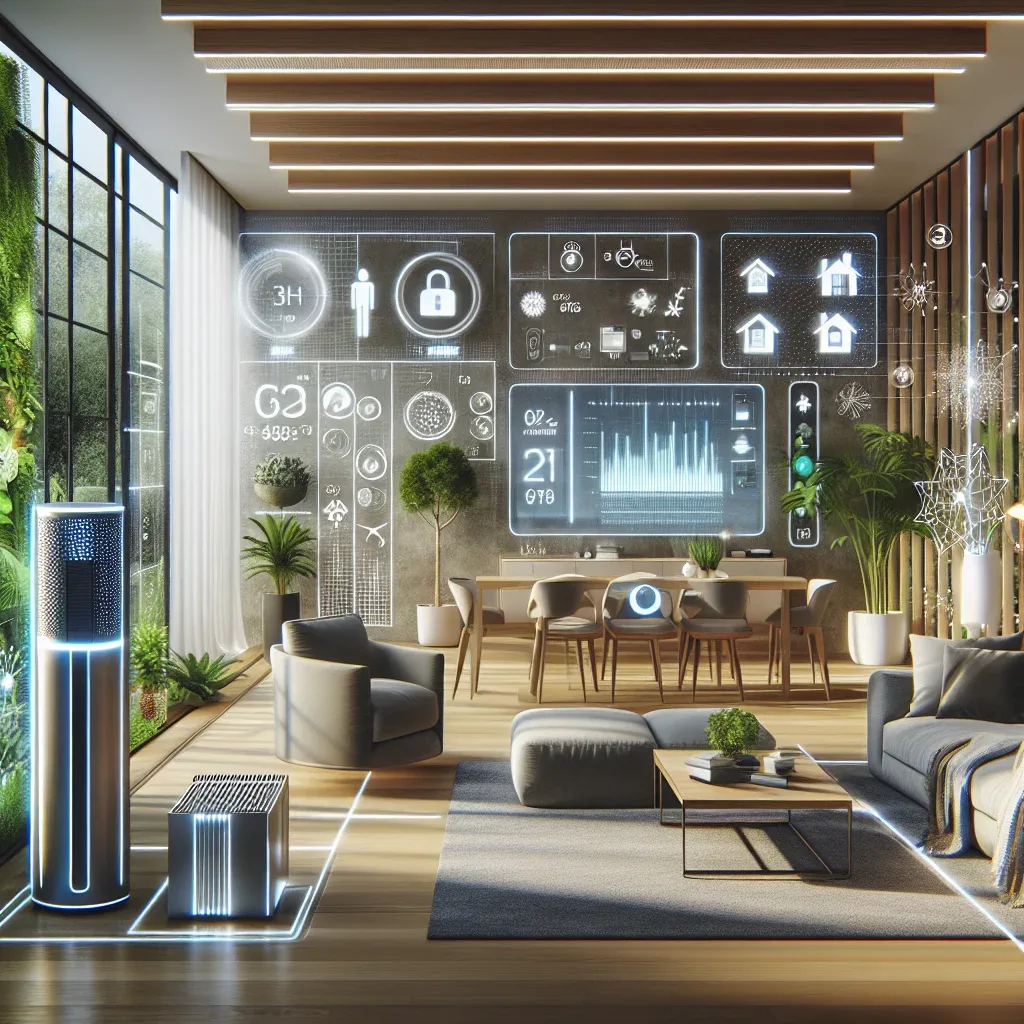
Light and air are the two most fundamental factors for health and wellbeing. Integrating Smart Lighting with intelligent air systems through Home Assistant creates an environment that supports body and mind — not just aesthetically, but in measurably healthy ways.
The Relationship Between Lighting and Ventilation
Lighting and ventilation have a compelling relationship. In the morning when the Smart Home activates Cool White 6500K bulbs to promote alertness, the system should simultaneously open ventilation to clear overnight CO2 accumulation — awakening both body and brain fully.
At night when switching to Warm White 2700K to stimulate melatonin production, the system should reduce ventilation fan speed to quiet mode, maintaining CO2 below 600 ppm without disruptive noise.
Circadian Rhythm Schedule for Smart Lighting
Configuring Circadian Lighting in Home Assistant makes bulbs automatically adjust color temperature and brightness throughout the day. Morning 06:00-09:00: Cool White 6500K at 100% brightness stimulates cortisol and alertness. Daytime 09:00-17:00: Natural White 4000K at 80% brightness provides balanced work lighting.
Evening 17:00-21:00: Warm White 3000K at 60% brightness helps the body relax after work. Night 21:00-bedtime: Warm White 2700K at 30-40% brightness stimulates melatonin to prepare for sleep.
Philips Hue White Ambiance at 1,500-2,500 THB per bulb or Yeelight Color at 700-1,200 THB per bulb support Zigbee and connect directly to Home Assistant.
UV-C Light for Air Disinfection
UV-C at 254nm wavelength destroys 99.9% of bacteria and virus DNA, ideal for kitchens, bathrooms, and rooms used by respiratory patients. Smart UV-C Sanitizers at 2,000-5,000 THB can be automated to activate only when rooms are unoccupied.
Integrating UV-C with Fresh Air Systems: after the ventilation system brings in fresh air, UV-C units installed in ducts or rooms disinfect incoming air before it circulates through the home — providing maximum protection for immunocompromised individuals and young children.
Room-by-Room Integration Examples
Bedroom: Circadian lighting adjusting automatically through the night, combined with quiet HEPA purifier and low-speed ERV maintaining CO2 below 600 ppm produces measurable sleep quality improvements.
Living room: Smart Scenes adjusting ambiance by activity (movie/social/work) combined with a purifier adjusting speed to live PM2.5 data and CO2 sensor-triggered automatic ventilation.
Kitchen: Full Cool White during cooking, smart exhaust fan automatically activating when VOC rises, and UV-C running after occupants leave to disinfect air-carried contaminants.
5 Benefits of Smart Lighting Combined with Air Systems
First: remote control via smartphone — adjust lights and air before arriving home. Second: 30-50% energy savings from automatically controlled LED lighting. Third: enhanced security through absence simulation — randomized light patterns when the home is empty.
Fourth: an environment that supports mental health, reducing stress from inappropriate light and air conditions. Fifth: automated scheduling that prepares the home for every life cycle — work, relaxation, and sleep.