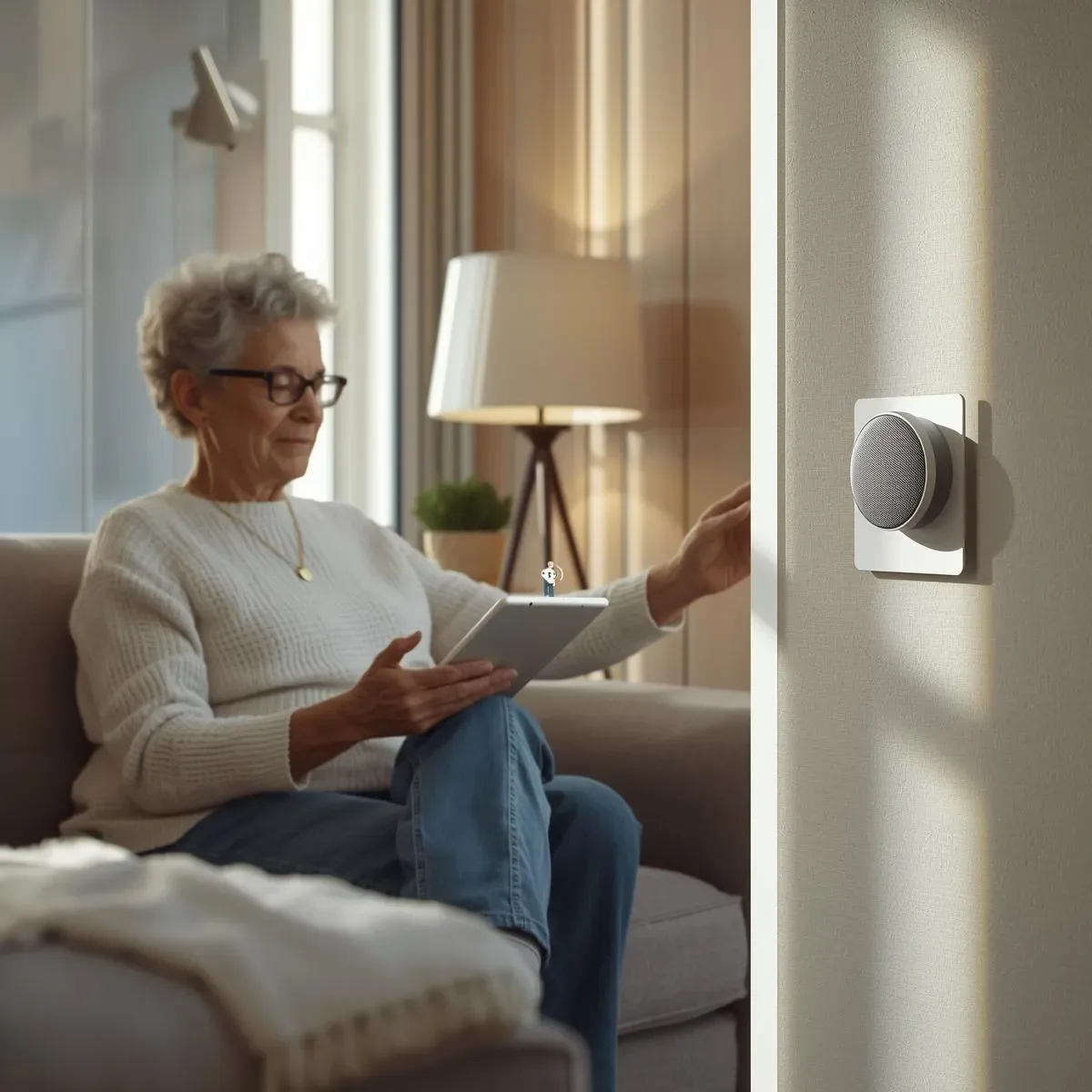
What Is Passive Monitoring and Why It Matters for Thai Elderly
Most elderly Thais refuse to wear smartwatches or health trackers — they find them uncomfortable or feel surveilled. Passive monitoring measures health without any wearables, using environment sensors instead. The elderly person lives normally while the system works invisibly in the background.
60GHz mmWave Radar: Contactless Vital Signs
Seeed Studio MR60BHA1 (60GHz): detects respiratory rate, heart rate, and falls without any wearable device. Detection radius 3–5 metres; connects to Home Assistant via UART-to-USB or ESPHome on ESP32.
Measurements: respiratory rate 12–20 breaths/min normal (alert if <10 or >25); heart rate 60–100 bpm normal (alert immediately if >120); presence detection — detects whether someone is in the room even without movement, unlike PIR which only detects motion.
Installation: mount on ceiling or wall above the bed, 1–2 metres from the person. Ceiling centre of bedroom is optimal.
Smart Toilet: Bathroom Visit Frequency Tracking
Toilet visit frequency is an important biomarker. Elderly adults normally visit 5–8 times per day. An increase to >10 visits per day may indicate UTI (urinary tract infection), diabetes, or medication side effects.
Tracking method: PIR or mmWave radar in the bathroom logs a timestamp each time someone enters. Home Assistant counts daily visits and compares to a personal baseline (calculated over the first 7 days of monitoring). If visit count rises >50% above baseline, the family is alerted.
Kitchen/Fridge Access Pattern Analytics
A magnetic contact sensor on the fridge door logs every opening — normally 4–8 times per day around meal times. If the fridge is not opened for >6 hours during a period when the person normally eats, this may indicate illness. Home Assistant builds a personal Pattern Profile from historical data.
Withings Body+ Smart Scale: BIA Body Composition
Daily morning weigh-in: weight, BMI, body fat %, muscle mass, hydration %. Data syncs from the Withings Health Mate API → Home Assistant. If weight drops >2kg in 7 days → alert (possible dehydration or illness).
IoT Pill Dispenser
An automatic pill dispenser (e.g., MedMinder or Hero Health) holds pre-loaded medication for multiple doses. It dispenses at scheduled times and sends a LINE notification. If the pill is not taken within 30 minutes, a second alert is sent. After 1 hour without retrieval, the family is notified.
ML Anomaly Detection for Behavioural Patterns
Home Assistant + Python analyses a multi-dimensional behaviour vector daily: wake-up time (from bed-exit radar), first bathroom visit time, bathroom visit frequency, first fridge opening time, mean overnight heart rate, and morning weight. An Isolation Forest algorithm detects statistically significant anomalies. On anomaly days, a summary report is sent via LINE OA to the family at 07:00 with a traffic-light status: Green (normal), Yellow (worth observing), Red (call to check in).
PDPA Compliance
All sensors operate locally — no data is sent to third-party cloud services. Vital signs and behaviour pattern data are stored only in the local Home Assistant database. The elderly person and family retain full control of their data.