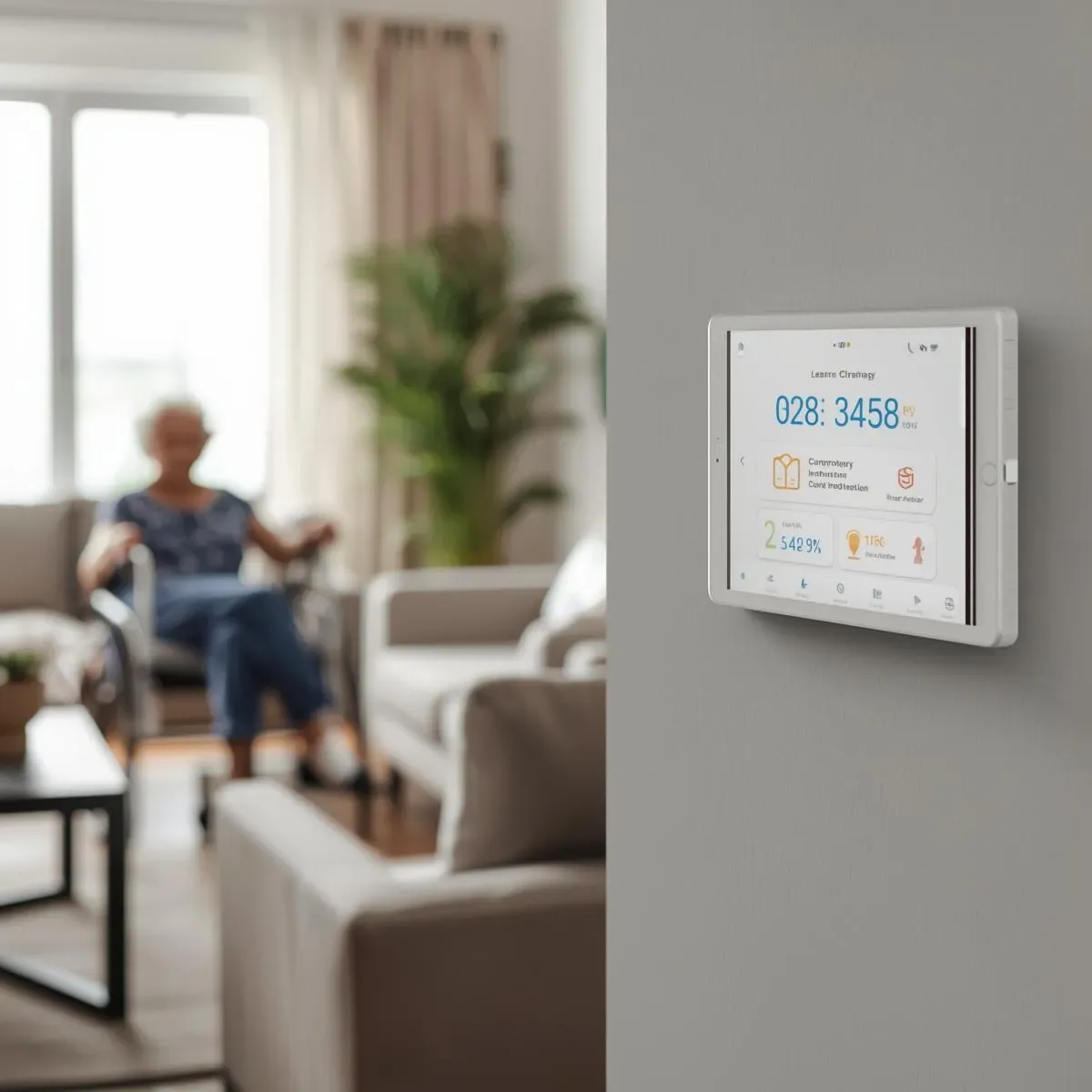
AI in Elderly Care: From Reactive to Predictive
Traditional elderly care systems are reactive — waiting for an incident and then responding. Modern AI Smart Home systems shift to predictive mode, analysing long-term patterns in activity, health indicators, and behaviour to detect warning signs before accidents or illness occur.
AI Pose Estimation for Advanced Fall Detection
MediaPipe Pose (Google): Detects 33 body landmarks in real time, running on a standard CPU without a dedicated GPU. Deployed on a Raspberry Pi 4 or with a Coral USB TPU connected to an IP camera, it analyses posture and detects fall events locally.
Fall detection algorithm: When the hip-to-floor angle drops below a defined threshold (<30 degrees) with high movement velocity (sudden drop), the system triggers a fall alert — while filtering out slow sitting movements and lying on a sofa via time-series analysis.
Privacy-first design: All pose data is processed locally. No video is transmitted outside the home — only skeletal keypoint data is stored, not actual footage. This makes elderly residents far more comfortable than being continuously recorded on camera.
Activity Recognition: A Home That Knows Your Elderly Relative’s Routines
With a motion sensor network and AI analysis, the system learns and memorises normal daily activity patterns, then alerts family members when anomalies appear:
Daily pattern baseline: Over the first 2–4 weeks, the system builds a baseline routine — wake at 07:00, bathroom at 07:15, cooking at 08:00, afternoon rest at 13:00.
Anomaly detection: When patterns deviate significantly — no kitchen activity three mornings in a row, or unusually frequent bathroom visits overnight (potentially indicating UTI or prostate issues) — family members receive a LINE alert.
Long-term trend: Activity level is recorded week by week. A sustained decline may indicate depression or an underlying health issue worth investigating.
AI Camera Setup for Elderly Care
Hardware: Reolink RLC-810A (PoE, 8MP) + Frigate NVR on Home Assistant with Coral USB TPU for local AI processing.
Frigate zone configuration:
yaml
cameras:
  living_room:
    detect:
      enabled: true
      width: 1920
      height: 1080
    objects:
      track:
        - person
    zones:
      danger_zone:
        coordinates: "100,600,800,600,800,1080,100,1080"
        objects:
          - person
Define a danger zone near stairs or the bathroom entrance. When person detection shows an occupant in the zone for an abnormal duration (lying on the floor), HA triggers an emergency alert.
Non-Invasive Sleep Quality Monitoring
mmWave radar sleep monitor: LD2410 or LD2450 mounted on the ceiling or bedside detects: breathing rate, estimated heart rate, movement count (number of turns), and time-in-bed versus estimated sleep duration.
HA integration: Via ESPHome on ESP32 + LD2410. Sleep quality data populates an HA dashboard where family can review a daily summary.
Alert conditions: Breathing rate below 10 or above 25 per minute (potential sleep apnea or emergency); no bed presence detected after 06:00 (resident has risen but not returned as expected).
Voice Interface for Elderly Users
Many older adults are uncomfortable with apps and touchscreens but interact naturally with voice. Place Google Nest Mini or Amazon Echo Dot units in the bedroom and living room:
SOS voice command: "OK Google, call my son" or "Alexa, call for help" triggers a HA automation that places a VoIP call and sends a LINE alert with location.
Daily check-in: "OK Google, how is today looking?" — HA responds with a weather summary, today’s medications, and scheduled activities.
Medication reminder: Voice reminders at each medication time with a confirmation prompt — "Have you taken your medicine?" — logged in HA.
Summary: AI Elderly Care That Does Not Interrupt Life
The best AI elderly care system operates quietly in the background — respecting privacy, not making the resident feel constantly monitored, yet responding immediately when an emergency occurs. Combining AI pose detection, activity recognition, and mmWave sleep monitoring through Home Assistant provides comprehensive protection that no traditional care system can match.