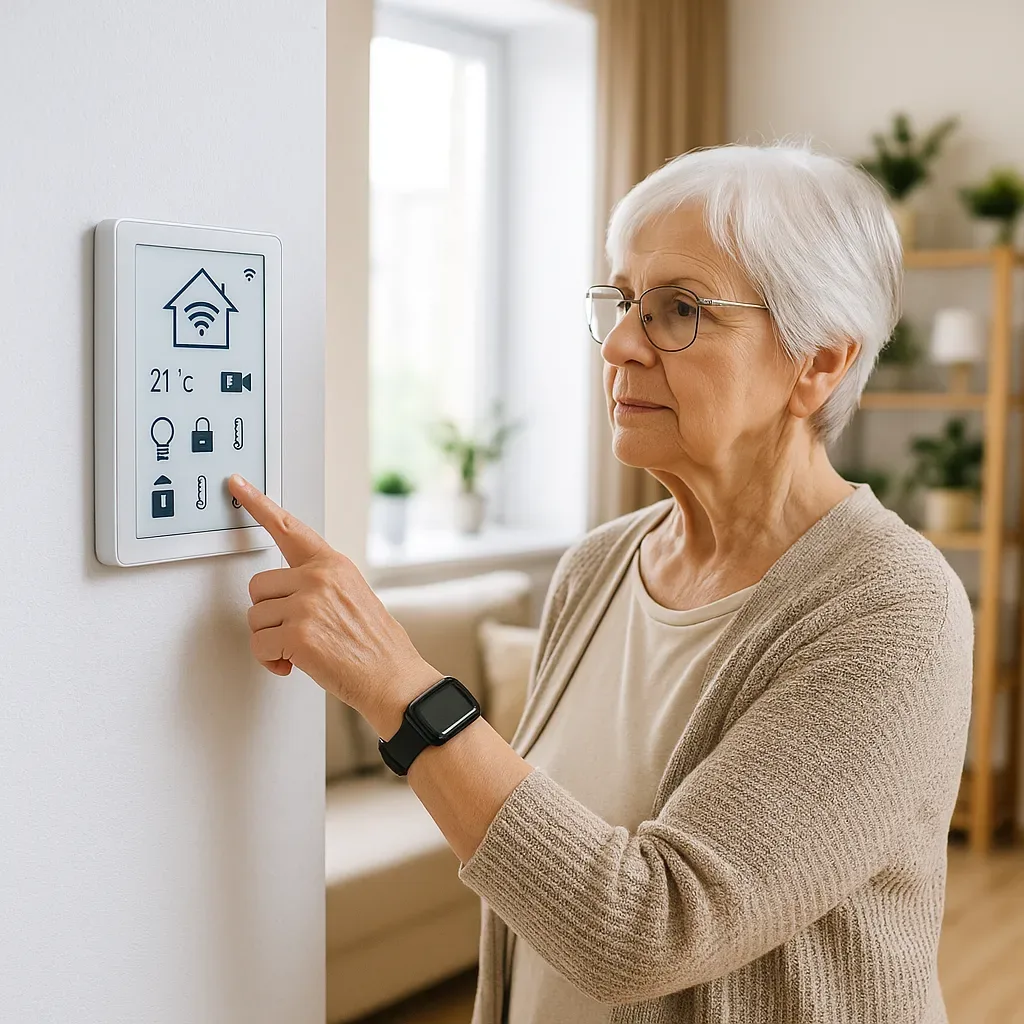
Designing Smart Homes for the Elderly: More Than Adding Devices
Creating a safe home for the elderly requires more than purchasing additional equipment — it requires designing integrated systems that work together effectively, focused on the four highest-risk dimensions: bathroom safety, medication management, emergency communication, and preserving independent lifestyle.
Smart Bathroom: The Home’s Highest-Risk Space
The bathroom is the most common location of household accidents for the elderly. Smart bathroom modifications include smart grab bars with pressure sensors that detect unusually forceful gripping (which may indicate a fall in progress) and send immediate alerts. Non-slip smart mats with FSR sensors monitor weight distribution and can detect abnormal body positions such as lying flat on the floor. Walk-in shower designs eliminate step-over edges, dramatically reducing trip-and-fall risk. Smart showers remember preferred water temperature and automatically dispense it correctly. Bathroom Night Mode activates warm low-intensity orange lighting automatically when the elderly resident enters at night, avoiding the pupil shock of sudden bright light.
Comprehensive Medication Management
Managing multiple medications for the elderly requires more than simple timers. A Smart Pill Dispenser with compartments organized by day and time opens the correct section with audio alerts and green indicator lights — if medication is not retrieved within 15 minutes, the system sends a repeat reminder and a LINE notification to family members. Medication Tracking logs every dose in a database for doctor and family review. Drug Interaction Alerts can check new medications against a database before they are added to the dispensing schedule.
Automated Daily Check-in: Confirming Safety Every Day
A Daily Check-in system provides families with daily reassurance without requiring phone calls. If morning activity is not detected by 10:00 AM, the system asks through the living room speaker if the resident is well and requests confirmation of a button press. If no confirmation arrives within 10 minutes, a LINE alert is sent to family members immediately.
Family Communication Hub
A comprehensive family communication hub for elderly residents includes a large Smart Display (such as Amazon Echo Show or Google Nest Hub Max) for photos, messages, and easy video calls. A One-Button Video Call button immediately initiates a video call to a designated family member without navigating menus. A Family Status Board displays where each family member is — home or traveling — using Home Assistant Device Tracker data.
Conclusion
A good smart home system for the elderly must be built around preserving independence and dignity — not surveillance or excessive monitoring. The right system is transparent, easy to use, and responds to the genuine needs of the person living in it.