Thailand’s New Reality: An Aging Society
Thailand officially entered “Aged Society” status in 2022 with over 13 million people aged 60+, representing nearly 20% of the population — rising to 28% by 2040. Simultaneously, family sizes are shrinking and adult children are working, unable to provide constant care.
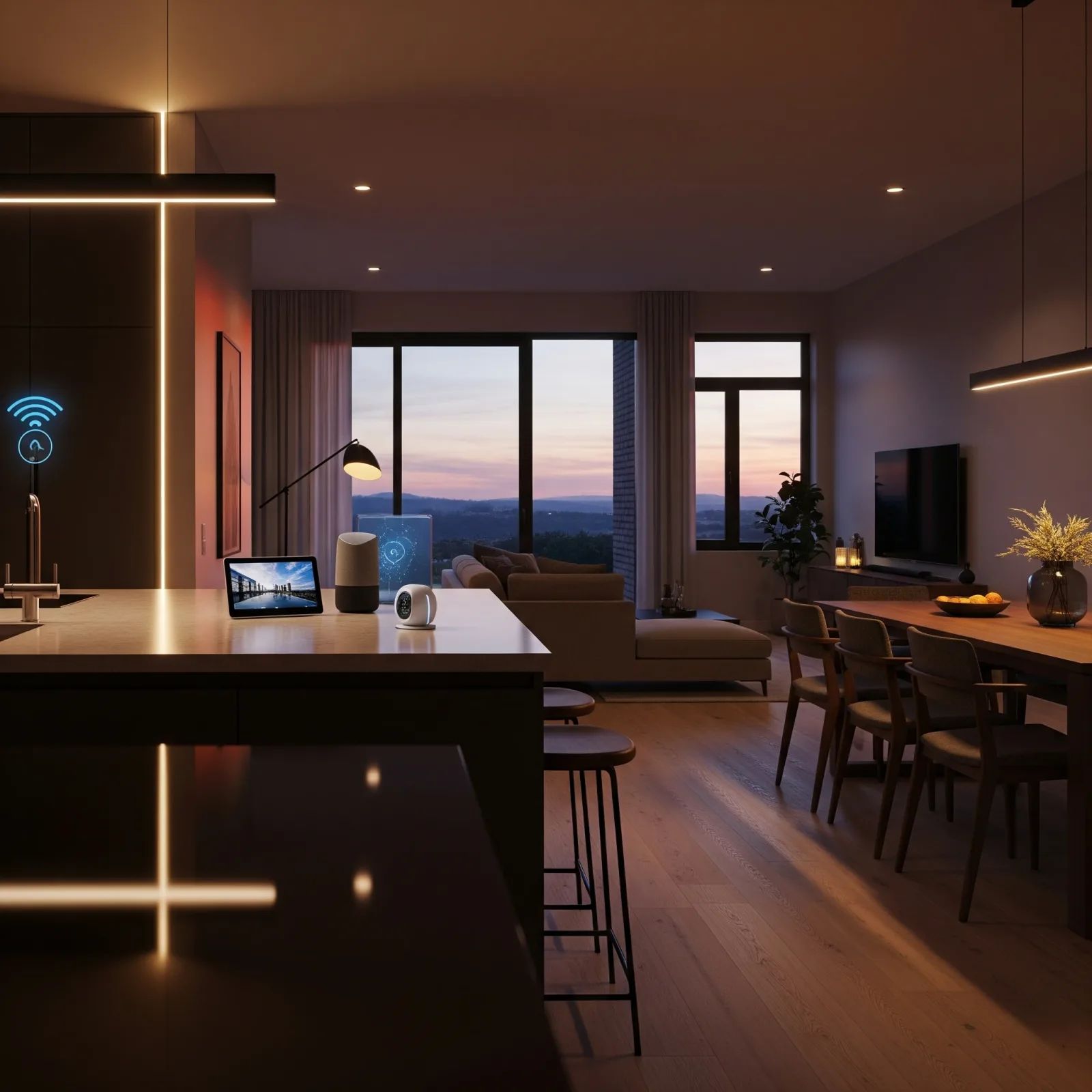
Smart Home is the answer that aligns with this reality.
4-Dimension Comparison: Conventional Home vs Smart Home
Dimension 1: Safety Monitoring
| Conventional Home | Smart Home | |
|---|---|---|
| Event detection | By chance if someone sees | 24/7 sensor monitoring |
| Fall detection speed | Unknown or hours later | 30–90 seconds |
| Detects while sleeping | No | mmWave monitors breathing |
| Cost | 0 THB | 5,000–25,000 THB (one-time) |
Dimension 2: Emergency Response
| Conventional Home | Smart Home | |
|---|---|---|
| Time-to-assistance | 8–14 hours | 5–15 minutes |
| Alert channels | Phone call (if phone is nearby) | LINE + Call + Push Notification |
| Active at night | No | 24/7 |
Dimension 3: Environment Control
| Conventional Home | Smart Home | |
|---|---|---|
| Temperature | Manual adjustment | Auto per preset |
| PM2.5 | Unknown | Monitored + Auto Purifier |
| Night lighting | Must physically turn on | Motion-activated |
| Medication | Self-memory (or forgotten) | Smart Reminder |
Dimension 4: Privacy and Independence
This is where Smart Home clearly outperforms a nursing home:
- 78% of Thai elderly want to remain in their own home (ABAC Poll 2023)
- Smart Home enables longer independent living while giving families peace of mind
- mmWave sensors detect presence without recording images or storing personal data
The Future of Smart Home Elderly Care (2026–2030)
AI Predictive Health
AI will learn individual patterns — knowing someone normally wakes at 7 AM, and alerting family if they haven’t stirred by 9 AM. Changes in walking pattern could signal early neurological conditions.
Wearable Integration
Apple Watch, Garmin, and other wearables will connect to Home Assistant, streaming heart rate, SpO2, and step data to family dashboards.
Robot Companions
Small companion robots (LOVOT, Pepper) are entering the Thai market — not replacing love, but providing companionship and cognitive stimulation.
Voice-First Interface
Many Thai elderly are unfamiliar with smartphones but comfortable with speech. Thai-language voice interfaces enabling direct commands like “turn on the AC” or “call the doctor” will be a major trend.
A Note for Thai Families
Investing in Smart Home for elderly family members is not just about technology — it is an expression of care, deployed through systems that watch when family cannot be present. Thailand’s culture of filial devotion (กตัญญูกตเวที) finds a powerful modern expression through Smart Home investment.
Start small — even PIR + LINE Notify makes a meaningful difference. Upgrade gradually as needs evolve.
Conclusion
Smart Home does not replace love — it amplifies love’s effectiveness. Elderly parents stay in their own home with dignity. Families gain peace of mind. Society benefits from healthier, happier seniors.