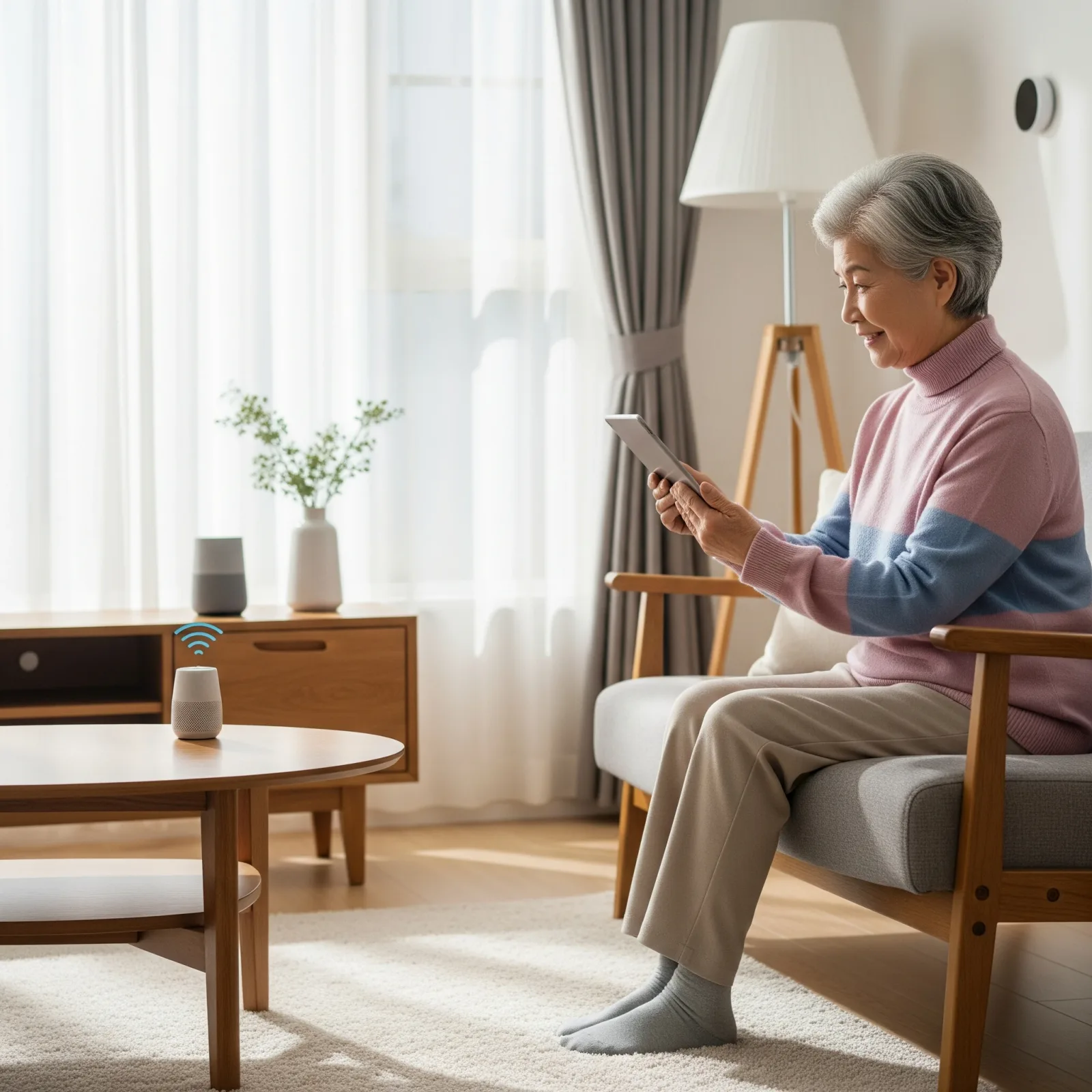
The Real Risk of Elderly Solitude
Across Thailand, the number of elderly residents living alone grows each year — children working in cities, seniors preferring independence. Yet behind the quiet of solitary living, real risks hide in plain sight.
Imagine a 75-year-old grandmother who manages perfectly well every day — until she slips in the bathroom at 2 AM. No one hears. Her phone is in the bedroom. Help arrives far too late. This happens in real Thai homes every day, and it is entirely preventable.
6 Technologies Built for Elderly Living Alone
1. Motion Sensor — Learning Daily Patterns
PIR sensors (200–800 THB) installed in the bedroom, living room, and hallway learn the resident’s routine — normally wakes at 7 AM, leaves bedroom by 8:30 AM. If 10 AM passes with no movement detected → LINE alert fires immediately.
2. mmWave Radar — Fall Detection Without a Camera
Millimeter-wave radar detects micro-movements including breathing while motionless. Ideal for bathrooms and bedrooms because:
- No camera means no privacy violation
- Detects fall pattern when an object remains at floor level for > 30 seconds
- DIY modules: 800–2,500 THB; Professional units: 12,000–25,000 THB
3. AI Camera — Behavioral Anomaly Detection
Modern AI cameras do far more than record. Pose Estimation distinguishes:
- Normal walking vs. unstable gait
- Fall events
- Extended motionless lying position
Alerts via LINE or Push Notification with a thumbnail of the event.
4. Smart Door Sensor — Preventing Nighttime Wandering
For seniors with memory issues, leaving home unaware at night is a serious risk. Door sensors alert when any door opens between 11 PM and 6 AM. Cost: 150–500 THB per point.
5. Wireless SOS Button
IP67 waterproof SOS button mounted in bathroom and beside the bed. One press sends a Zigbee → LINE Notify alert immediately. Cost: 350–600 THB.
Important note: Train seniors to actually use the button. Many refuse to press it because they “don’t want to bother anyone” — explain clearly that it exists to protect them.
6. Motion-Activated Lighting
LED bulbs or strips triggered by motion sensors auto-illuminate when a senior rises from bed, switch off after 5 minutes of inactivity. Studies show this reduces nighttime fall risk by up to 60%.
Emergency Response: Before and After Smart Home
| Scenario | Conventional Home | Smart Home |
|---|---|---|
| Fall at night | 8–14 hours (until morning) | 5–15 minutes (LINE alert) |
| Nighttime door exit | Unknown until morning | Instant on door open |
| Prolonged inactivity | Unknown until phone not answered | Auto-alert |
Investment Tiers
Starter (3,000–6,000 THB): PIR × 2 + Door Sensor × 1 + SOS Button × 2 + LINE Notify
Standard (15,000–25,000 THB): mmWave × 2 + AI Camera × 1 + Starter package
Full Care (35,000–55,000 THB): Standard + Home Assistant Dashboard + Smart Lock + Air Quality
Conclusion
Living alone does not have to mean living vulnerably. The right Smart Home Safety setup preserves an elderly resident’s independence while giving families real-time peace of mind.