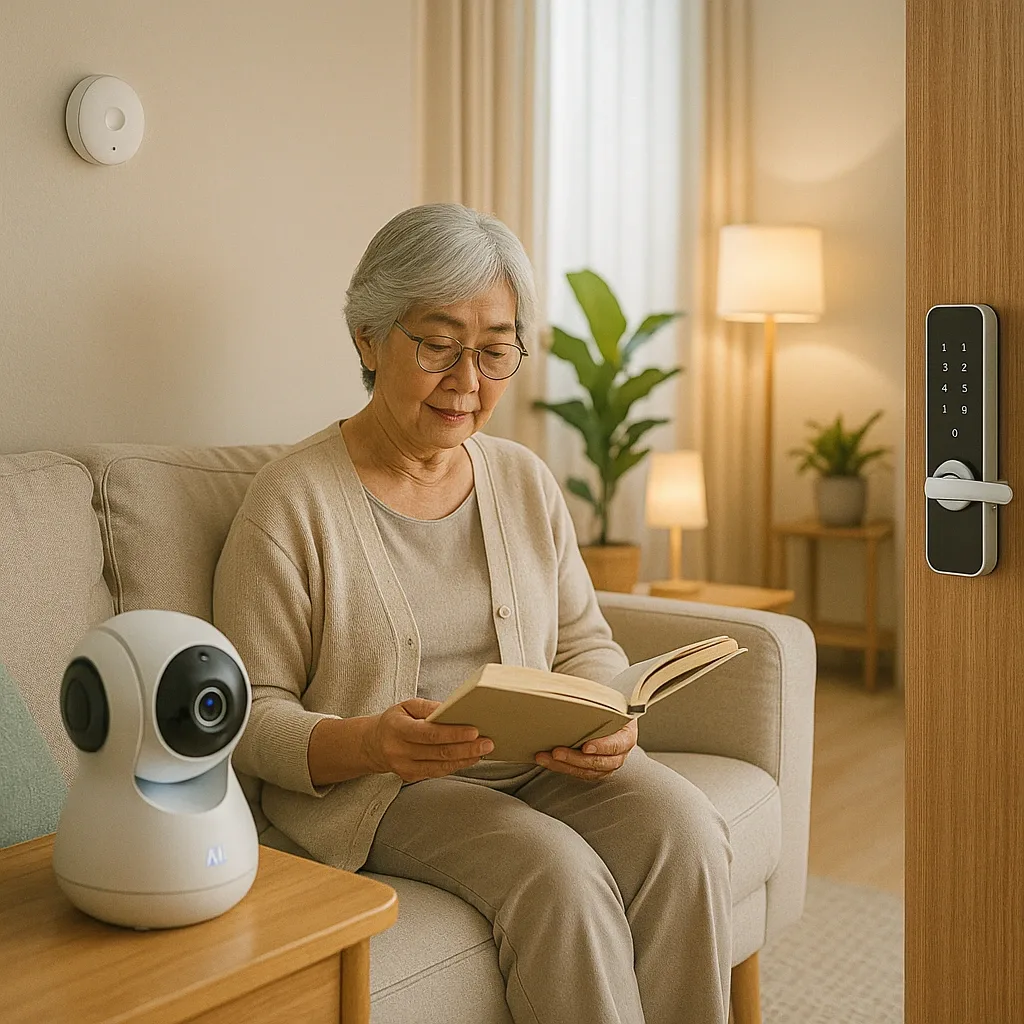
When most families think about caring for an elderly person who lives alone, a panic button is usually the first solution that comes to mind. While useful, it has a critical limitation: an elderly person who has lost consciousness from a fall, cardiac event, or severe hypoglycaemia cannot press any button. This is why Passive Monitoring systems are essential for solo elderly residents.
The Difference Between Active and Passive Monitoring
Active Monitoring depends on action from the elderly person: pressing a Panic Button, triggering an SOS watch, or calling family. These systems are effective when the resident is conscious and mobile.
Passive Monitoring operates automatically without any action from the elderly person. This includes mmWave Sensors that detect falls and prolonged stillness, a Pressure Mat on the bed that alerts if no movement is detected after the scheduled wake time, and Door or Window Sensors that verify the elderly person is following their daily routine — opening the bathroom door or the refrigerator during normal hours.
High-Risk Windows When Passive Systems Must Act Instead of the Caregiver
Medical data identifies three periods when elderly people are most vulnerable: 01:00–04:00 when blood pressure is at its daily low, 06:00–08:00 when cognitive function is at its lowest after waking, and 13:00–15:00 during the post-lunch drowsiness window with elevated risk of Postural Hypotension when rising from the sofa. During all three windows, elderly people are often unable to press a button in time — making Passive Monitoring an indispensable layer of protection.
Recommended Passive Monitoring Devices for an Elderly Home
Installation priority order: first, one mmWave Sensor in the bathroom (highest-risk location); second, a Pressure Mat or second mmWave Sensor in the bedroom; third, a Door Sensor on the refrigerator or bathroom door to verify daily routine; and fourth, an mmWave Sensor in the living room if the elderly person spends significant time there. A basic Passive Monitoring package costs approximately 10,000–18,000 THB before professional installation.
Combining Active and Passive for Maximum Effectiveness
The best system combines both types. Use the Panic Button for events the elderly person can recognise — chest pain, irregular heartbeat — and use Passive Monitoring as a backup layer when Active Monitoring cannot function. A well-configured alert rule: if no movement is detected for more than 30 minutes in the bathroom, notify the family immediately; if a further 10 minutes pass without response, escalate to the Call Center automatically.