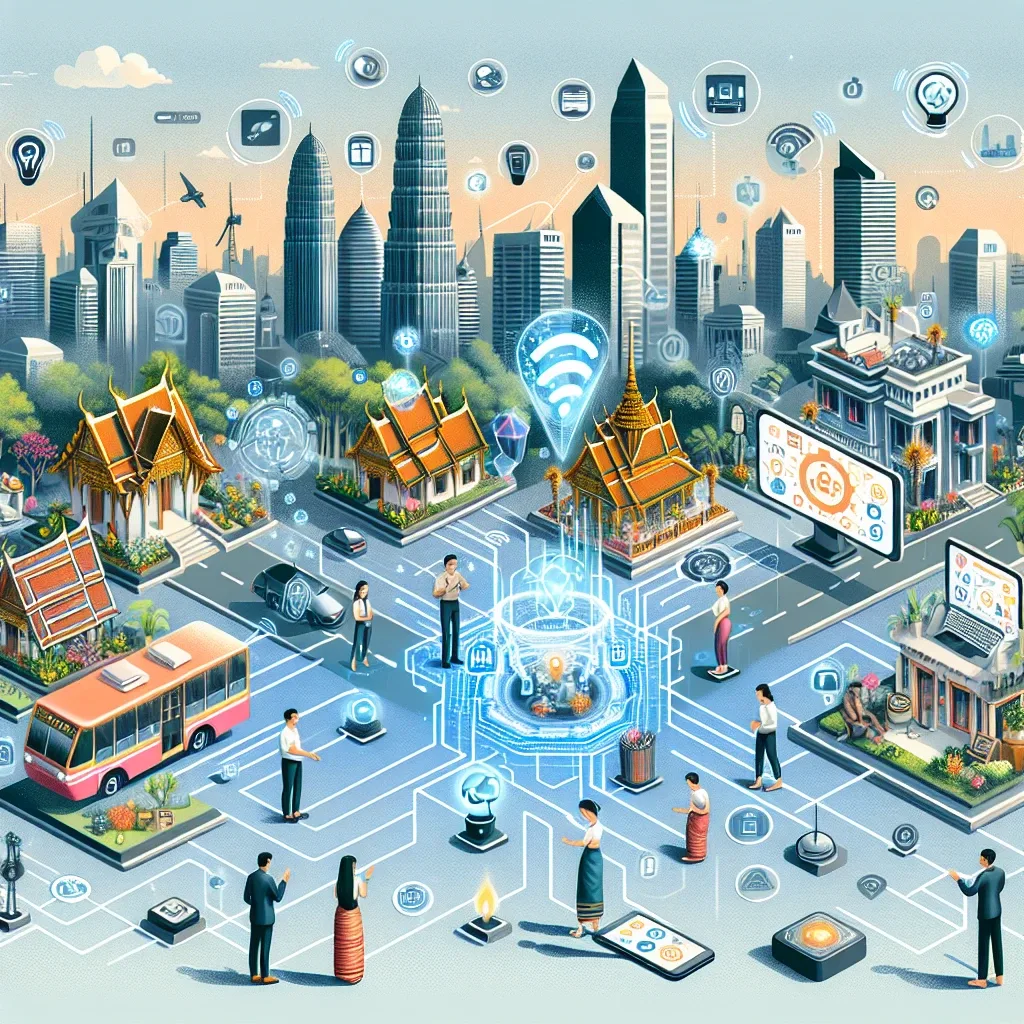
IoT in Thailand: Current Landscape
IoT in Thailand has grown rapidly over the past 5 years. The Digital Economy Promotion Agency (DEPA) reports consistently increasing IoT market value, driven by the Thailand 4.0 policy and Smart City expansion in major urban areas.
Households in Bangkok and major cities are adopting IoT devices at accelerating rates, particularly in Smart Living and Home Care segments — growing faster than the Southeast Asian average.
Key Trends: Smart Living and Home Care
The fastest-growing segments in Thailand are Smart Living (comfort and convenience automation) and Home Care (health monitoring and elderly care technology). Both markets are shifting from convenience focus toward genuine health management and safety applications.
Key growth drivers include widespread smartphone penetration, affordable mobile internet access, a rapidly aging population, and growing awareness of urban air quality problems.
Impact of AI and Big Data on Thai IoT
AI integration with IoT (AIoT) is transforming how smart home devices operate. Instead of following pre-set rules, AIoT systems learn resident behavior and adapt automatically.
Examples include Smart Thermostats that learn you prefer 25°C in the bedroom 30 minutes before sleep and pre-adjust automatically, or Home Care systems that analyze Motion Sensor data to detect anomalies in elderly residents' movement patterns.
The Role of 5G in Accelerating IoT Growth
Nationwide 5G expansion by Thailand's major carriers is opening doors to new IoT use cases. 5G delivers sub-10ms latency and high bandwidth supporting thousands of IoT devices per square kilometer.
However, for residential Smart Home applications, Wi-Fi 6 remains the primary protocol due to better coverage economics. 5G will play a more significant role for Smart Buildings and city-scale Smart City applications.
Challenges for IoT in Thailand
Key challenges include inconsistent security standards — many low-cost devices lack proper encryption — data privacy concerns, and a shortage of qualified IoT technicians outside Bangkok.
Local Smart Home platforms like Home Assistant and HomeBridge are gaining traction among privacy-conscious users seeking independence from manufacturer cloud dependencies.
Conclusion
Thailand's IoT market has strong long-term prospects, driven by government policy, expanding 5G and AI availability, and genuine Smart Living demand from consumers. Those building Smart Home foundations today will benefit most from the ecosystem's development over the next 5-10 years.