PM2.5 Health Impacts That Cannot Be Ignored
PM2.5 describes fine particles with a diameter no greater than 2.5 micrometers — small enough to penetrate the upper respiratory tract and enter the bloodstream directly. Scientifically established health effects include respiratory diseases such as coughing, asthma, pneumonia, and COPD; cardiovascular disease with elevated myocardial infarction risk; allergic responses including red eyes, nasal irritation, and skin rashes; immune suppression; and neurological effects such as headaches, insomnia, and impaired concentration. In pregnant women, PM2.5 elevates the risk of premature birth and low birth weight.
Given these documented consequences, measuring and controlling indoor PM2.5 is not excessive — it is quantifiable long-term health protection.
How IoT Transforms Air Quality Monitoring
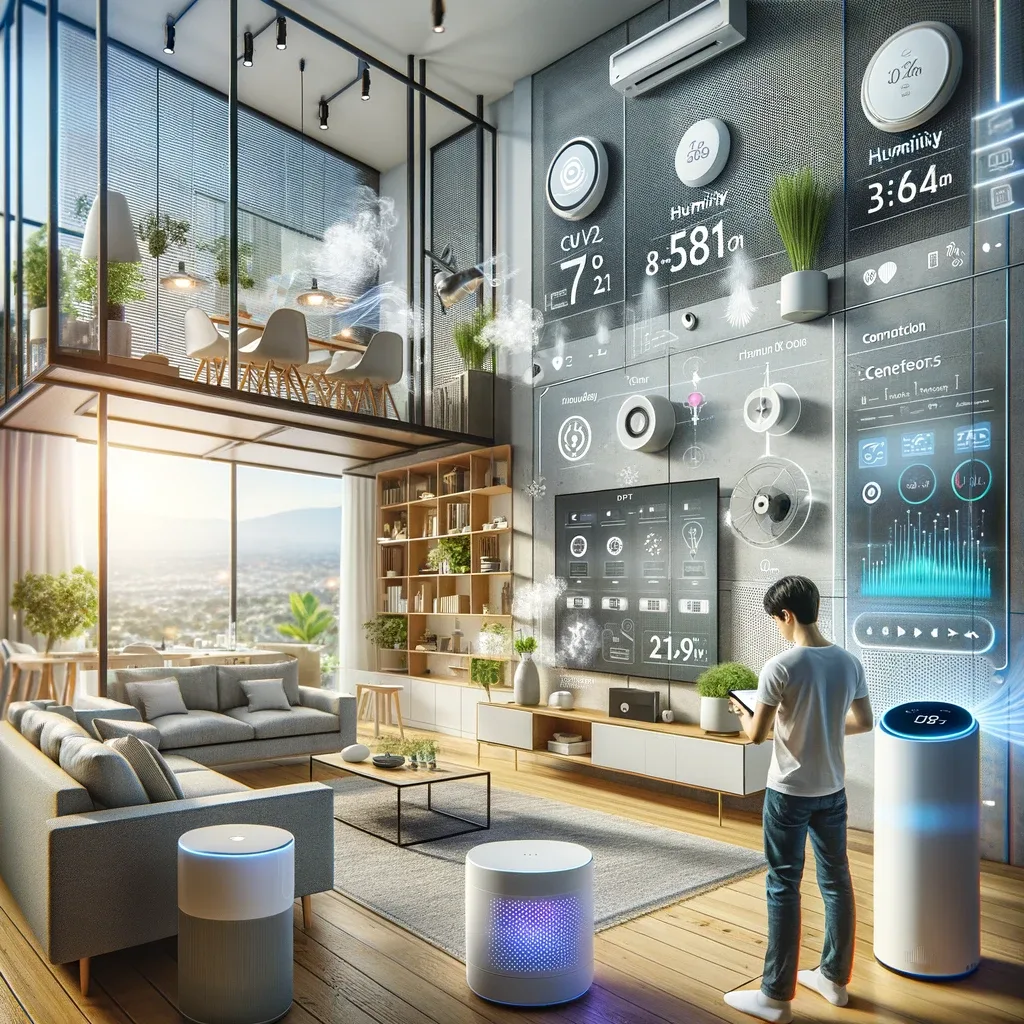
IoT technology connects devices so they exchange data and operate collaboratively without manual intervention. In the air quality context, PM2.5/PM10 sensors measure fine and coarse particle concentrations in real time. CO2 sensors measure carbon dioxide levels that indicate ventilation adequacy. VOC sensors detect volatile chemicals from furniture, paints, and cleaning products. Humidity and temperature sensors prevent mold growth conditions.
All data transmits via Wi-Fi or Zigbee to Home Assistant or a mobile app, giving occupants constant awareness of indoor conditions and enabling the system to respond automatically.
Recommended IoT Sensors for Air Quality Measurement
Xiaomi Air Quality Monitor measures PM2.5, temperature, and humidity via Wi-Fi at a budget price point — suitable for beginners. Aqara Air Quality Monitor uses Zigbee, which is more stable and energy-efficient than Wi-Fi, measuring PM2.5, TVOC, temperature, and humidity with native HomeKit support. IKEA VINDRIKTNING offers very low cost and DIY Home Assistant integration through ESPHome. PurpleAir delivers research-grade accuracy for users who want highly detailed data. Position sensors at 1.0-1.5 meters above the floor to measure air at breathing level.
Smart Air Purifiers That Integrate with IoT
IoT-capable air purifiers receive PM2.5 sensor data and automatically adjust operation. The Xiaomi Mi Air Purifier connects to Home Assistant through the Miio Integration. Dyson Pure Cool supports the Dyson API within Home Assistant. Matter-compatible models connect directly to Apple HomeKit, Google Home, and Amazon Alexa without relying on cloud servers.
Home Assistant automation examples: when PM2.5 > 35, activate High Mode; when PM2.5 < 12, reduce to Sleep Mode; when all household members leave home, power down to save electricity.
Smart Ventilation Systems in an IoT Ecosystem
HRV/ERV systems filter outdoor air through HEPA before introducing it into the home, with Home Assistant integration enabling automatic shutdown when outdoor PM2.5 rises. Smart windows connect to outdoor sensors, closing when dust levels are high and reopening when outdoor air quality returns to safe levels. Positive Pressure fans push clean air into the home to prevent outdoor dust from infiltrating through gaps and penetrations.
Why Choose HappySmart for IoT Air Quality Systems
HappySmart specializes in designing and installing Smart Home systems that integrate air quality sensors, smart air purifiers, ventilation systems, and Home Assistant into one unified automated platform. The expert team assesses your home, recommends the right equipment, configures automation, and provides complete after-sales support — ensuring your home maintains clean air around the clock.