What Is IoT and Why Does It Transform Dust Management?
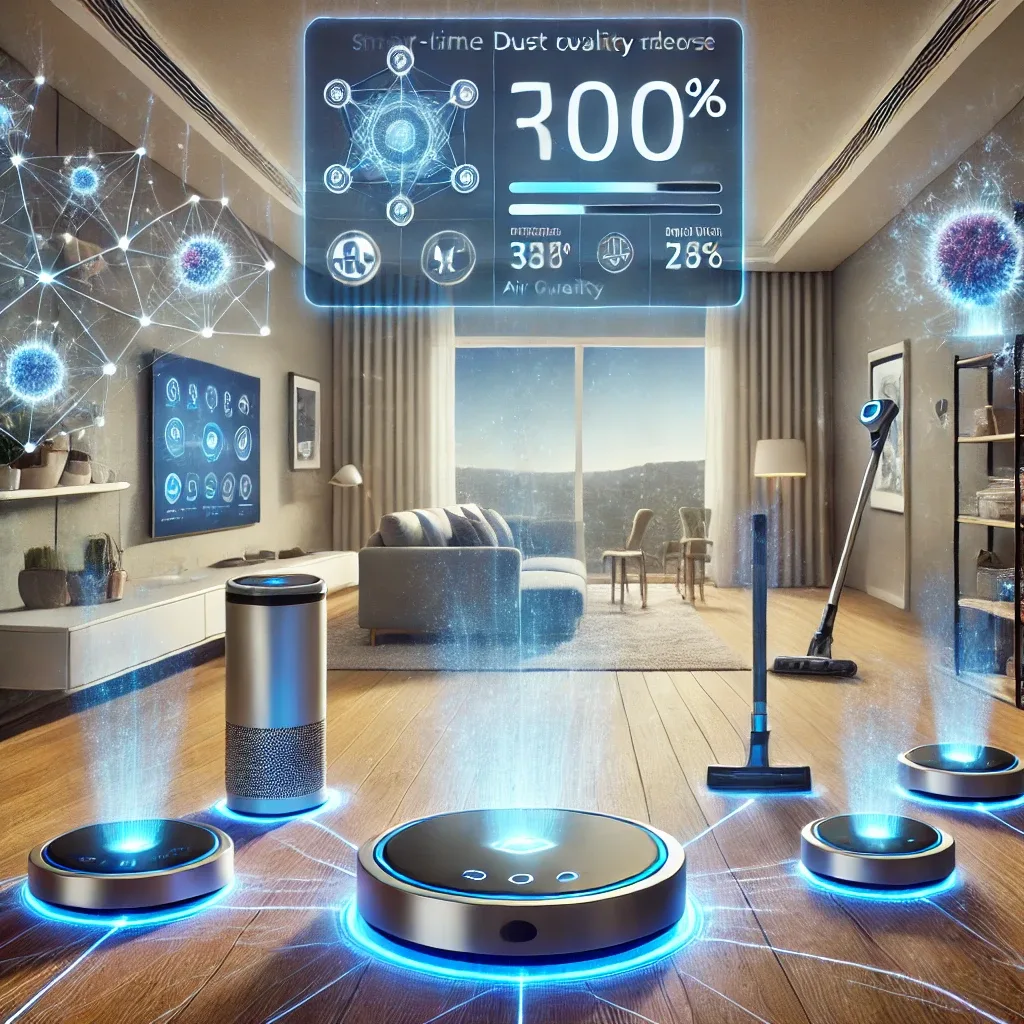
The Internet of Things (IoT) is a network of connected devices that exchange data via the internet. In the context of dust management, IoT enables your home to "know" how much dust exists in each room and automatically activate the appropriate equipment — without waiting for you to notice a problem and respond manually.
Dust affects health across multiple dimensions: respiratory symptoms such as coughing, wheezing, and asthma; allergy responses including sneezing, runny nose, and eye irritation; sleep quality through mid-night waking; and cognitive performance from brain fog caused by poor air quality. IoT addresses all of these by detecting and responding in real time.
IoT Sensors for Dust and Pollutant Detection
PM2.5/PM10 sensors measure fine and coarse dust particle concentrations. Allergen sensors detect pollen, pet dander, and dust mites. VOC sensors identify volatile organic compounds. Humidity and temperature sensors prevent mold formation.
Data from these sensors transmits via Wi-Fi or Zigbee to Home Assistant, which processes the readings and commands relevant devices automatically — transforming your home into a self-managing intelligent environment.
IoT Air Purifiers: Automatic Adjustment Based on Real Dust Data
Smart air purifiers connected to IoT receive PM2.5 sensor data and automatically adjust fan speed accordingly. When PM2.5 exceeds 35 μg/m³, they ramp to High mode; when levels drop below 12 μg/m³, they reduce to Sleep Mode to save energy. Voice control through Google Home, Amazon Alexa, or Apple Siri enables hands-free operation, while smartphone apps allow monitoring and control from anywhere in the world.
Genuine HEPA filtration is non-negotiable — not ionizer-only or UV-only alternatives. HEPA physically captures dust particles rather than merely causing them to settle.
IoT Air Conditioning and Ventilation
New-generation IoT air conditioners monitor humidity and maintain optimal levels to prevent mold growth. Positive Pressure ventilation systems push filtered clean air into the home to block dust infiltration. Smart airflow management optimizes circulation patterns for maximum indoor air quality, while automated shutdown when the home is empty delivers meaningful energy savings.
IoT Robot Vacuums: Schedule-Based Automated Cleaning
IoT robot vacuums learn your home layout and plan efficient cleaning routes. Daily scheduling requires no manual triggering. Built-in HEPA filtration prevents recirculation of collected dust. Home Assistant integration enables automatic cleaning activation when PM2.5 rises above threshold or when the household leaves home.
Home Assistant: The Central Hub Connecting Everything
Home Assistant is an open-source platform for controlling all IoT devices in a home, supporting Zigbee, Z-Wave, Wi-Fi, Bluetooth, and Matter protocols. It enables sophisticated automation such as: if PM2.5 > 35, activate purifier at High + start robot vacuum; if PM2.5 < 12, reduce everything to Sleep Mode; if leaving home, shut down all devices to save energy.
HappySmart designs and installs complete IoT dust management systems — from sensor selection and air purifier specification to robot vacuum integration and full Home Assistant configuration tailored to each home's specific needs.