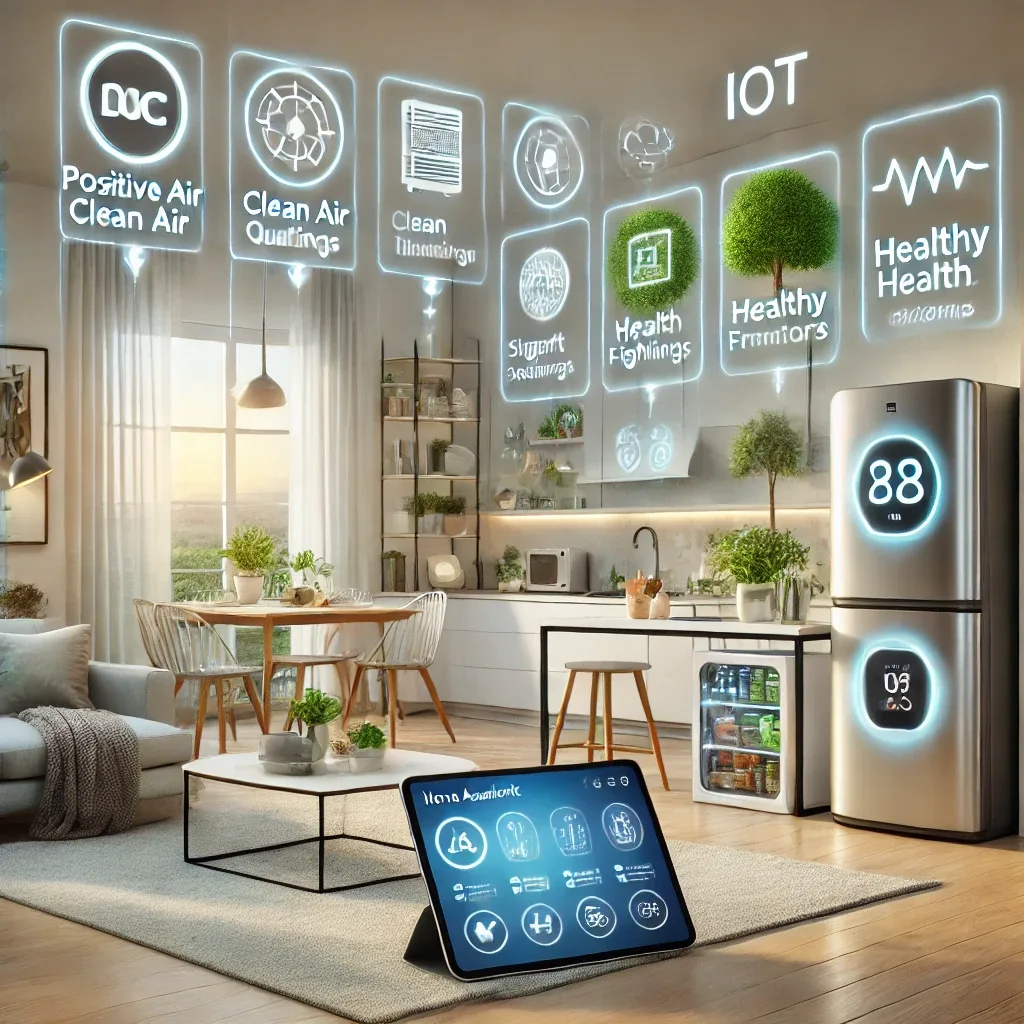
Why Your Home Environment Matters More Than You Think
Most Thais spend over 80-90% of their lives indoors, yet indoor air quality is often overlooked. WHO studies show indoor air can be 2-5 times more polluted than outdoor air, especially in Bangkok where PM2.5 enters from outside, CO2 builds up from occupants, and TVOC accumulates from new furniture and paint.
Essential IoT Sensors for a Healthy Home
PM2.5 Sensor detects fine particles that penetrate deep into lungs. WHO's 24-hour standard is 15 μg/m³. Recommended: Xiaomi Smart Air Detector 4 (400-600 THB), Aqara Air Quality Monitor (700-900 THB), IQAir AirVisual Pro (4,000-5,000 THB)
CO2 Sensor — levels above 1,000 ppm cause drowsiness, reduced concentration, and headaches. Bedrooms with closed windows through the night often reach 1,500-2,500 ppm. Recommended: SenseAir Sunrise (Zigbee, high accuracy), Aranet4 (Bluetooth, lab-grade precision)
TVOC Sensor detects Volatile Organic Compounds from paint, new furniture, and cleaning products — linked to cancer and neurological damage with prolonged exposure.
Humidity Sensor — the ideal indoor humidity range is 45-55%. Below 40% causes dry skin, respiratory irritation, and faster viral spread. Above 60% promotes mold growth.
Gas and Smoke Sensors — MQ-2 or Zigbee Gas/Smoke Sensors provide instant alerts for gas leaks or fire smoke, critically important for Thai home kitchens.
Health-Focused Automation Scenarios
When sensors integrate with Home Assistant or other IoT platforms, powerful automations become possible:
Complete scenario: PM2.5 > 35 → Air Purifier Turbo mode + close air intake / CO2 > 1,000 ppm → activate Exhaust Fan or HRV (Heat Recovery Ventilator) / Humidity > 65% → start Dehumidifier / Temperature > 28°C at night → auto-start AC at 25°C / Smoke detected → all emergency lights on + auto-close gas valve + SMS alert
Smart Thermostat and Temperature Control
Optimal sleep temperature is 18-22°C and optimal work temperature is 21-24°C. Smart Thermostats such as Nest Learning Thermostat, Sensibo Air (supports IR remote for Thai AC units), and tado° learn usage patterns and pre-adjust temperature automatically, saving 15-25% compared to fixed temperature settings.
Smart Bed: The Next Frontier in Health
Though still premium technology (Sleep Number 360, Eight Sleep Pod 3), Smart Beds that automatically adjust firmness and temperature based on sleep tracker data are gaining popularity. Current Thai pricing sits at 80,000-200,000 THB, suited for people with sleep issues, sleep apnea, or back pain.
Start Simply with a Small Budget
For budget-conscious households, begin with a basic combo: Xiaomi Smart Air Detector 4 (PM2.5+CO2+TVOC+Temp+Humidity in one device, 400-600 THB) + Xiaomi Air Purifier 4 Pro (2,500-3,500 THB) + Zigbee Gas Sensor (300-500 THB). Total under 5,000 THB for comprehensive family health protection.