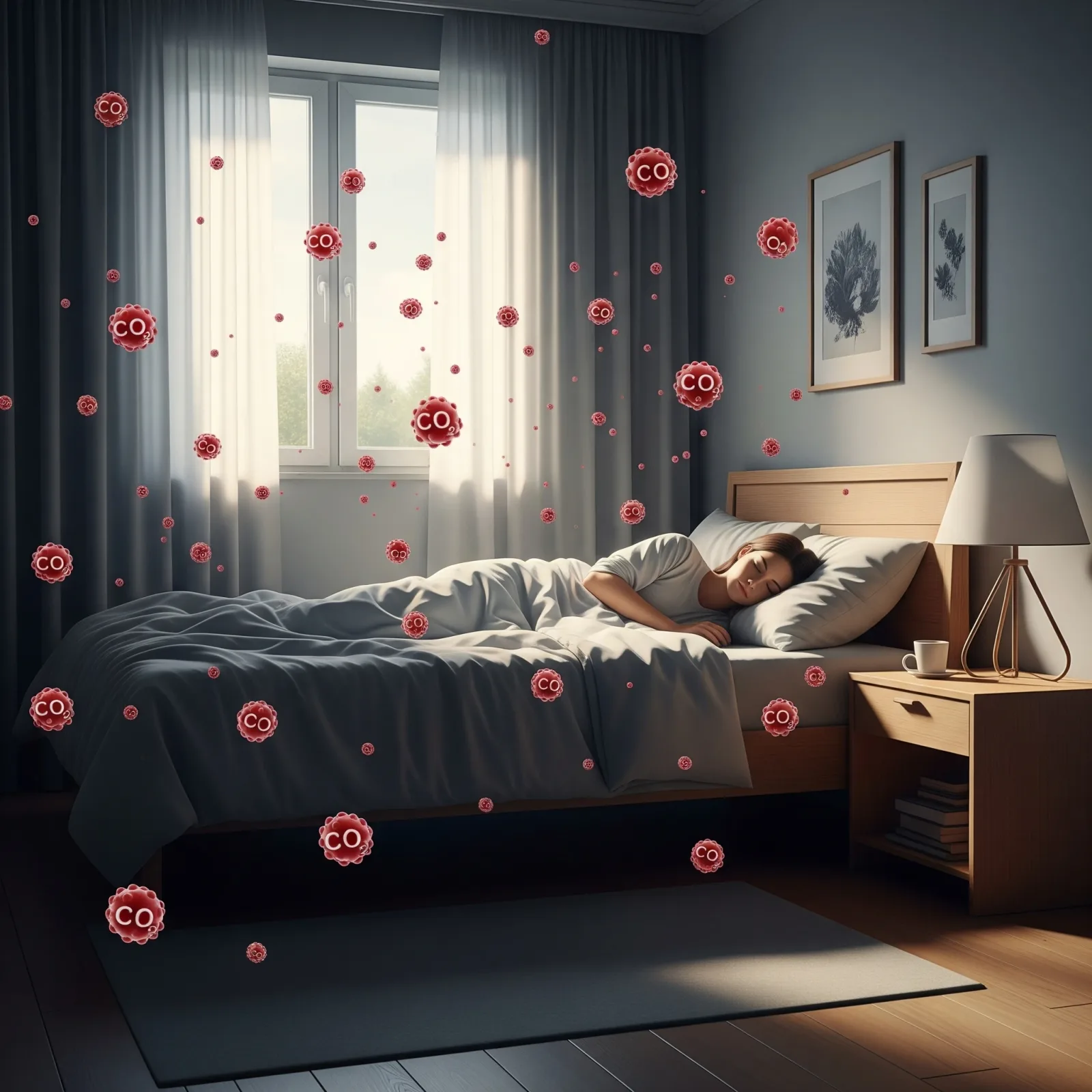
Bedroom CO2 in Bangkok Condos: A Nightly Problem
Mid- to lower-range condominiums and apartments in Bangkok are built for energy efficiency — but a trade-off is poor air exchange. A sealed bedroom with one or two people sleeping and the AC running all night steadily accumulates CO2 with no outlet. Key contributing factors include small room volume (limited air supply), no exhaust fan or ventilation duct, multiple occupants sharing one room, and no plants or CO2-absorbing devices.
CO2 Levels and Their Real Health Effects
400–600 ppm represents fresh, clean air ideal for deep sleep. 600–1,000 ppm is slightly stuffy — respiratory effort subtly increases and brain function begins to slow imperceptibly. 1,000–2,000 ppm clearly degrades sleep quality: you wake with a headache, feeling unrefreshed, with measurably reduced cognitive performance. Above 2,000 ppm causes marked drowsiness, dizziness, and breathing difficulty — chronic exposure at these levels has been linked to elevated blood pressure and weakened immunity over time.
CO2 Sensors Suited to Condo Bedrooms
For condos, choose compact, easy-to-install devices. Top options in 2026: the Aranet4 Home, with an E-Ink display showing CO2, temperature, and humidity simultaneously, pairing via Bluetooth; the Aqara TVOC Air Quality Monitor (CO2, VOC, temperature, humidity via Zigbee, directly compatible with Home Assistant); and the Netatmo Smart Indoor Air Quality Monitor (CO2, temperature, humidity, and noise, with HomeKit support). All use NDIR technology — the most accurate measurement standard available for consumer devices.
Smart Home Strategies to Reduce Bedroom CO2
The simplest solution is opening a window for 15–20 minutes before bed, but high-rise condos facing major roads or requiring security make this inconvenient. A better approach is installing an exhaust fan in the bathroom or wall, connected via Smart Plug so Home Assistant controls it automatically. Practical automation examples: when CO2 exceeds 1,000 ppm, run the exhaust fan for 20 minutes; when CO2 exceeds 1,500 ppm, push a notification via the Home Assistant app; when CO2 drops below 800 ppm, stop the fan. Air purifiers with Fresh Air Intake systems are another option — they draw outdoor air in while simultaneously filtering and reducing CO2.