MPU6050: The 6-Axis Sensor at the Core
The MPU6050 is a small integrated circuit that combines two sensor types in a single chip: a 3-axis accelerometer measuring X, Y, and Z acceleration and vibration, and a 3-axis gyroscope measuring roll, pitch, and yaw rotation. The ability to measure all six axes simultaneously allows the MPU6050 to distinguish genuine seismic wave patterns from everyday vibrations like people walking inside the home, using pattern analysis algorithms applied to the raw motion data.
ESP32: The Brain That Connects Everything
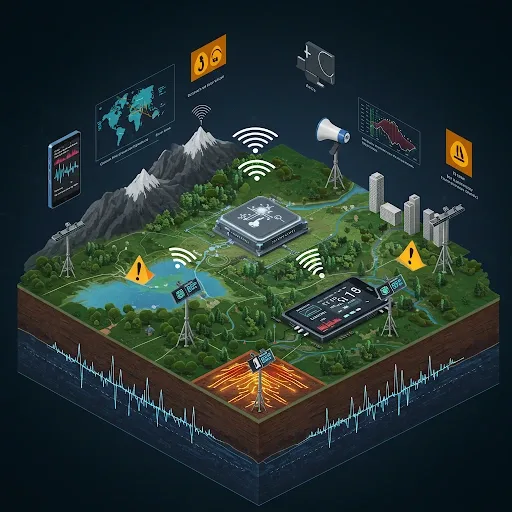
ESP32 is a microcontroller with built-in Wi-Fi and Bluetooth running at 240 MHz, with 520 KB of SRAM sufficient for real-time sensor data processing. In the earthquake warning system, ESP32 receives data from the MPU6050 via I2C protocol, processes it, and compares readings against pre-set thresholds. When shaking exceeds the threshold, it transmits data via Wi-Fi to Home Assistant to trigger automated responses.
Home Assistant: The Decision Hub
Home Assistant runs on a local server inside the home, whether a Raspberry Pi, NUC, or Home Assistant Green device. It receives the signal from ESP32 and executes the configured automations: closing the smart gas valve, activating emergency lights, unlocking smart locks, sending Push Notifications via the Home Assistant Companion App, and sending LINE Notify alerts. The entire process operates within the home network and does not depend on external servers, so it functions even when internet connectivity fails.
Future Technology Trends
In the near future, earthquake warning systems will advance further. AI-powered Big Data analysis will improve identification of at-risk zones and earthquake pattern prediction. AR (Augmented Reality) alerts on smartphones will overlay evacuation route guidance on live camera views. Direct real-time linkage between private Smart Home systems and government seismic databases will enable faster coordination. Machine Learning will improve discrimination between genuine seismic events and background vibration noise.
HappySmart Technology Integration
HappySmart combines MPU6050 and ESP32 with Home Assistant to create an immediate response system that does not wait for external signals. The HappySmart IoT engineering team designs each system to the specific characteristics of the home, calibrates sensor sensitivity for the local environment, and configures automations to match each family's needs, with ongoing after-sales support and system updates.