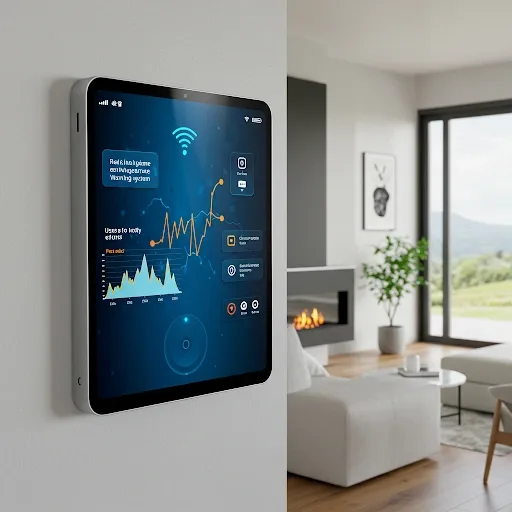
Why Thai Homes Need an Intelligent Earthquake Warning System
In 2025, earthquakes are no longer a distant concern for Thai residents. Chiang Rai, Mae Hong Son, and Tak have all experienced repeated shaking, and many households had no time to take shelter because they lacked an early warning system. An intelligent earthquake warning system has shifted from being a luxury to a necessary safety investment.
The Technology Behind the System: MPU6050, ESP32, and Home Assistant
The system operates through three core components. The MPU6050 is a 6-axis sensor detecting both acceleration and rotation, enabling it to distinguish genuine earthquake vibration patterns from everyday household movement. The ESP32 microcontroller processes the sensor signal and transmits data via Wi-Fi to Home Assistant in under 100 milliseconds. Home Assistant on the local home server receives the signal and immediately executes automations: closing the gas valve, activating emergency lights, unlocking exit doors, and pushing alerts to all devices, all without depending on external internet.
Price Comparison and Market Options
HappySmart provides complete professional installation by IoT engineers starting at 9,900 THB, covering site assessment, installation, automation configuration, and after-sales support. Xiaomi offers a range of IoT devices starting around 6,500 THB, but requires self-installation and has limited Home Assistant integration. DIY using ESP32 and MPU6050 components starts at approximately 2,500 THB and suits users with electronics and programming knowledge, though setup time and technical troubleshooting must be accounted for.
Case Study: Magnitude 5.7 Earthquake at Mae Sot
Scenario: At 2:38 am a magnitude 5.7 earthquake struck Tak Province with an epicenter 10 kilometres deep. A home in Mae Sot District equipped with a Smart Home earthquake warning system had its MPU6050 sensor detect shaking immediately. Within 2 seconds, the system closed the gas valve, activated emergency lighting, unlocked exit doors, and sent smartphone alerts to the homeowner. The family evacuated safely before the full S-wave force arrived. Property damage was significantly lower compared to neighboring homes without the system.
Basic Installation Steps
Core setup steps include connecting MPU6050 to ESP32 via I2C protocol, mounting the unit on a structurally sound location such as a load-bearing wall near the building base, configuring ESPHome on ESP32 and linking it to Home Assistant via Wi-Fi, setting vibration detection thresholds, connecting automations to a smart gas valve, emergency light switch, and smart lock, then testing by gently tapping the sensor to confirm automations trigger correctly. For those less confident with technical setup, HappySmart offers complete installation with warranty.
2025 Is the Right Moment
Rising earthquake frequency in 2025, falling IoT device prices, and a more stable Home Assistant platform combine to make this the ideal time to invest in an intelligent earthquake warning system for home safety.