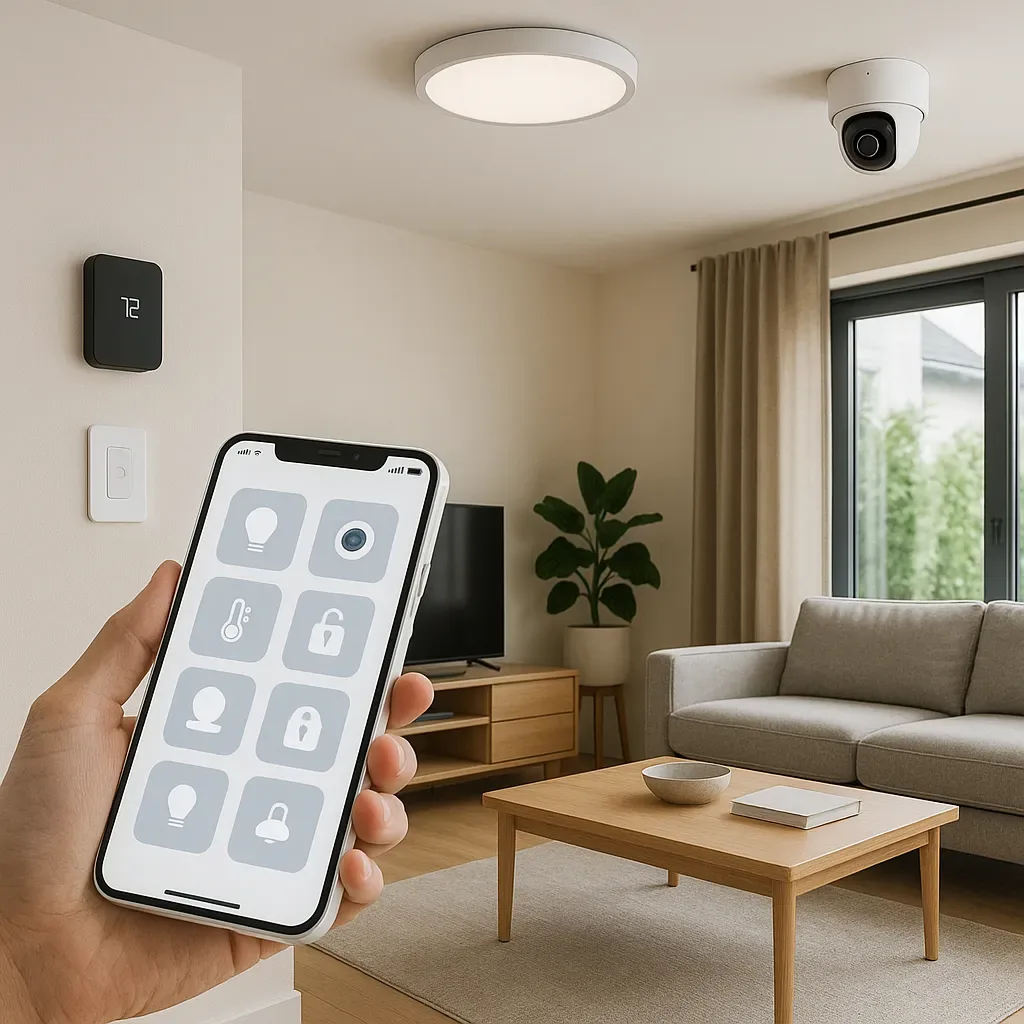
The Most Common Smart Home Mistake
70% of smart home problems stem from buying devices before planning — getting 20 Tuya switches that won’t integrate with existing HomeKit, buying Wi-Fi cameras then discovering weak Wi-Fi, or installing Zigbee sensors without a Zigbee coordinator.
Principle 1: Analyze Lifestyle Before Choosing Technology
Ask yourself before buying any device:
Question 1: Who in the household needs special support?
→ Elderly → fall detection + emergency button
→ Young children → air quality + medicine cabinet lock
→ Work from Home → stable network + tunable lighting
→ Frequent travelers → remote access + security

Question 2: Does the household use iOS or Android?
→ Mostly iPhone → HomeKit + Matter
→ Mixed → Home Assistant (supports both)
→ Tech-savvy → Full HA stack

Question 3: Local or cloud preference?
→ Privacy / no monthly fees → Local-first HA
→ Cloud-acceptable → Google/Alexa ecosystem
Principle 2: Plan the Network Before Everything Else
Most smart home failures trace back to weak Wi-Fi — devices dropping offline, automations not firing, cameras buffering.
Network standards for smart homes:
| Home Size | Recommended | Notes |
|---|---|---|
| ≤120 sqm | Mesh 2-node | UniFi U6 Lite or ASUS ZenWiFi |
| 120–250 sqm | Mesh 3-node + PoE switch | Ethernet to all cameras |
| >250 sqm | UniFi + PoE+ switch + VLAN | Separate IoT VLAN |
Run CAT6 cabling to camera mount points, NVR, and HA server during construction — extremely difficult to retrofit later.
Principle 3: Choose a Central Platform
Home Assistant is best for Thai homes requiring maximum flexibility:
- Supports 3,000+ device brands
- 100% local, no cloud dependency
- Add-ons: Frigate, Zigbee2MQTT, Node-RED, InfluxDB
- Thai LINE Notify integration
For those who don’t want any setup, Google Home is the easiest option — especially in homes that already have Google Nest speakers.
Principle 4: Phase Your Budget
Phase 1 — Foundation (THB 15,000–30,000):
  Network: mesh router + PoE switch
  Hub: HA server (RPi 5 or mini PC)
  Zigbee: coordinator + 5–10 sensors
  Quick wins: smart plugs + smart LED

Phase 2 — Security (THB 15,000–25,000):
  2–3 IP cameras + Frigate NVR
  Door/window sensors on all entry points
  Smart lock for front door

Phase 3 — Comfort and Energy (THB 20,000–50,000):
  Smart AC control (IR blaster or Modbus)
  Energy monitoring (CT clamp sensors)
  HRV/ERV ventilation
  Motorized curtains
Integrating Technology into Thai Home Aesthetics
Thai homes span many styles — smart home additions should blend in, not stand out:
- Switches: Use Aqara H1 or Sonoff MINI R4 hidden inside existing junction boxes
- Speakers: Nest Mini sits naturally on a bookshelf as decor
- Cameras: Small Reolink/Hikvision units painted to match ceiling color
- Sensors: White Aqara sensors blend into white walls naturally
- Cables: Run conduit inside walls during construction
Summary
A great smart home is built through planning, not purchasing — starting with lifestyle → network → platform → phased budget produces a home that works reliably and remains upgradeable for the next 10–20 years.