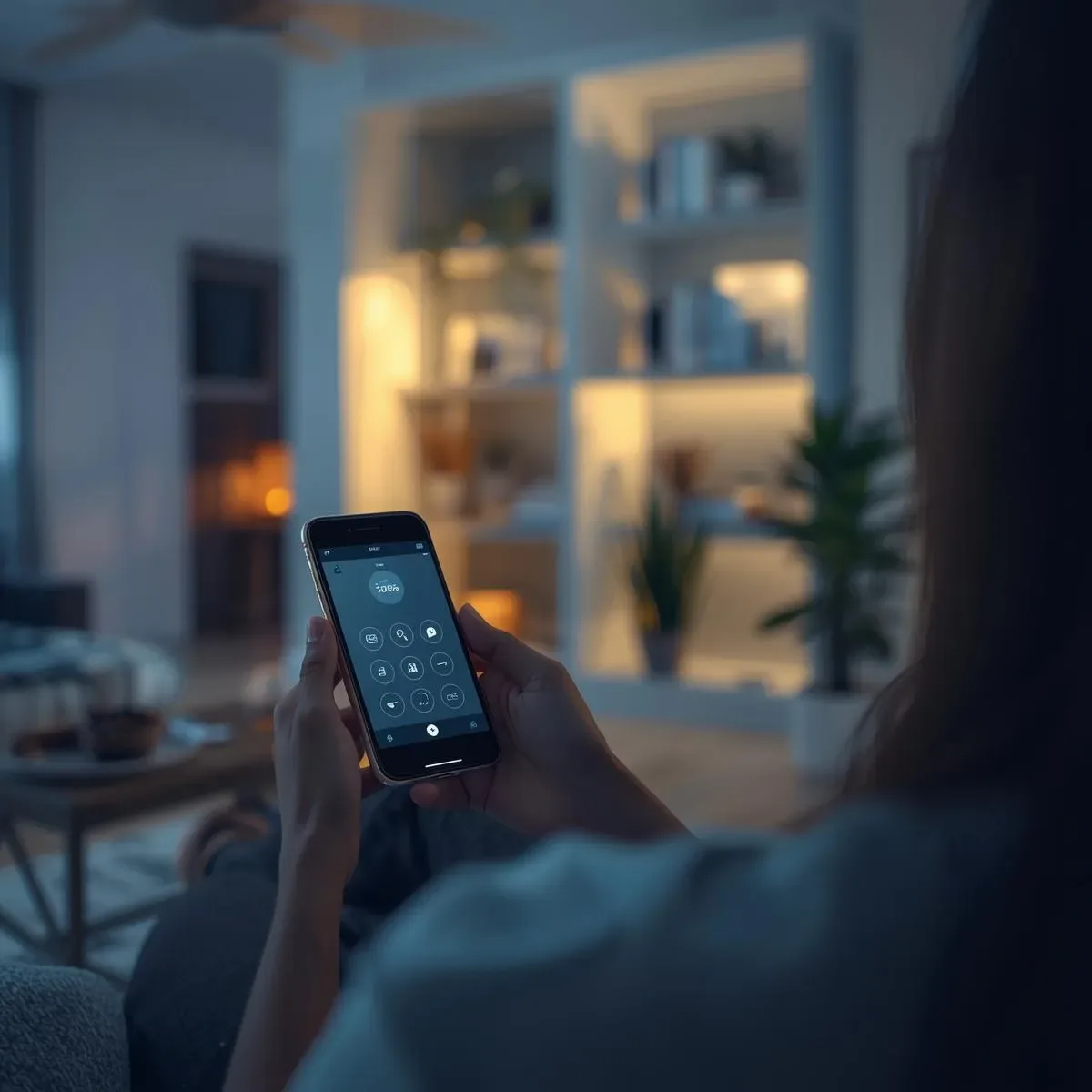
Presence Simulation Engine: AI Behavioral Mimicry for Vacancy Security
Professional burglars surveil properties for days before striking, looking for consistent lighting patterns, absence of sounds, and absence of movement. A Presence Simulation Engine uses real behavioral data from your family to generate randomized occupancy patterns that cannot be distinguished from genuine presence.
Core Concept: Markov Chain Occupancy Model
Instead of rigid timers (lights on 18:00–22:00 — patterns that repeat and can be learned), the engine uses a Markov Chain to generate probabilistic but realistic state sequences: - States: {TV_on, living_room_light, bedroom_light, bathroom_light, kitchen_light, audio_on} - Transition matrix derived from 30 days of actual household behavior logs - Inter-transition time drawn from Gaussian distribution (mean 15–45 min, σ 5 min)
Home Assistant AppDaemon Implementation
A Python AppDaemon class loads the learned transition matrix, samples the next state every 5 minutes when away mode is active, and applies changes gradually (dimmer fade rather than instant on/off) to simulate natural human behavior.
Simulated Signals
Lighting: Zigbee dimmers (IKEA TRADFRI or Shelly Dimmer 2) with gradual brightness changes — bedroom fading down before simulated bedtime, kitchen flickering on briefly for simulated meal prep, bathroom cycling every 1–3 hours.
Audio: Google Home or Sonos playing low-volume Thai TV broadcast audio or TTS dialog clips at randomized intervals and volumes.
Exterior: Lights activated at true local sunset time (Home Assistant Sun integration); garage smart socket simulates plugged-in vehicle.
Appliances: TV smart plug showing occasional active power draw; washing machine operating 2–3 times per week on the household’s historical schedule.
Anti-Pattern Enforcement
The engine monitors its own output to prevent repetition: no identical 7-day sequence allowed, minimum entropy enforced on state sequences, simulation start time randomized ±30 minutes daily.
Pilot Results
In a 60-day Bangkok pilot, five uninformed neighbors consistently assumed the home was occupied. Frigate zone analytics showed a significant decrease in lingering activity near the perimeter compared to the baseline period. Electricity cost increase: 150–300 THB/month.