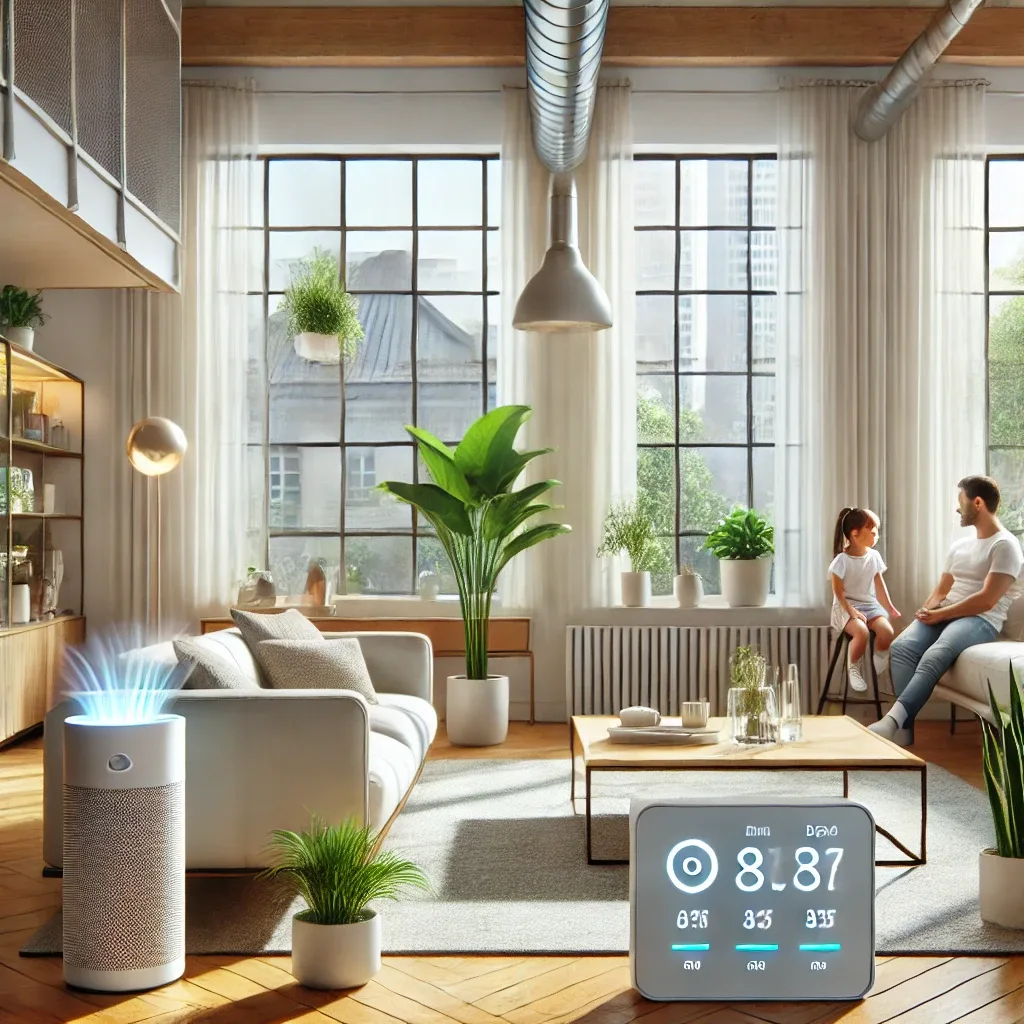
Why Indoor Air Is More Dangerous Than You Think
Many people believe staying indoors keeps them safe from pollution, but the startling truth is that indoor air can be 2-5 times more polluted than outdoor air, according to the U.S. Environmental Protection Agency (EPA). Indoor pollution sources are diverse: PM2.5 from cooking, dust and dust mites from furniture, VOCs from paints and cleaning chemicals, mold, bacteria, and CO2 accumulating in sealed spaces.
Health impacts range from short-term irritation of the eyes, nose, and throat to chronic respiratory disease, cardiovascular conditions, and long-term cancer risk. Children, the elderly, and those with existing respiratory conditions face the highest risk.
Hidden Indoor Pollution Sources You're Overlooking
Indoor air pollution comes from sources we often fail to notice. High-heat cooking generates significant PM2.5 and VOCs, especially stir-frying and deep-frying. Carpets, curtains, and sofas accumulate massive amounts of dust and dust mites. Pets shed hair and dander that are potent allergens. Cleaning products, perfumes, and sprays release VOCs and harmful chemicals. Even laser printers and electronics emit fine particles during operation.
Insufficient ventilation allows pollutants to accumulate, particularly in sealed buildings that run air conditioning continuously — a very common scenario in Bangkok and major Thai cities.
Smart Air Filtration Systems: The Comprehensive Solution
Modern smart air filtration systems use multi-layer filtration to handle diverse pollutant types. The first layer — a Pre-Filter — captures large dust and pet hair. Next, HEPA H13 filters PM2.5 and PM10 at 99.97% efficiency. Activated Carbon eliminates VOCs, odors, and toxic gases. Some models add UV-C layers that kill bacteria and pathogens with ultraviolet light.
The intelligence lies in IoT sensors that measure PM2.5, PM10, CO2, VOC, and humidity in real time. The unit automatically adjusts fan speed based on measured air quality, pushes data to a smartphone app, and alerts you when levels exceed standards or filter replacement is due.
How to Choose the Right System for Your Home
The key selection metric is CADR (Clean Air Delivery Rate), which should equal room area multiplied by 2.5. A 25 sqm room needs a CADR of at least 62.5 m3/hour. Filter types must cover both HEPA for particulates and Carbon for odors and VOCs. Wi-Fi/App/Google Assistant/Alexa connectivity adds control convenience. Noise level should not exceed 35 dB in sleep mode for bedrooms, and automatic filter-replacement alerts are essential.
Installation and Operation for Maximum Performance
Placement matters enormously. Install units in your most-used rooms — bedroom and living room — at least 30 cm from walls to allow proper airflow. Avoid positioning near frequently opened doors or windows. Set Auto Mode so the unit adjusts speed automatically based on air quality, and schedule operation to match your daily routine.
Consistent maintenance keeps the system at peak performance. Clean the Pre-Filter every 2-4 weeks, replace the HEPA filter every 6-12 months depending on use, and replace the Carbon filter every 3-6 months. Smart systems will alert you automatically when it's time.
The Future of Air Filtration in the AI Era
Technology is advancing toward systems that learn occupant behavior. AI will analyze air quality patterns by time, season, and activity to proactively adjust before pollutants accumulate. Integration with central HVAC systems will make whole-home air quality control effortless, and health data linked to home air quality will illuminate the relationship between environment and wellbeing.
HappySmart is ready to design a smart air filtration system matched to your home and budget — from device selection to complex Automation configuration — so every breath in your home is clean and safe.