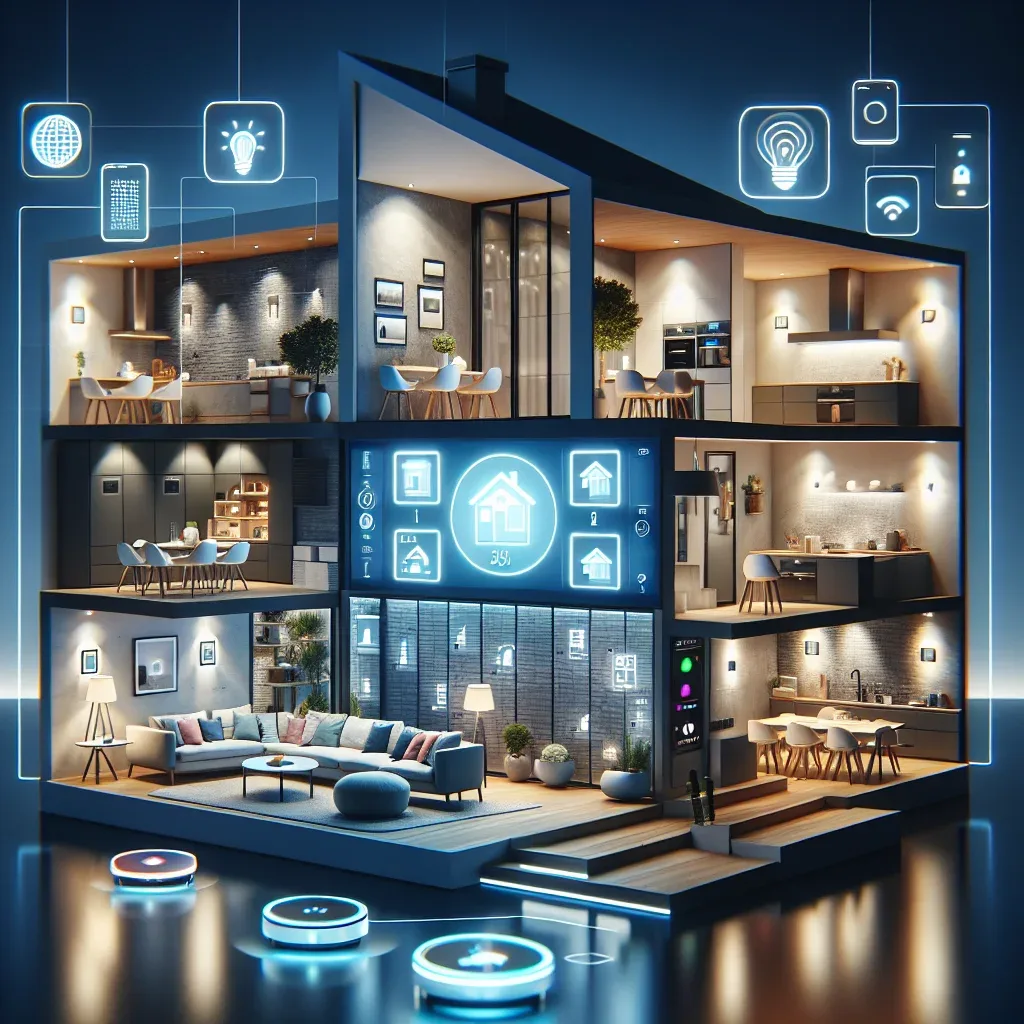
What Smart Home Lighting Is and How It Works
Smart home lighting refers to light fixtures and bulbs that communicate with a control system using wireless protocols: Wi-Fi, Zigbee, Z-Wave, and Matter — the open standard co-developed by Apple, Google, Samsung, and Amazon.
In 2026 the Matter 1.4 standard allows bulbs from Philips Hue, Yeelight, Nanoleaf, and TP-Link Tapo to coexist in the same system without separate bridges, controllable through Apple HomeKit, Google Home, Alexa, or Home Assistant from a single interface.
Key Factors to Consider Before Choosing
Ecosystem compatibility is the most important starting point. If your home is built around iPhone and an Apple TV acts as a hub, HomeKit delivers the best stability and privacy because it processes everything locally via Thread and Matter.
For cost-effectiveness and maximum flexibility, the TP-Link Tapo L535E and Xiaomi Yeelight Pro are strong candidates. Both support Matter 1.4 and are priced at roughly ฿500–700 per bulb, with no electrician required for installation.
Brightness and colour temperature are factors many buyers overlook. A quality smart bulb should deliver at least 800 lm for a bedroom and 1,200 lm or above for a living room or kitchen. A tunable range of 2,700K warm to 6,500K cool gives a home the flexibility to shift between multiple moods.
Designing Lighting Scenes for Each Room
HappySmart designs custom lighting scenes for each area of the home based on the occupants' actual daily habits.
For living rooms: a Relax scene at 2,700K and 30% brightness for film watching, a Reading scene at 4,000K and 80% brightness, and a Party scene with colour cycling synced to Spotify through a Home Assistant integration.
For bedrooms: lights gradually dim from 21:00 automatically and switch off when mmWave sensors confirm the occupant is asleep. A low-level night light activates when anyone rises from bed without waking other occupants.
For entry areas: lights activate automatically when the smart lock is disengaged and shut off after five minutes of no detected movement.
Real Energy Savings from Smart Lighting
Energy monitoring data from Bangkok HappySmart clients shows that smart lighting combined with presence-based automation reduces lighting electricity costs by an average of 25–40% per month. The system switches off lights in empty rooms automatically and adjusts brightness based on natural light levels measured by a Lux sensor.
The HappySmart Smart Lighting package starts at ฿1,599, including three Matter-compatible bulbs and a control hub, with unlimited expansion points.