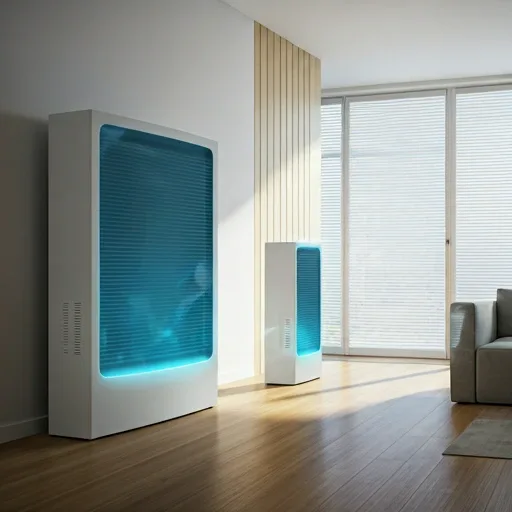
Four Types of Indoor Pollution in Bangkok Homes
Bangkok homes face four distinct forms of air pollution from different sources. Outdoor PM2.5 peaks during January-March when stagnant air and northern agricultural burning combine. Indoor VOC comes from cooking, cleaning products, and new furniture. Cooking smoke from Thai cuisine's high-heat stir-frying generates fine particles and PAH (Polycyclic Aromatic Hydrocarbons). Mold and humidity become critical during rainy season (May-October) when humidity exceeds 70% in poorly ventilated corners.
Four Solutions That Work Together
HappySmart designs its system so each component communicates and operates as a single unit. The Air Sensor is the system's heart, simultaneously measuring PM2.5, CO2, VOC, temperature, and humidity, transmitting every 60 seconds to the cloud and Home Assistant.
The Smart Purifier responds automatically to Air Sensor data without separate configuration. When PM2.5 or VOC rises, fan speed adjusts immediately. The Ventilation System draws fresh outdoor air to replace accumulated CO2, with a pre-filter that blocks outdoor pollutants from entering alongside it. The Smart Humidifier maintains 45-55% humidity — the range that simultaneously inhibits mold growth and dust mite proliferation.
How Integration Works: Sensor Triggers Everything
When the Air Sensor detects PM2.5 above 35 μg/m³, three simultaneous triggers fire: increase Smart Purifier speed to levels 3-4, temporarily close Ventilation System valves to prevent bringing in additional outdoor PM2.5, and send LINE notifications with actionable advice like closing windows or wearing a mask if going outside.
When CO2 exceeds 800 ppm, the system triggers the Ventilation System to bring fresh air in — but only after checking outdoor PM2.5 levels via API. If outdoor AQI exceeds 50, ERV with a built-in filter activates instead.
Five Steps to Transform Your Home into a Safe Zone
Step one: assess your home and identify which rooms need the most attention (children's and elderly bedrooms first). Step two: install Air Sensors at 2-3 key locations and collect baseline data for two weeks. Step three: add Smart Purifiers sized for each room and configure basic automations. Step four: install Ventilation System to solve CO2 and stale air accumulation. Step five: add Smart Humidifier to control humidity and prevent mold.
Five Dimensions of Measurable Benefits
Health: 40-60% reduction in allergy and asthma symptoms in households running the complete system. Convenience: no need to manually check or adjust devices. Energy: 20-30% savings from Smart Control. Safety: immediate alerts when air quality deteriorates rapidly. Property value: homes with Smart Air Quality systems are increasingly attractive to buyers in Bangkok's real estate market.