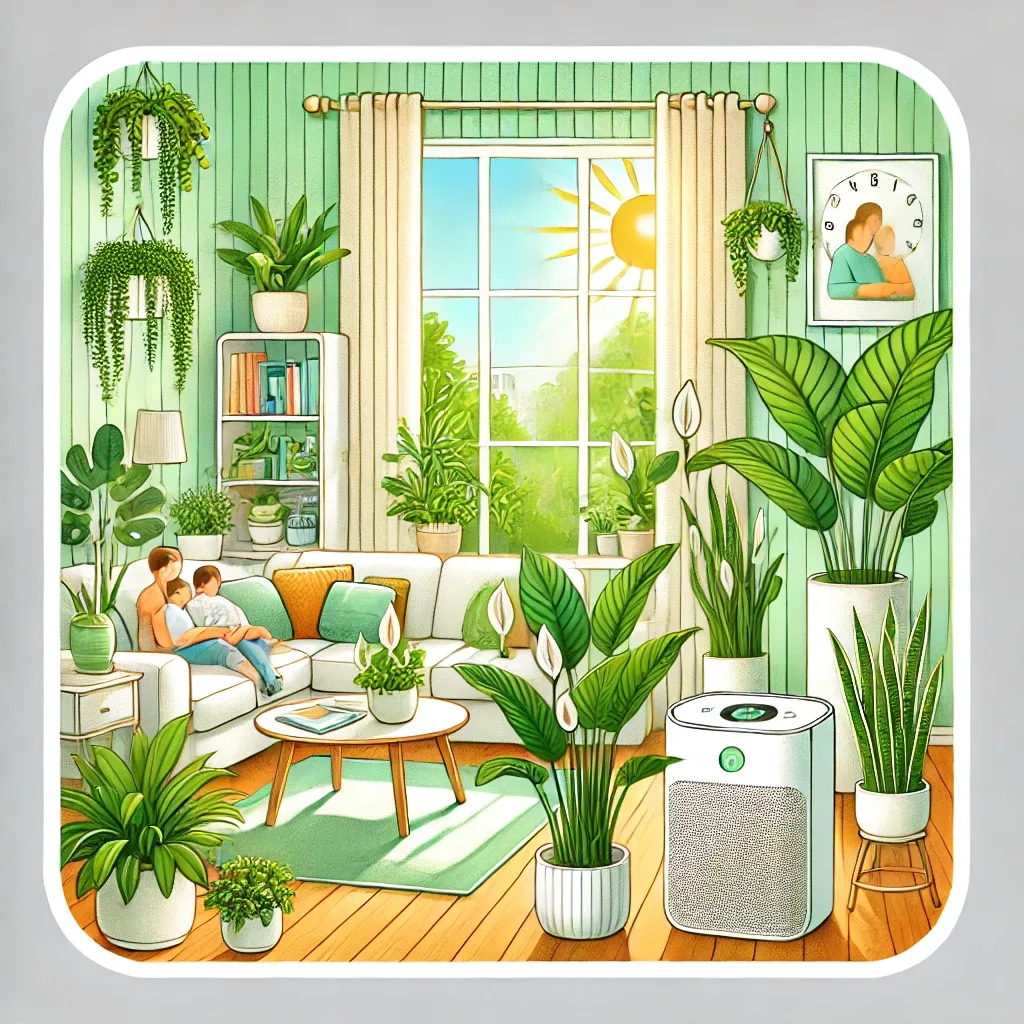
Why These Five Methods Matter: Data-Driven Context
Before diving in, understand the baseline: EPA data shows indoor air has 2-5 times more pollutants than outdoor air. People spend 70-90% of their day indoors. Children in Bangkok absorb more PM2.5 from indoor air than outdoor air during dust season because windows are closed while cooking still happens. This data confirms that managing indoor air quality matters more than most people realize.
Method 1: Smart Filtration System — The System's Heart
Smart air purifiers differ from standard ones by having built-in sensors and automatic fan speed adjustment. Key selection criteria: HEPA H13 (not just H11), CADR ≥ room area (sqm) × 2.5, and Wi-Fi or Zigbee for Home Assistant integration. Smart purifiers that auto-adjust speed based on PM2.5 use 25-35% less electricity than manual units because they avoid running Turbo unnecessarily.
Method 2: Multi-Point IoT Sensors — Comprehensive Coverage
A single sensor only tells you about one room. Multi-point systems give a whole-home picture. Recommended placement: three minimum points — bedroom (CO2 for sleep quality), kitchen (PM2.5 and VOC from cooking), and living room (overall home baseline). Home Assistant can prioritize children's bedrooms to always receive the lowest PM2.5 levels, even during peak demand periods.
Method 3: Smart Ventilation — Intelligently Bringing in Fresh Air
Smart ventilation isn't just an exhaust fan — it includes ERV (Energy Recovery Ventilator) that exchanges heat before bringing outdoor air in, avoiding the energy cost of cooling hot outdoor air. The system checks outdoor AQI via API first. If outdoor PM2.5 is below 25 μg/m³, it opens to fresh air. Above 50 μg/m³, it closes the valve and switches to recirculation mode.
Method 4: Robot Vacuum with HEPA Filtration
Dust settled on floors becomes airborne again with every movement. A Robot Vacuum with HEPA H13 filtration captures dust and prevents re-suspension. Set it to run twice daily at 7 AM and 7 PM when the house is empty or just returning. Integrating a Robot Vacuum with Home Assistant allows automatic triggering when indoor PM2.5 spikes abnormally.
Method 5: Complete Smart Home Integration — Control Everything from One Place
The difference between good and excellent systems is integration. When every device communicates, Cascade Automation becomes possible: when outdoor AQI is high one morning, the system automatically closes windows, increases purifier speed, sends a LINE alert with recommendations, and switches AC to Recirculate mode. HappySmart Smart Hub connects all devices — supporting Wi-Fi, Zigbee, Z-Wave, and Bluetooth in one unit, eliminating the need for multiple hubs.