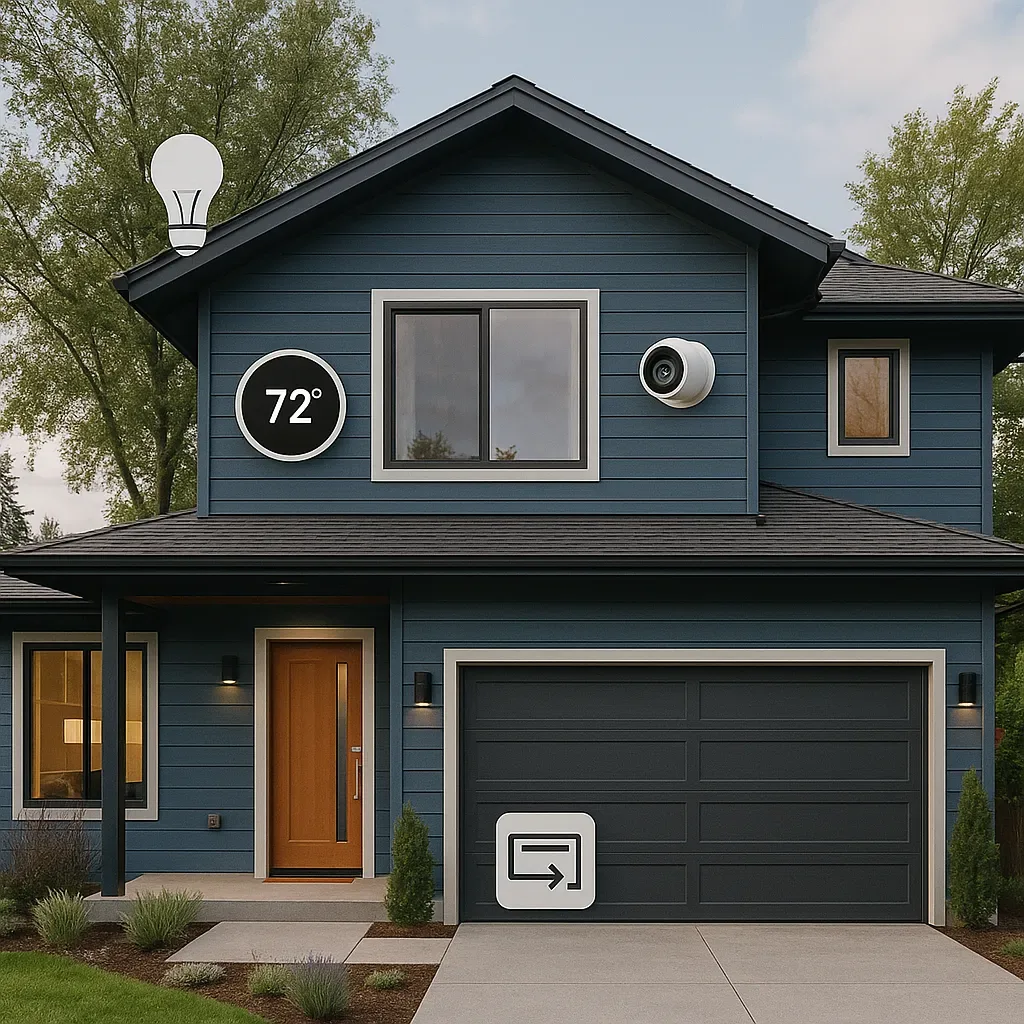
Why Siloed Systems Are Not Enough
Most smart homes in the market install systems separately — security cameras on one platform, air purifiers on another app, door locks on a third. Each works well individually but gains nothing from working together. A truly integrated system enables complex, high-value automation that isolated systems cannot achieve.
Cross-System Automation: When Systems Communicate
Security and health can work together: when a camera detects a stranger at the door during periods of high outdoor PM2.5, the system automatically locks the door, closes the ERV ventilation inlet, and sends a LINE alert with a camera snapshot. Health and comfort integration activates when sensors detect the occupant has just exercised (elevated heart rate from smartwatch integration) — the system cools the AC, increases fan speed, activates the air purifier, and prepares warm water in the bathroom. Convenience and security combine when GPS tracking shows the homeowner approaching — the AC pre-cools 15 minutes before arrival, welcome lighting activates, all cameras are verified online, and a home status summary arrives via LINE before the door opens.
Areas and Groups in Home Assistant: The Integration Foundation
Organizing devices into Areas (individual rooms) and Groups (device collections) in Home Assistant makes automation significantly more efficient and readable. A single Evening Mode automation can simultaneously adjust lighting across multiple areas, set bedroom temperature, close all smart curtains, and lock all smart locks — in one compact configuration.
Security, Health, and Convenience Zones
Dividing the home into functional zones makes automation design more meaningful. The Security Zone covers external perimeters, entry points, and windows for person and vehicle detection. The Health Zone encompasses bedrooms, living areas, and workspaces managing air quality, temperature, and Circadian Rhythm-appropriate lighting. The Convenience Zone handles kitchen, bathroom, and general living areas for daily task automation.
Unified Dashboard: The Entire Home in One View
A well-designed Lovelace dashboard in Home Assistant provides a complete home overview — Security Status, Air Quality readings, Energy Usage, and Device Status — using components such as Mushroom Cards, Mini Graph Card, and Picture Elements for a clean, actionable interface.
Conclusion
A fully integrated smart home is more than the sum of its parts. When security, health, and convenience systems work together, the home becomes genuinely intelligent — responding to real life rather than just following individual commands.