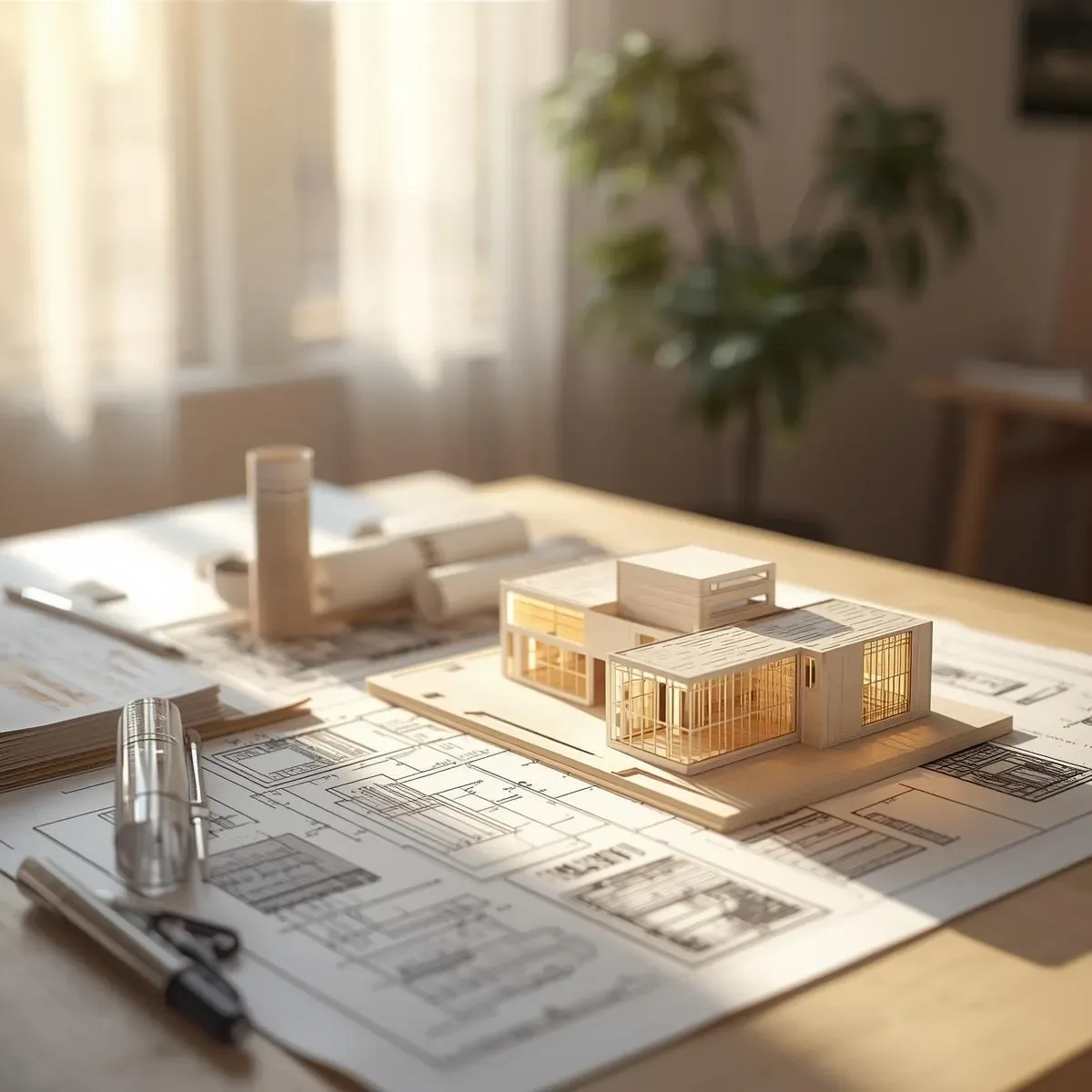
Construction cost overruns are the most common problem in Thai private home building. Studies show 60–70% of private home projects exceed their original budget by 20–40%. 3D Models and BIM Quantities are the primary tools for controlling costs before construction begins.
BIM Quantities: Automated BOQ from the 3D Model
When a 3D Model has sufficient detail (Level of Development 200 or higher), software can automatically generate a Bill of Quantities (BOQ): Quantities BIM generates automatically: - Concrete volume (cubic meters): broken down by Footing, Column, Beam, and Slab - Wall area (square meters): broken down by wall type (fired brick/block/concrete) - Floor and ceiling area (square meters): broken down by material type - Door and window counts: with dimensions - Electrical conduit and pipe lengths (meters): if the MEP Model is included BIM BOQ accuracy: - LOD 200 (Schematic Design): ±20–30% — sufficient for Budget Feasibility Check - LOD 300 (Design Development): ±10–15% — sufficient for Contractor Bidding - LOD 400 (Construction Documents): ±5–10% — close to Final Cost
Value Engineering: Reducing Cost Without Reducing Quality
Value Engineering (VE) is the process of analyzing how the same Function can be achieved at lower cost. 3D Models make VE faster and more accurate: Common VE Decisions:
- Structural VE: - Switching from Post-Tension Slab (expensive) to Conventional Slab with added Beams when Span does not exceed 6 meters — saves 15–25% of structural cost - Reducing Column Section from 0.35×0.35 meters to 0.30×0.30 meters based on Structural Analysis confirming Load does not approach the limit — saves 5–10% 2. Facade VE: - Replacing Natural Stone Cladding (THB 1,800–3,500/sqm) with stone-look Porcelain Tile (THB 400–800/sqm) on facades that receive little light or are difficult to see closely — saves 60–70% of Facade cost - Reducing Window Size on west-facing walls: reduces both Window cost and long-term HVAC cost 3. Specification VE: - Use Premium Finish only in Level 1 Hierarchy areas (main bedroom, main living room); use Standard Spec in other areas - Choose 60×60 cm tiles instead of 80×80 cm tiles in smaller rooms — lower Cutting Waste
Budget Trade-off Analysis: Deciding Before Construction
3D Models make Budget Trade-offs visible. Analysis examples: Scenario A: Expanding the Master Bedroom by +5 sqm - Additional cost: THB 75,000–100,000 (structure + finish) - What must be reduced to maintain Budget: reduce Guest Bedroom by 3 sqm, or downgrade Bathroom Tile throughout - 3D shows both options before the decision is made Scenario B: Adding a Swimming Pool - Cost of 4×8 meter pool: THB 600,000–900,000 (construction + equipment) - Monthly Running Cost: THB 3,000–6,000 (electricity, chemicals, cleaning) - Opportunity Cost: the same budget could buy Solar + BESS with positive ROI — 3D analysis shows the comparison clearly
Construction Cost Reference: Material Prices in Thailand
Construction cost benchmarks in Bangkok (2025–2026): - Standard construction (Conventional RC Frame): THB 18,000–25,000/sqm - High-quality construction (Quality Spec): THB 28,000–40,000/sqm - Luxury construction: THB 45,000–80,000+/sqm - Interior Fit-out (separate): THB 8,000–25,000/sqm depending on Spec - Smart Home System Add-on: THB 2,000–8,000/sqm depending on Package BIM-assisted Cost Analysis enables informed Budget Trade-off decisions before construction, rather than discovering cost overruns after committing.